Wade James H, Alsop Aurora T, Vertin Nicholas R, Yang Hongwei, Johnson Mark D, Bailey Ryan C
Department of Chemistry, University of Illinois at Urbana-Champaign , 600 South Mathews Avenue, Urbana, Illinois 61801, United States.
Department of Neurological Surgery, Brigham and Women's Hospital and Harvard Medical School , Boston, Massachusetts 02115, United States.
ACS Cent Sci. 2015 Oct 28;1(7):374-382. doi: 10.1021/acscentsci.5b00250. Epub 2015 Sep 30.
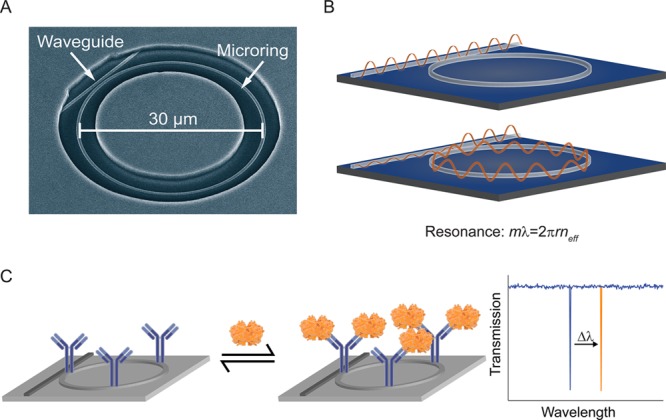
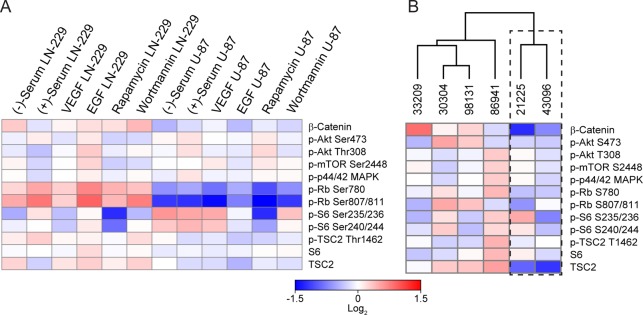
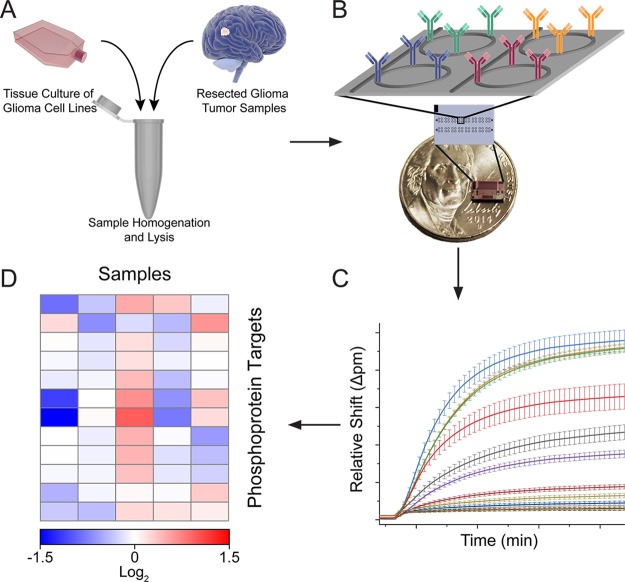
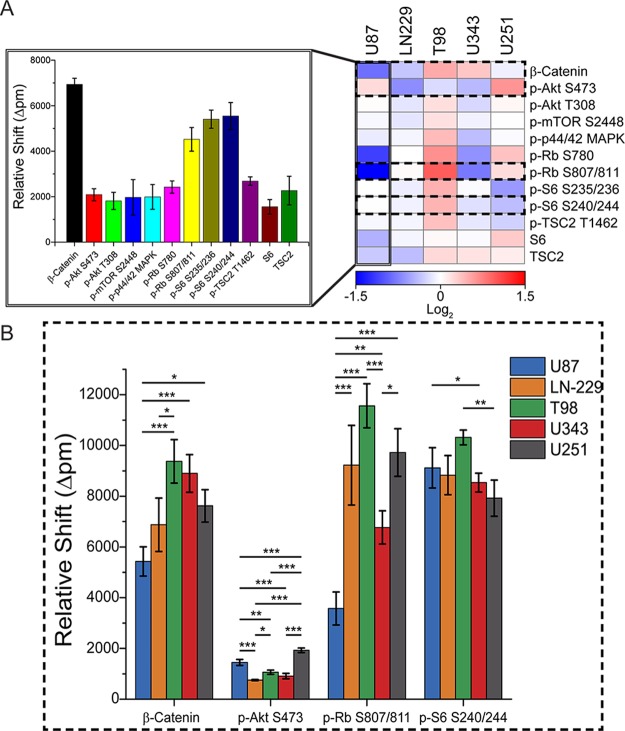
Extracellular signaling is commonly mediated through post-translational protein modifications that propagate messages from membrane-bound receptors to ultimately regulate gene expression. Signaling cascades are ubiquitously intertwined, and a full understanding of function can only be gleaned by observing dynamics across multiple key signaling nodes. Importantly, targets within signaling cascades often represent opportunities for therapeutic development or can serve as diagnostic biomarkers. Protein phosphorylation is a particularly important post-translational modification that controls many essential cellular signaling pathways. Not surprisingly, aberrant phosphorylation is found in many human diseases, including cancer, and phosphoprotein-based biomarker signatures hold unrealized promise for disease monitoring. Moreover, phosphoprotein analysis has wide-ranging applications across fundamental chemical biology, as many drug discovery efforts seek to target nodes within kinase signaling pathways. For both fundamental and translational applications, the analysis of phosphoprotein biomarker targets is limited by a reliance on labor-intensive and/or technically challenging methods, particularly when considering the simultaneous monitoring of multiplexed panels of phosphoprotein biomarkers. We have developed a technology based upon arrays of silicon photonic microring resonator sensors that fills this void, facilitating the rapid and automated analysis of multiple phosphoprotein levels from both cell lines and primary human tumor samples requiring only minimal sample preparation.
细胞外信号传导通常通过翻译后蛋白质修饰介导,这些修饰将信息从膜结合受体传递至最终调控基因表达。信号级联普遍相互交织,只有通过观察多个关键信号节点的动态变化才能全面了解其功能。重要的是,信号级联中的靶点通常代表着治疗开发的机会,或可作为诊断生物标志物。蛋白质磷酸化是一种特别重要的翻译后修饰,它控制着许多重要的细胞信号通路。不出所料,在包括癌症在内的许多人类疾病中都发现了异常磷酸化,基于磷蛋白的生物标志物特征在疾病监测方面有着尚未实现的前景。此外,磷蛋白分析在基础化学生物学中有着广泛应用,因为许多药物研发工作都试图靶向激酶信号通路中的节点。对于基础和转化应用而言,磷蛋白生物标志物靶点的分析受到依赖劳动密集型和/或技术挑战性方法的限制,尤其是在考虑同时监测磷蛋白生物标志物的多重面板时。我们开发了一种基于硅光子微环谐振器传感器阵列的技术,填补了这一空白,有助于从细胞系和原发性人类肿瘤样本中快速自动分析多种磷蛋白水平,且只需要极少的样品制备。