Liu Jia, Bai Jing, Jiang Guoqiang, Li Xinli, Wang Jing, Wu Dachang, Owusu Lawrence, Zhang Ershao, Li Weiling
Department of Biotechnology, Dalian Medical University, Dalian, Liaoning, China.
Department of Biochemistry and Biotechnology, Kwame Nkrumah University of Science and Technology, Kumasi, Ghana.
PLoS One. 2015 Nov 5;10(11):e0142157. doi: 10.1371/journal.pone.0142157. eCollection 2015.
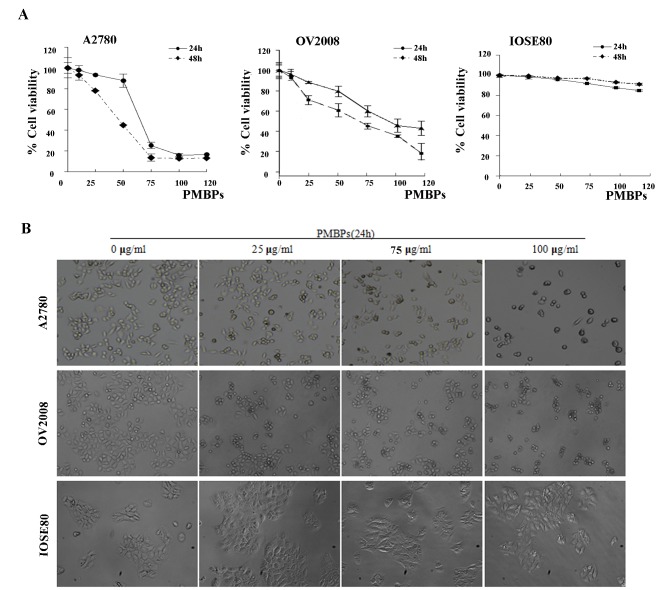
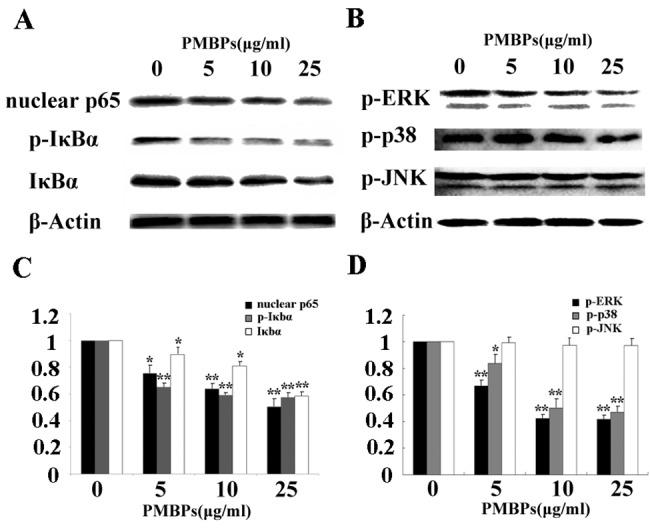
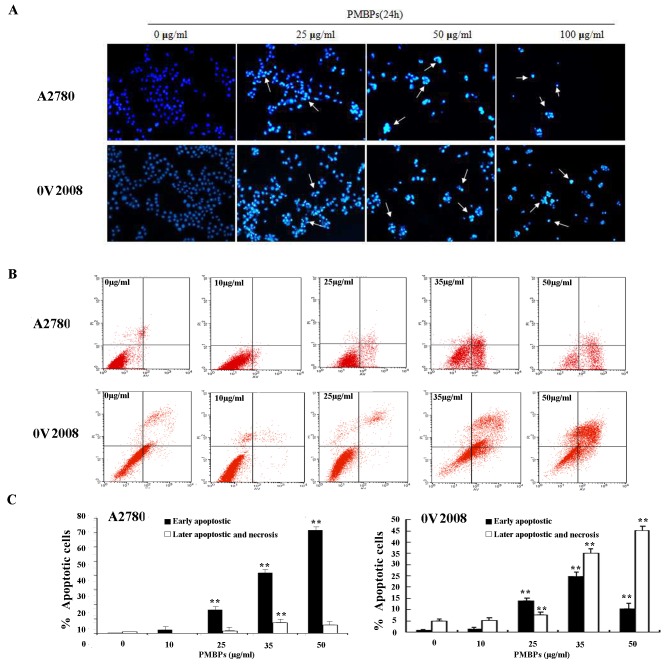
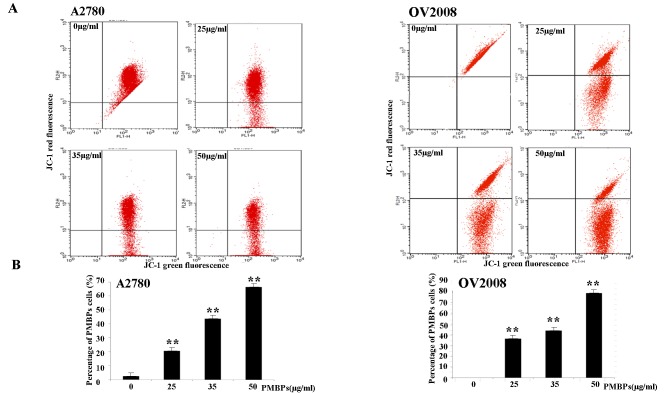
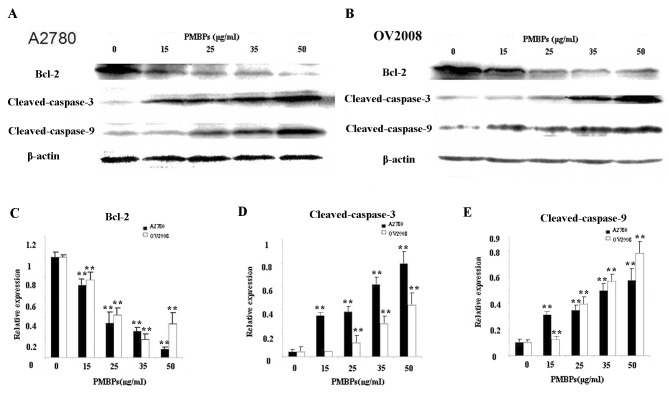
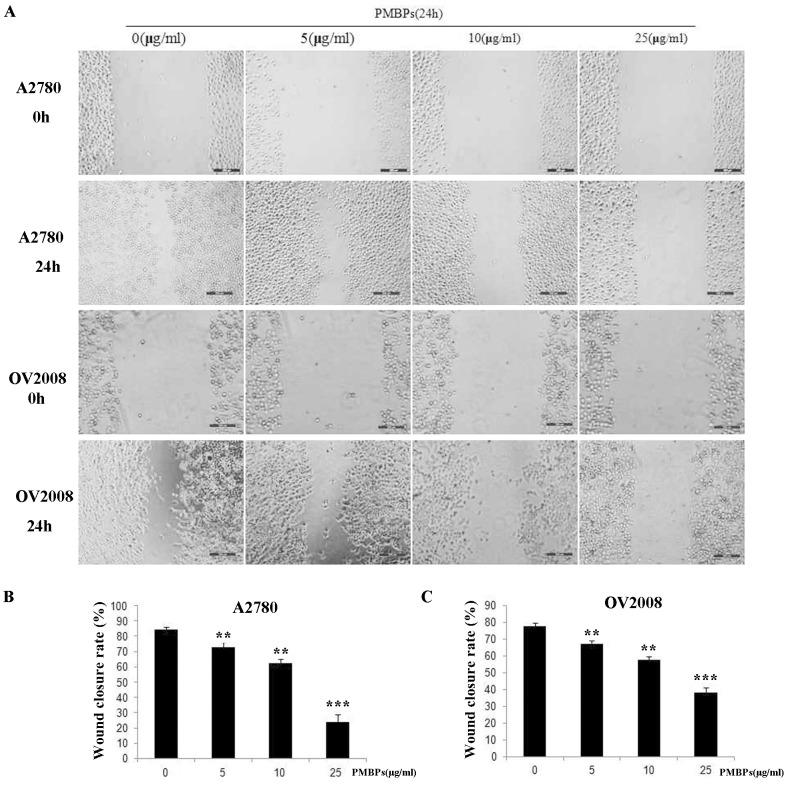
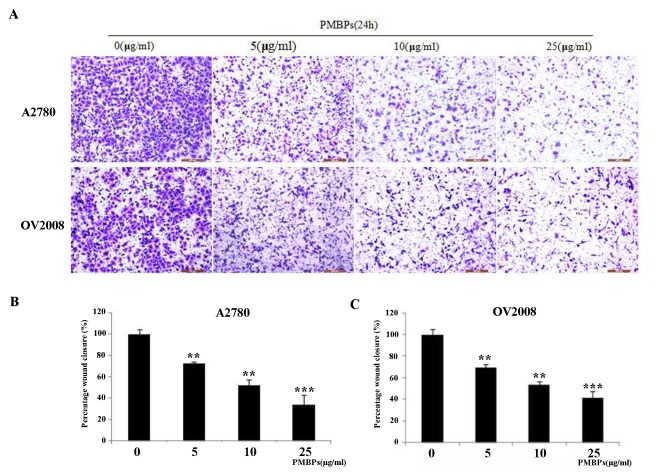
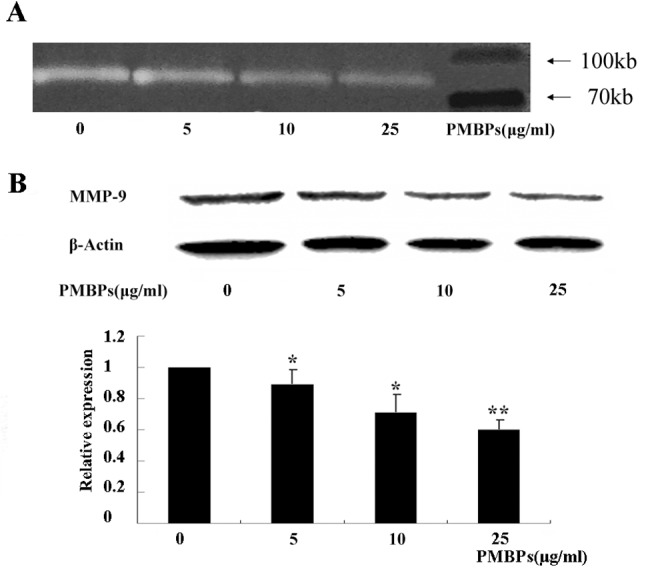
Pinus massoniana bark proanthocyanidins (PMBPs), an active component isolated from Pinus massoniana bark, has been reported to possess a wide range of biochemical properties. Here, we investigated the anti-tumor effect of PMBPs on ovarian cancer. The results indicated that PMBPs significantly reduced the growth of ovarian cancer cells and induced dose-dependent apoptosis. The underlying mechanisms involved were elucidated to include the loss of mitochondrial membrane potential, down-regulation of the anti-apoptotic protein Bcl-2 and the activation of Caspase 3/9, suggesting that PMBPs triggered apoptosis through activation of mitochondria-associated apoptotic pathway. In addition, wound healing and transwell chamber assays revealed that PMBPs could suppress migration and invasion of ovarian cancer cells. PMBPs dramatically inhibited MMP-9 activity and expression, blocked the activity of NFκB and the activation of ERK1/2 and p38 MAPK. Our findings suggest that PMBPs has the potential to be developed as an anti-tumor drug for ovarian cancer treatment and/ or disease management.
马尾松树皮原花青素(PMBPs)是从马尾松树皮中分离出的一种活性成分,据报道具有广泛的生化特性。在此,我们研究了PMBPs对卵巢癌的抗肿瘤作用。结果表明,PMBPs显著抑制卵巢癌细胞的生长并诱导剂量依赖性凋亡。所涉及的潜在机制包括线粒体膜电位丧失、抗凋亡蛋白Bcl-2的下调以及Caspase 3/9的激活,这表明PMBPs通过激活线粒体相关凋亡途径触发凋亡。此外,伤口愈合和Transwell小室实验表明,PMBPs可抑制卵巢癌细胞的迁移和侵袭。PMBPs显著抑制MMP-9活性和表达,阻断NFκB活性以及ERK1/2和p38 MAPK的激活。我们的研究结果表明,PMBPs有潜力被开发为用于卵巢癌治疗和/或疾病管理的抗肿瘤药物。