Syrbe Steffen, Merkenschlager Andreas, Bernhard Matthias K, Grosche Jens, Liebert Uwe Gerd, Hirsch Wolfgang, Härtig Wolfgang
Department of Women and Child Health, Hospital for Children and Adolescents, University Hospitals, University of Leipzig, Liebigstr 20a, 04103 Leipzig, Germany.
Paul Flechsig Institute for Brain Research, University of Leipzig, Liebigstr. 19, 04103 Leipzig, Germany.
Springerplus. 2015 Oct 23;4:636. doi: 10.1186/s40064-015-1429-1. eCollection 2015.
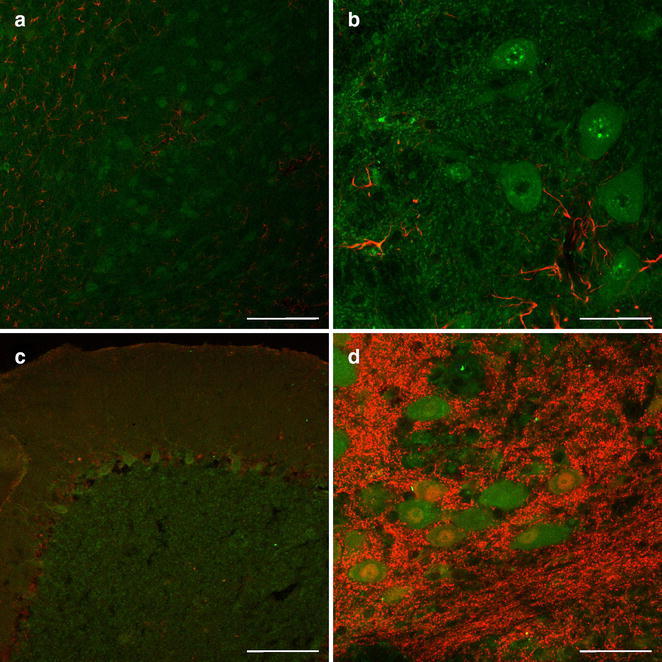
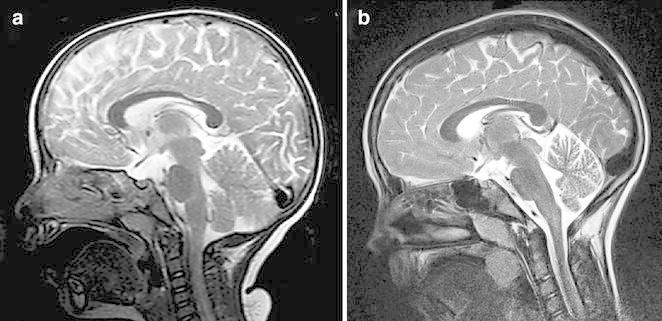
Autoimmune and paraneoplastic movement disorders are rare in childhood. Diagnosis often relies on clinical manifestations and clinicians' recognition. A 22-month-old girl at onset of opsoclonus-myoclonus syndrome (OMS) was followed for 8 years. Adenovirus (type C subtype 3) infection coincided with manifestation. Data on treatment, imaging and follow-up are provided. In the spinal fluid, elevated anti-rubella antibodies and oligoclonal bands were detected. An autoimmune process affecting mainly cerebellar neurons was revealed immunohistochemically. Moderately intense long-term immunosuppressive therapy resulted in a favorable clinical outcome. A video demonstrated severe OMS manifestations at onset, followed by nearly complete recovery after treatment. We describe the association of a parainfectious OMS and adenovirus infection; laboratory results indicate a non-specific humoral process affecting mainly cerebellar neurons. Our video documentation will aid to recognize this rare movement disorder and to initiate early treatment.
自身免疫性和副肿瘤性运动障碍在儿童时期较为罕见。诊断通常依赖于临床表现和临床医生的识别。一名22个月大的患有眼阵挛-肌阵挛综合征(OMS)的女童被随访了8年。腺病毒(C型3亚型)感染与症状出现同时发生。提供了治疗、影像学和随访数据。在脑脊液中,检测到抗风疹抗体升高和寡克隆带。免疫组织化学显示主要影响小脑神经元的自身免疫过程。适度强烈的长期免疫抑制治疗产生了良好的临床结果。一段视频展示了发病时严重的OMS表现,治疗后几乎完全恢复。我们描述了一种感染后OMS与腺病毒感染的关联;实验室结果表明主要影响小脑神经元的非特异性体液过程。我们的视频记录将有助于识别这种罕见的运动障碍并启动早期治疗。