Ye Fei, Xin Zhongshuai, Han Wei, Fan Jingjing, Yin Bin, Wu Shuzhen, Yang Wei, Yuan Jiangang, Qiang Boqin, Sun Wei, Peng Xiaozhong
The State Key Laboratory of Medical Molecular Biology, Department of Molecular Biology and Biochemistry, Institute of Basic Medical Sciences, Chinese Academy of Medical Sciences and Peking Union Medical College, Beijing, China.
Division of Hormone, National Institute for Food and Drug Control, Beijing, China.
PLoS One. 2015 Nov 6;10(11):e0142082. doi: 10.1371/journal.pone.0142082. eCollection 2015.
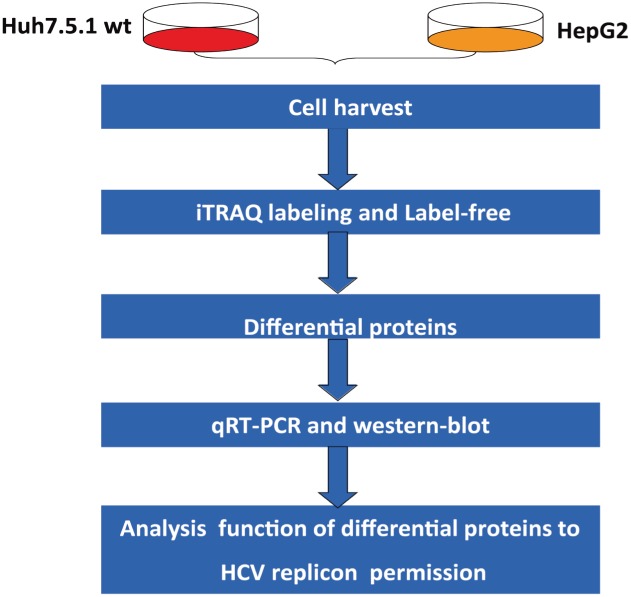
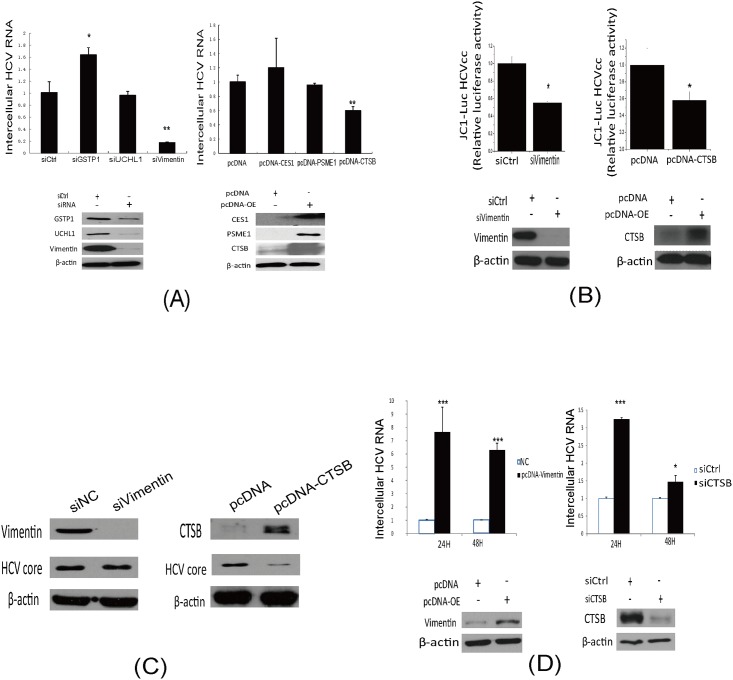
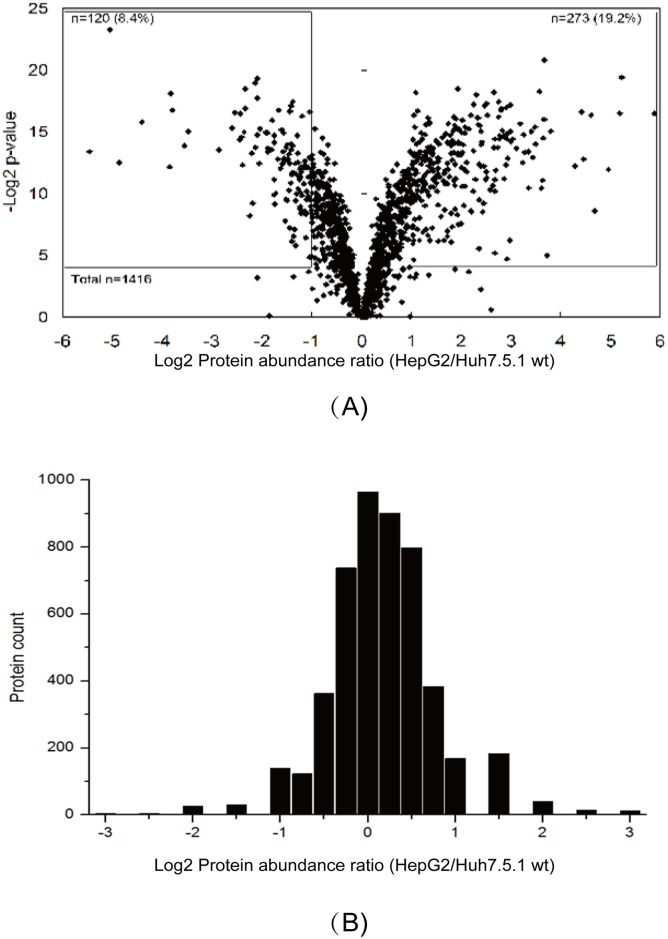
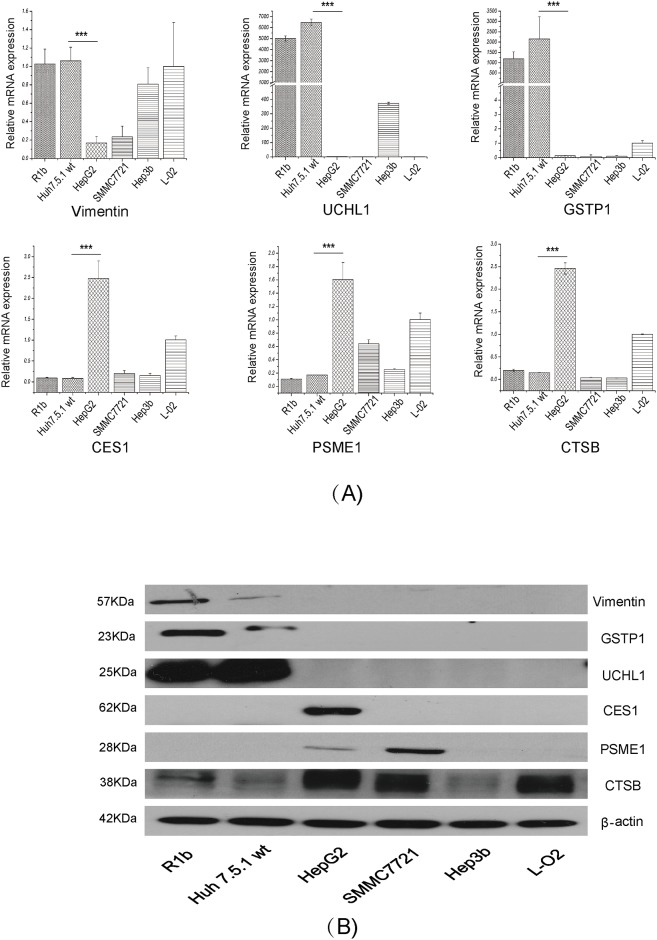
Chronic hepatitis C virus (HCV) infection is one of the leading causes of severe hepatitis. The molecular mechanisms underlying HCV replication and pathogenesis remain unclear. The development of the subgenome replicon model system significantly enhanced study of HCV. However, the permissiveness of the HCV subgenome replicon greatly differs among different hepatoma cell lines. Proteomic analysis of different permissive cell lines might provide new clues in understanding HCV replication. In this study, to detect potential candidates that might account for the differences in HCV replication. Label-free and iTRAQ labeling were used to analyze the differentially expressed protein profiles between Huh7.5.1 wt and HepG2 cells. A total of 4919 proteins were quantified in which 114 proteins were commonly identified as differentially expressed by both quantitative methods. A total of 37 differential proteins were validated by qRT-PCR. The differential expression of Glutathione S-transferase P (GSTP1), Ubiquitin carboxyl-terminal hydrolase isozyme L1 (UCHL1), carboxylesterase 1 (CES1), vimentin, Proteasome activator complex subunit1 (PSME1), and Cathepsin B (CTSB) were verified by western blot. And over-expression of CTSB or knock-down of vimentin induced significant changes to HCV RNA levels. Additionally, we demonstrated that CTSB was able to inhibit HCV replication and viral protein translation. These results highlight the potential role of CTSB and vimentin in virus replication.
慢性丙型肝炎病毒(HCV)感染是导致严重肝炎的主要原因之一。HCV复制和发病机制的分子机制仍不清楚。亚基因组复制子模型系统的发展显著增强了对HCV的研究。然而,HCV亚基因组复制子在不同肝癌细胞系中的允许性差异很大。对不同允许性细胞系进行蛋白质组学分析可能为理解HCV复制提供新线索。在本研究中,为了检测可能导致HCV复制差异的潜在候选物。采用无标记和iTRAQ标记分析Huh7.5.1 wt细胞和HepG2细胞之间差异表达的蛋白质谱。共定量了4919种蛋白质,其中114种蛋白质被两种定量方法共同鉴定为差异表达。通过qRT-PCR验证了37种差异蛋白。通过蛋白质免疫印迹法验证了谷胱甘肽S-转移酶P(GSTP1)、泛素羧基末端水解酶同工酶L1(UCHL1)、羧酸酯酶1(CES1)、波形蛋白、蛋白酶体激活复合物亚基1(PSME1)和组织蛋白酶B(CTSB)的差异表达。CTSB的过表达或波形蛋白的敲低导致HCV RNA水平发生显著变化。此外,我们证明CTSB能够抑制HCV复制和病毒蛋白翻译。这些结果突出了CTSB和波形蛋白在病毒复制中的潜在作用。