Kelbert Patricia, Droege Gabriele, Barker Katharine, Braak Kyle, Cawsey E Margaret, Coddington Jonathan, Robertson Tim, Whitacre Jamie, Güntsch Anton
Botanic Garden and Botanical Museum Berlin-Dahlem, Freie Universität Berlin, Berlin, Germany.
National Museum of Natural History, Smithsonian Institution, Washington DC, United States of America.
PLoS One. 2015 Nov 6;10(11):e0142240. doi: 10.1371/journal.pone.0142240. eCollection 2015.
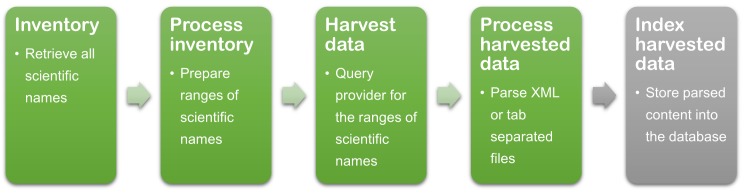
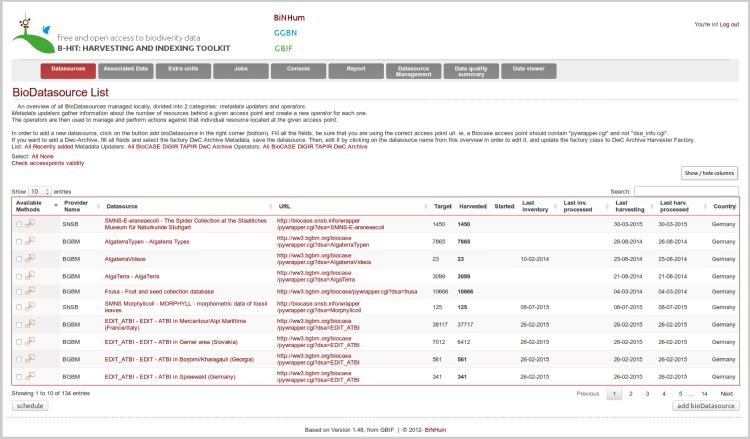
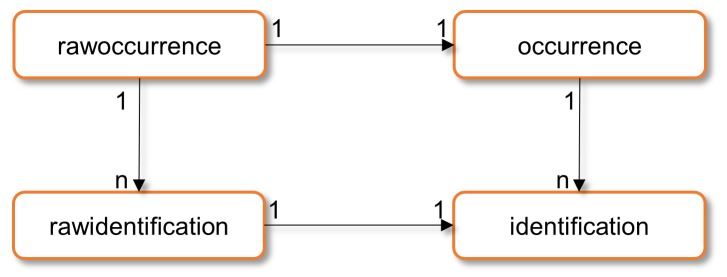
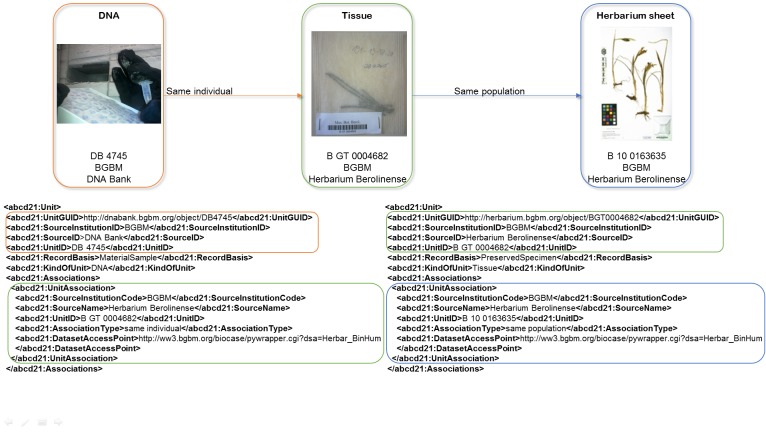
With the rapidly growing number of data publishers, the process of harvesting and indexing information to offer advanced search and discovery becomes a critical bottleneck in globally distributed primary biodiversity data infrastructures. The Global Biodiversity Information Facility (GBIF) implemented a Harvesting and Indexing Toolkit (HIT), which largely automates data harvesting activities for hundreds of collection and observational data providers. The team of the Botanic Garden and Botanical Museum Berlin-Dahlem has extended this well-established system with a range of additional functions, including improved processing of multiple taxon identifications, the ability to represent associations between specimen and observation units, new data quality control and new reporting capabilities. The open source software B-HIT can be freely installed and used for setting up thematic networks serving the demands of particular user groups.
随着数据发布者数量的迅速增长,收集和索引信息以提供高级搜索和发现功能的过程成为全球分布式原生生物多样性数据基础设施中的一个关键瓶颈。全球生物多样性信息机构(GBIF)实施了一个收集和索引工具包(HIT),该工具包在很大程度上实现了数百个收集和观测数据提供者的数据收集活动自动化。柏林 - 达勒姆植物园和植物博物馆的团队为这个成熟的系统扩展了一系列附加功能,包括改进对多个分类群鉴定的处理、表示标本与观测单位之间关联的能力、新的数据质量控制和新的报告功能。开源软件B - HIT可以免费安装并用于建立满足特定用户群体需求的主题网络。