Zheng Xiaobin, Yue Sibiao, Chen Haiyang, Weber Blake, Jia Junling, Zheng Yixian
Department of Embryology, Carnegie Institution for Science, Baltimore, MD 21218, USA.
Department of Embryology, Carnegie Institution for Science, Baltimore, MD 21218, USA; Life Sciences Institute and Innovation Center for Cell Signaling Network, Zhejiang University, Hangzhou, Zhejiang 310058, PRC.
Cell Rep. 2015 Nov 17;13(7):1505-1518. doi: 10.1016/j.celrep.2015.10.004. Epub 2015 Nov 5.
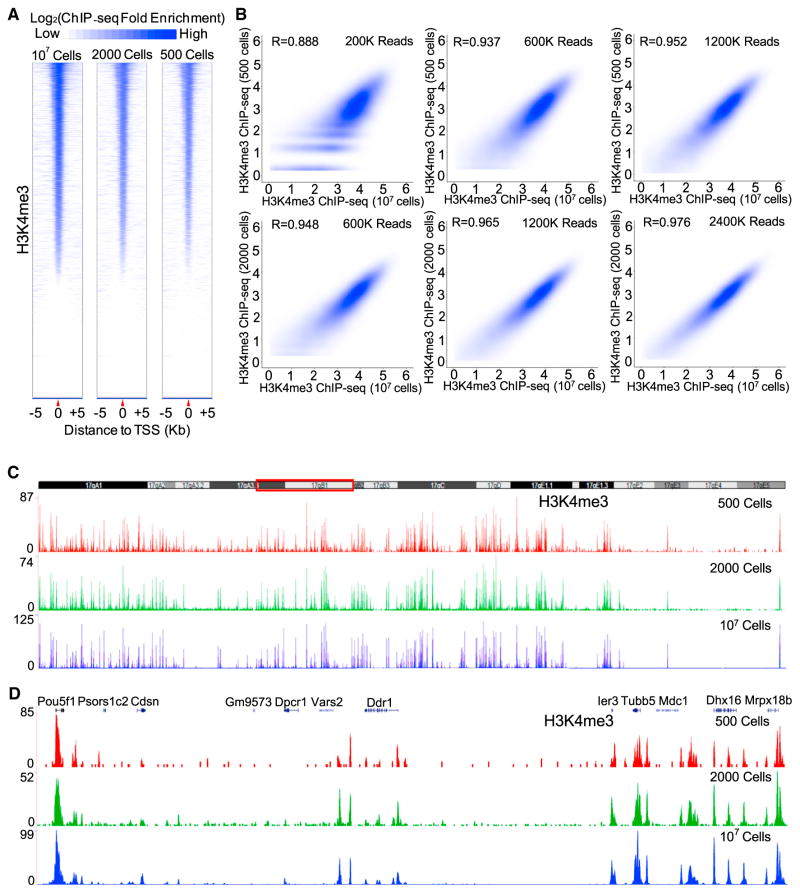
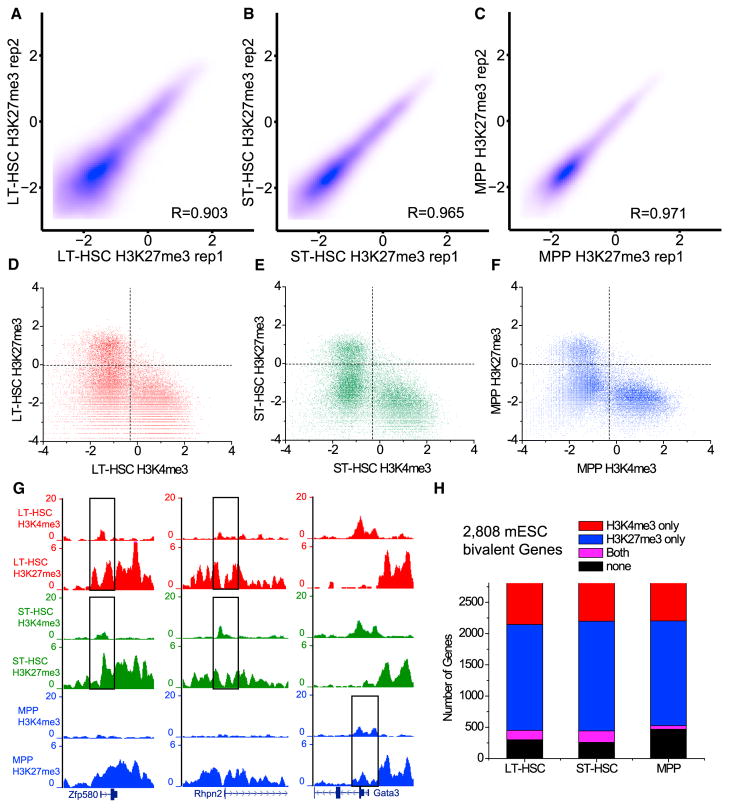
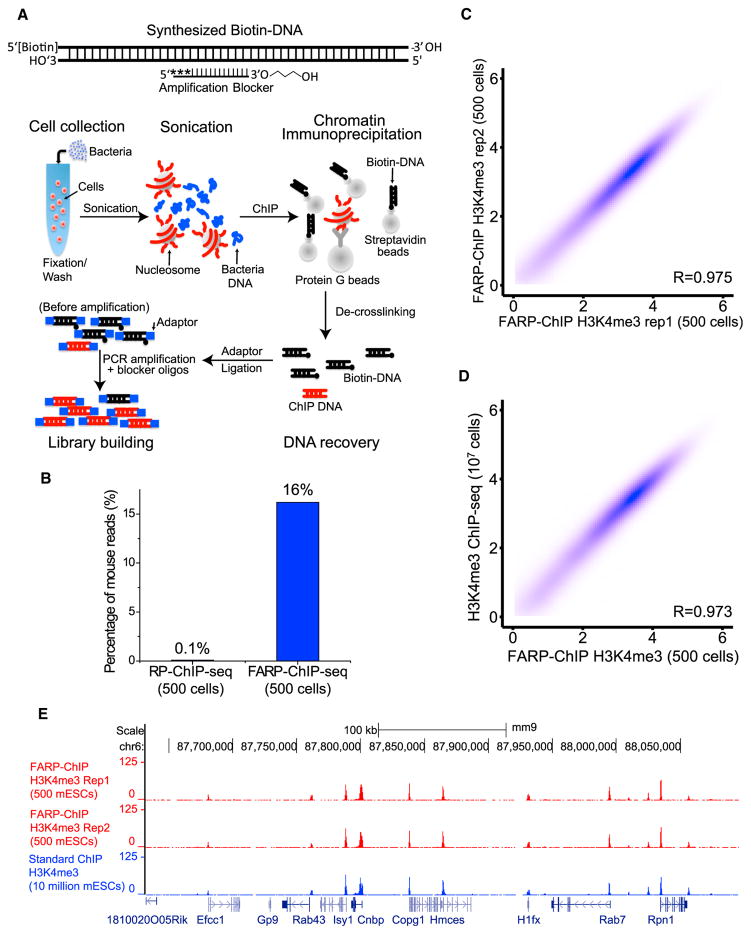
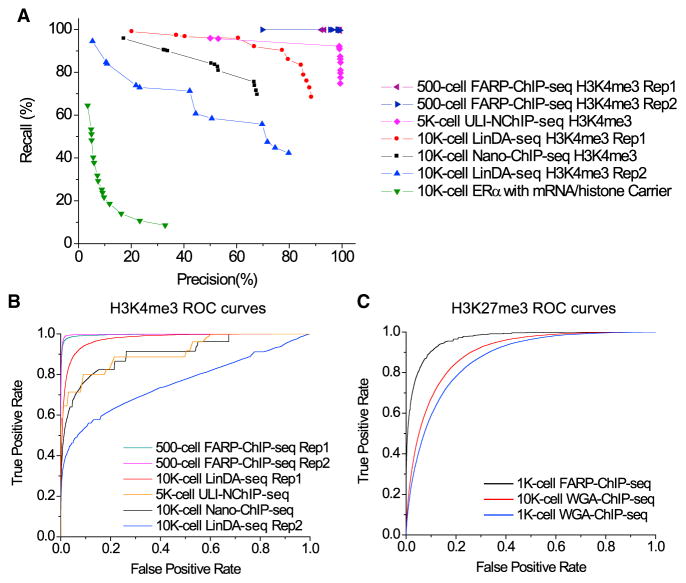
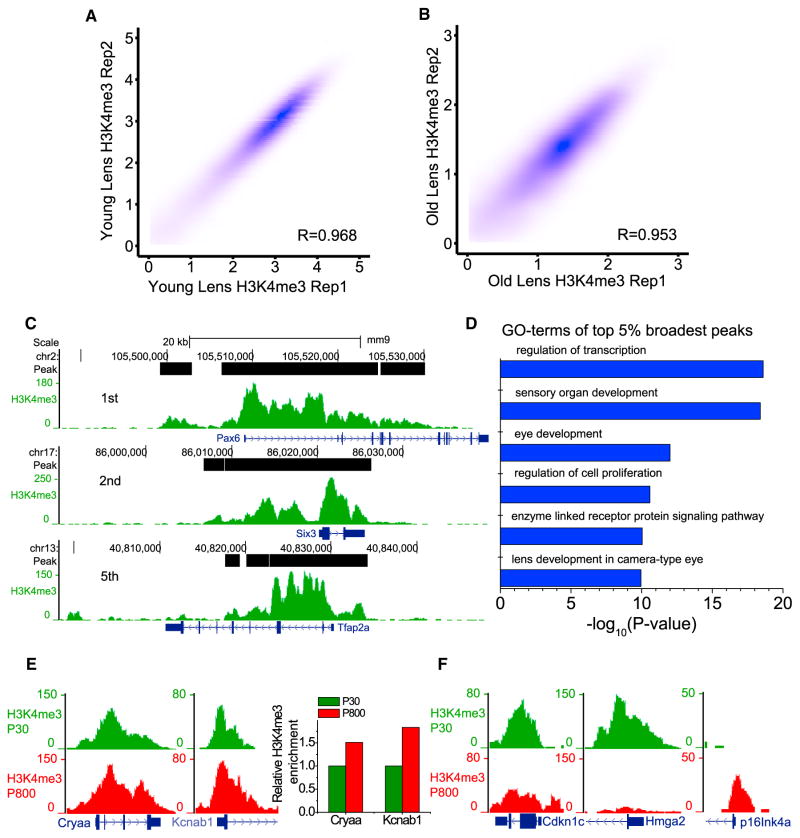
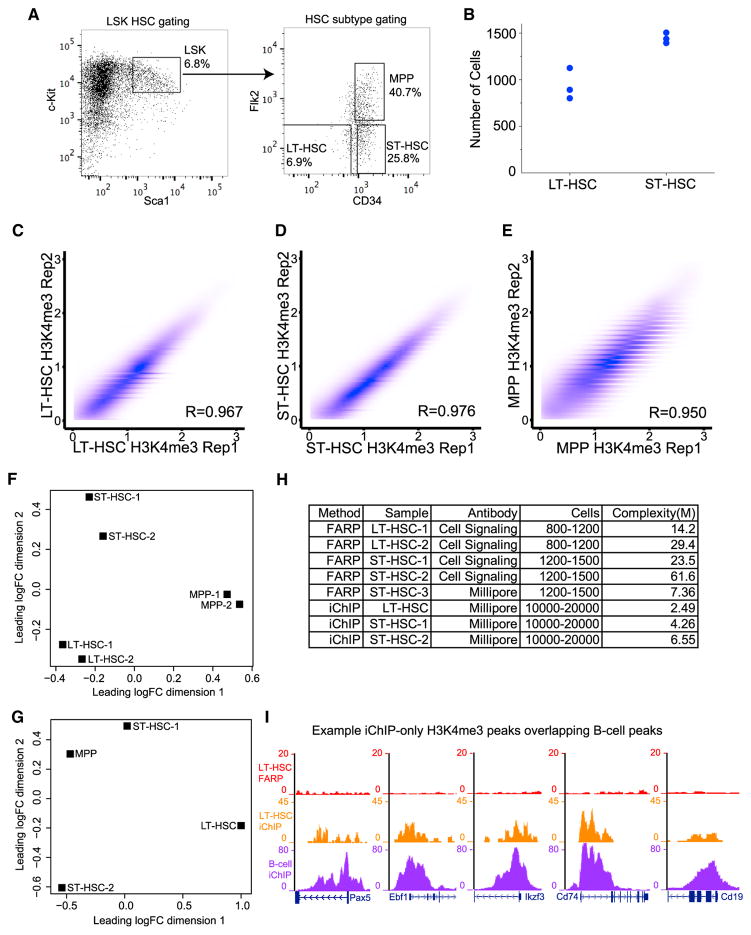
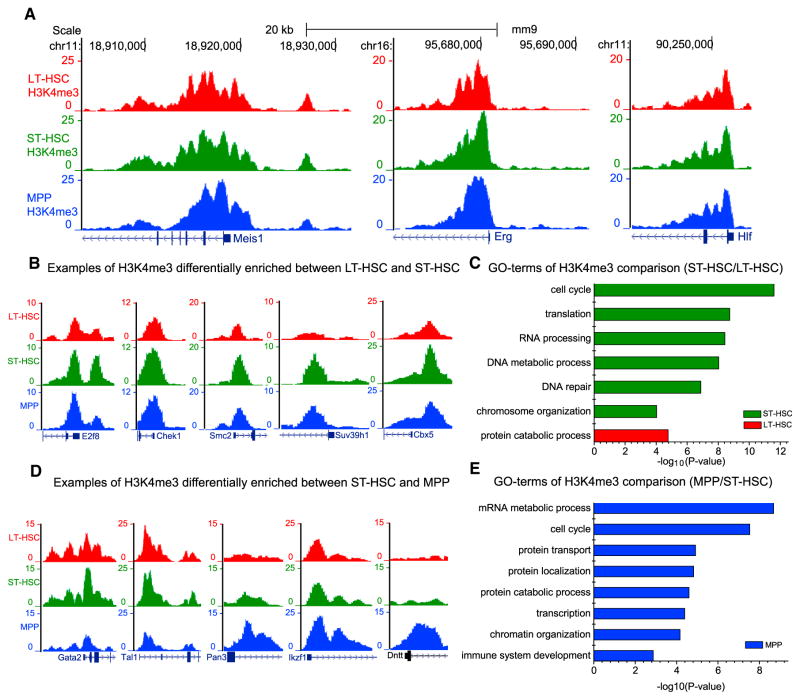
Understanding how chromatin modification regulates development and disease can be limited by available material. Despite recent progress, balancing high-quality and reliable mapping using chromatin-immunoprecipitation-based deep sequencing (ChIP-seq) remains a challenge. We report two techniques, recovery via protection (RP)-ChIP-seq and favored amplification RP-ChIP-seq (FARP-ChIP-seq), that provide reproducible mapping in as few as 500 cells. RP-ChIP-seq allows detection of age-associated epigenetic changes in a single mouse lens, whereas FARP-ChIP-seq accurately maps histone H3 lysine 4 trimethylation (H3K4me3) and H3K27me3 in long-term hematopoietic stem cells (LT-HSCs), short-term HSCs (ST-HSCs), and multi-potent progenitors (MPPs) from one mouse. These datasets not only highlight genes that may be involved in lens aging but also indicate a lack of H3K4me3/H3K27me3 bivalency on hematopoietic genes in HSCs.
由于可获取的材料有限,对染色质修饰如何调控发育和疾病的理解可能会受到限制。尽管最近取得了进展,但使用基于染色质免疫沉淀的深度测序(ChIP-seq)来平衡高质量和可靠的图谱绘制仍然是一项挑战。我们报告了两种技术,即通过保护进行回收(RP)-ChIP-seq和偏好扩增RP-ChIP-seq(FARP-ChIP-seq),它们在仅500个细胞中就能提供可重复的图谱绘制。RP-ChIP-seq能够检测单个小鼠晶状体中与年龄相关的表观遗传变化,而FARP-ChIP-seq则能准确地绘制来自一只小鼠的长期造血干细胞(LT-HSC)、短期造血干细胞(ST-HSC)和多能祖细胞(MPP)中的组蛋白H3赖氨酸4三甲基化(H3K4me3)和H3K27me3图谱。这些数据集不仅突出了可能参与晶状体老化的基因,还表明造血干细胞中造血基因缺乏H3K4me3/H3K27me3双价性。