
人类蛋白质组、胃肠道微生物群和病原菌之间广泛的T细胞表位库共享:对自身定义的启示
Extensive T-Cell Epitope Repertoire Sharing among Human Proteome, Gastrointestinal Microbiome, and Pathogenic Bacteria: Implications for the Definition of Self.
作者信息
Bremel Robert D, Homan E Jane
机构信息
EigenBio LLC , Madison, WI , USA.
出版信息
Front Immunol. 2015 Oct 22;6:538. doi: 10.3389/fimmu.2015.00538. eCollection 2015.
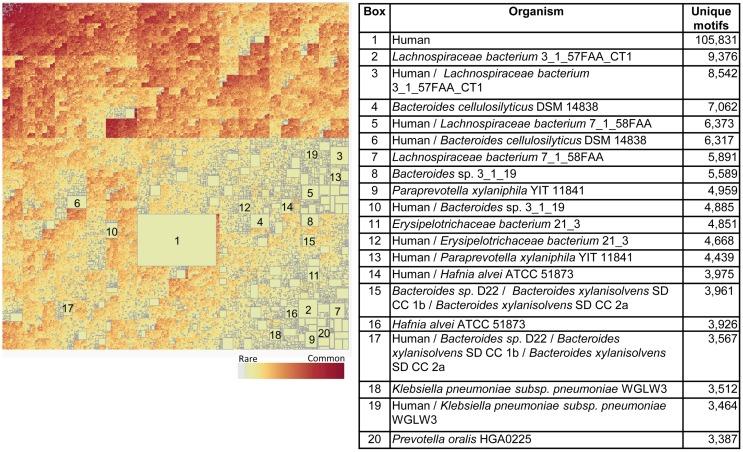
T-cell receptor binding to MHC-bound peptides plays a key role in discrimination between self and non-self. Only a subset, typically a pentamer, of amino acids in a MHC-bound peptide form the motif exposed to the T-cell receptor. We categorize and compare the T-cell exposed amino acid motif repertoire of the total proteomes of two groups of bacteria, comprising pathogens and gastrointestinal microbiome organisms, with the human proteome and immunoglobulins. Given the maximum 20(5), or 3.2 million of such motifs that bind T-cell receptors, there is considerable overlap in motif usage. We show that the human proteome, exclusive of immunoglobulins, only comprises three quarters of the possible motifs, of which 65.3% are also present in both composite bacterial proteomes. Very few motifs are unique to the human proteome. Immunoglobulin variable regions carry a broad diversity of T-cell exposed motifs (TCEMs) that provides a stratified random sample of the motifs found in pathogens, microbiome, and the human proteome. Individual bacterial genera and species vary in the content of immunoglobulin and human proteome matched motifs that they carry. Mycobacteria and Burkholderia spp carry a particularly high content of such matched motifs. Some bacteria retain a unique motif signature and motif sharing pattern with the human proteome. The implication is that distinguishing self from non-self does not depend on individual TCEMs, but on a complex and dynamic overlay of signals wherein the same TCEM may play different roles in different organisms, and the frequency with which a particular TCEM appears influences its effect. The patterns observed provide clues to bacterial immune evasion and to strategies for intervention, including vaccine design. The breadth and distinct frequency patterns of the immunoglobulin-derived peptides suggest a role of immunoglobulins in maintaining a broadly responsive T-cell repertoire.
T细胞受体与主要组织相容性复合体(MHC)结合的肽段之间的相互作用在区分自我与非自我方面起着关键作用。在与MHC结合的肽段中,通常只有一小部分氨基酸(通常为五聚体)形成暴露于T细胞受体的基序。我们对两组细菌(包括病原体和胃肠道微生物群落生物)的总蛋白质组中暴露于T细胞的氨基酸基序库与人类蛋白质组和免疫球蛋白进行了分类和比较。考虑到与T细胞受体结合的此类基序最多有20^5(即320万个),基序的使用存在相当大的重叠。我们发现,不包括免疫球蛋白的人类蛋白质组仅包含四分之三的可能基序,其中65.3%也存在于两种复合细菌蛋白质组中。人类蛋白质组特有的基序非常少。免疫球蛋白可变区携带多种多样的暴露于T细胞的基序(TCEMs),这些基序提供了在病原体、微生物群落和人类蛋白质组中发现的基序的分层随机样本。不同的细菌属和种所携带的与免疫球蛋白和人类蛋白质组匹配的基序含量各不相同。分枝杆菌属和伯克霍尔德菌属携带的此类匹配基序含量特别高。一些细菌与人类蛋白质组保留了独特的基序特征和基序共享模式。这意味着区分自我与非自我并不取决于单个TCEM,而是取决于信号的复杂动态叠加,其中相同的TCEM在不同生物体中可能发挥不同作用,特定TCEM出现的频率会影响其效果。观察到的模式为细菌免疫逃逸和干预策略(包括疫苗设计)提供了线索。免疫球蛋白衍生肽段的广度和独特频率模式表明免疫球蛋白在维持广泛反应性的T细胞库中发挥作用。


 Zotero 插件