Werner Stefan, Stamm Hauke, Pandjaitan Mutiha, Kemming Dirk, Brors Benedikt, Pantel Klaus, Wikman Harriet
Department of Tumor Biology, University Medical Center Hamburg-Eppendorf, Martinistrasse 52, 20246, Hamburg, Germany.
European Laboratory Association, Ibbenbüren, Germany.
BMC Cancer. 2015 Nov 11;15:896. doi: 10.1186/s12885-015-1907-4.
Disseminated tumor cells (DTCs) can be detected using ultrasensitive immunocytochemical assays and their presence in the bone marrow can predict the subsequent occurrence of overt metastasis formation and metastatic relapse. Using expression profiling on early stage primary breast tumors, low IRX2 expression was previously shown to be associated with the presence of DTCs in the bone marrow, suggesting a possible role of IRX2 in the early steps of metastasis formation. The purpose of this study is to gain insights into the significance of IRX2 protein function in the progression of breast cancer.
To assess the physiological relevance of IRX2 in breast cancer, we evaluated IRX2 expression in a large breast cancer cohort (n = 1992). Additionally, constitutive IRX2 over expression was established in BT-549 and Hs578T breast cancer cell lines. Subsequently we analyzed whether IRX2 overexpression effects chemokine secretion and cellular motility of these cells.
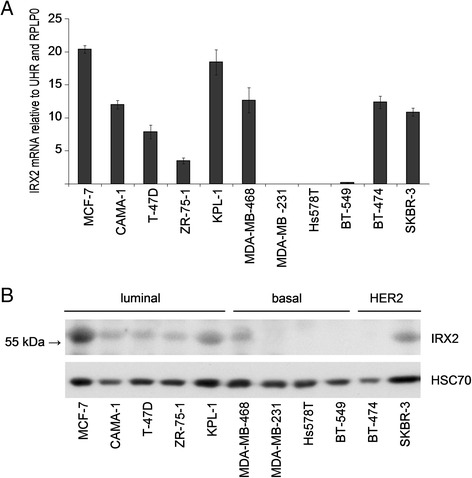
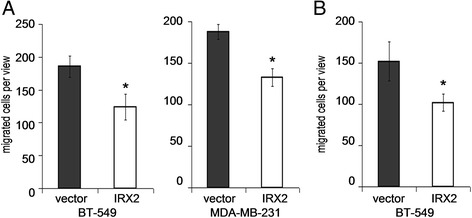
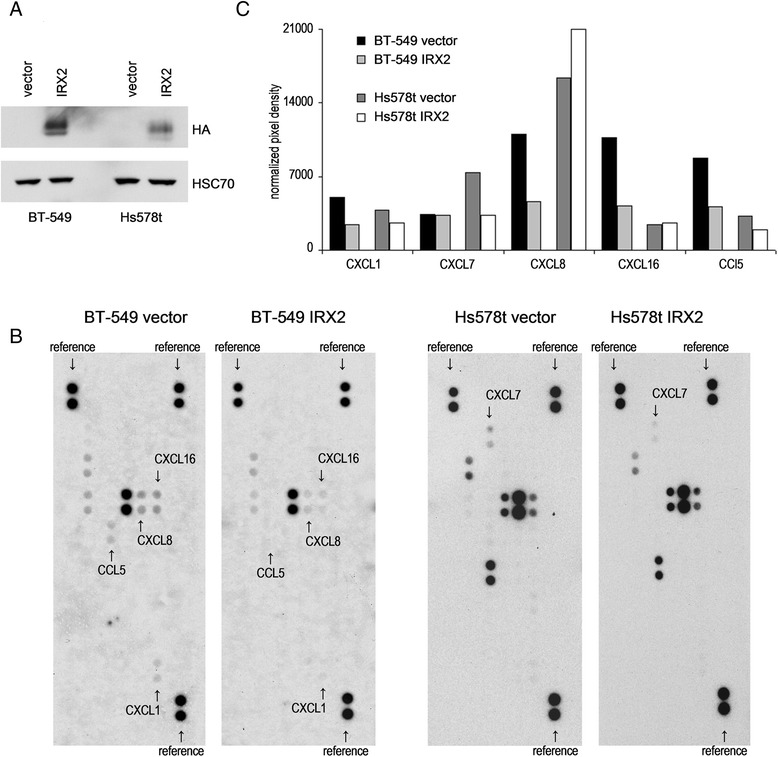
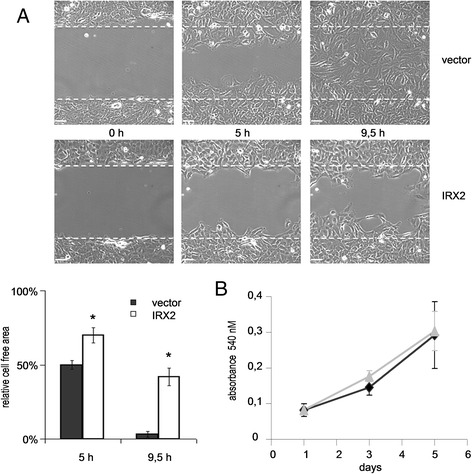
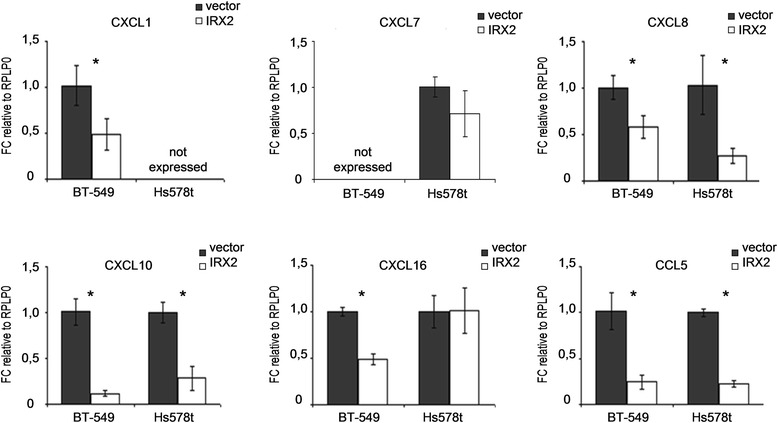
Low IRX2 mRNA expression was found to correlate with high tumor grade, positive lymph node status, negative hormone receptor status, and basal type of primary breast tumors. Also in cell lines low IRX2 expression was associated with mainly basal breast cancer cell lines. The functional studies show that overexpression of the IRX2 transcription factor in basal cell lines suppressed secretion of the pro-metastatic chemokines and inhibited cellular motility but did not influence cell proliferation.
Our results imply that the IRX2 transcription factor might represent a novel metastasis associated protein that acts as a negative regulator of cellular motility and as a repressor of chemokine expression. Loss of IRX2 expression could therefore contribute to early hematogenous dissemination of breast cancer by sustaining chemokine secretion and enabling mobilization of tumor cells.
使用超灵敏免疫细胞化学检测法可检测到播散肿瘤细胞(DTCs),其在骨髓中的存在可预测随后明显转移灶的形成及转移复发。通过对早期原发性乳腺癌进行表达谱分析,先前研究表明低IRX2表达与骨髓中DTCs的存在相关,提示IRX2在转移形成的早期步骤中可能发挥作用。本研究的目的是深入了解IRX2蛋白功能在乳腺癌进展中的意义。
为评估IRX2在乳腺癌中的生理相关性,我们在一个大型乳腺癌队列(n = 1992)中评估了IRX2的表达。此外,在BT - 549和Hs578T乳腺癌细胞系中建立了IRX2的组成型过表达。随后我们分析了IRX2过表达是否影响这些细胞的趋化因子分泌和细胞运动性。
发现低IRX2 mRNA表达与高肿瘤分级、阳性淋巴结状态、阴性激素受体状态以及原发性乳腺癌的基底型相关。在细胞系中,低IRX2表达也主要与基底型乳腺癌细胞系相关。功能研究表明,在基底细胞系中IRX2转录因子的过表达抑制了促转移趋化因子的分泌并抑制了细胞运动性,但不影响细胞增殖。
我们的结果表明,IRX2转录因子可能代表一种新型的转移相关蛋白,它作为细胞运动性的负调节因子和趋化因子表达的抑制因子发挥作用。因此,IRX2表达的缺失可能通过维持趋化因子分泌和促使肿瘤细胞迁移而导致乳腺癌早期血行播散。