Whitehorn James, Nguyen Chau Van Vinh, Khanh Lam Phung, Kien Duong Thi Hue, Quyen Nguyen Than Ha, Tran Nguyen Thi Thanh, Hang Nguyen Thuy, Truong Nguyen Thanh, Hue Tai Luong Thi, Cam Huong Nguyen Thi, Nhon Vo Thanh, Van Tram Ta, Farrar Jeremy, Wolbers Marcel, Simmons Cameron P, Wills Bridget
London School of Hygiene and Tropical Medicine, United Kingdom.
Oxford University Clinical Research Unit.
Clin Infect Dis. 2016 Feb 15;62(4):468-476. doi: 10.1093/cid/civ949. Epub 2015 Nov 12.
Dengue endangers billions of people in the tropical world, yet no therapeutic is currently available. In part, the severe manifestations of dengue reflect inflammatory processes affecting the vascular endothelium. In addition to lipid lowering, statins have pleiotropic effects that improve endothelial function, and epidemiological studies suggest that outcomes from a range of acute inflammatory syndromes are improved in patients already on statin therapy.
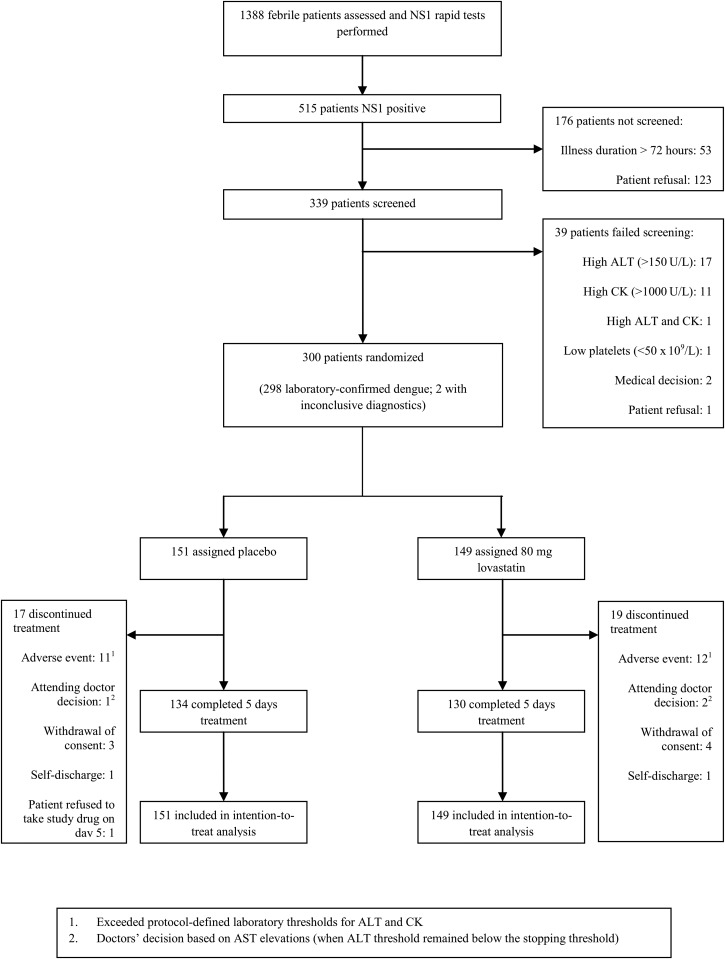
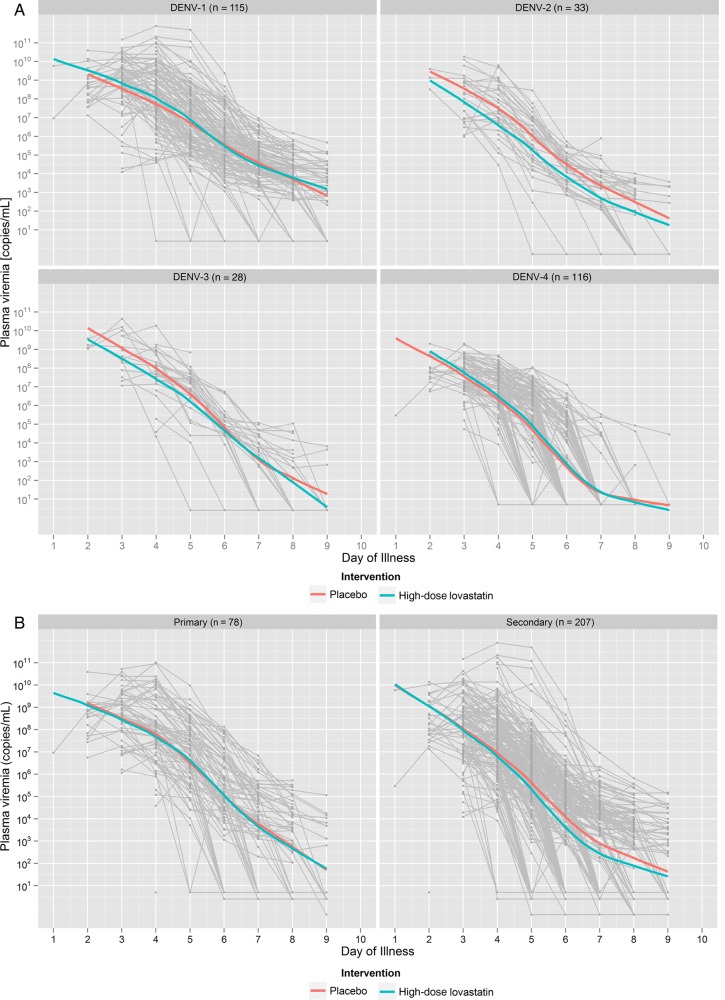
Following satisfactory review of a short pilot phase (40 mg lovastatin vs placebo in 30 cases), we performed a randomized, double-blind, placebo-controlled trial of 5 days of 80 mg lovastatin vs placebo in 300 Vietnamese adults with a positive dengue NS1 rapid test presenting within 72 hours of fever onset. The primary outcome was safety. Secondary outcomes included comparisons of disease progression rates, fever clearance times, and measures of plasma viremia and quality of life between the treatment arms.
Adverse events occurred with similar frequency in both groups (97/151 [64%] placebo vs 82/149 [55%] lovastatin; P = .13), and were in keeping with the characteristic clinical and laboratory features of acute dengue. We also observed no difference in serious adverse events or any of the secondary outcome measures.
We found lovastatin to be safe and well tolerated in adults with dengue. However, although the study was not powered to address efficacy, we found no evidence of a beneficial effect on any of the clinical manifestations or on dengue viremia. Continuing established statin therapy in patients who develop dengue is safe.Chinese Clinical Trials Registration. ISRCTN03147572.
登革热危及热带地区数十亿人口,但目前尚无治疗方法。登革热的严重表现部分反映了影响血管内皮的炎症过程。除了降低血脂外,他汀类药物还具有改善内皮功能的多效性作用,流行病学研究表明,已接受他汀类药物治疗的患者在一系列急性炎症综合征中的预后得到改善。
在对一个短期试点阶段(30例患者使用40mg洛伐他汀与安慰剂对比)进行满意的评估之后,我们对300名越南成年人进行了一项随机、双盲、安慰剂对照试验,这些患者在发热开始72小时内登革热NS1快速检测呈阳性,给予80mg洛伐他汀或安慰剂,为期5天。主要结局是安全性。次要结局包括比较治疗组之间的疾病进展率、热退时间、血浆病毒血症指标和生活质量。
两组不良事件发生频率相似(安慰剂组97/151 [64%] ,洛伐他汀组82/149 [55%];P = 0.13),且与急性登革热的特征性临床和实验室特征相符。我们还观察到严重不良事件或任何次要结局指标均无差异。
我们发现洛伐他汀在登革热成人患者中安全且耐受性良好。然而,尽管该研究没有足够的效力来评估疗效,但我们没有发现对任何临床表现或登革热病毒血症有有益影响的证据。登革热患者继续进行已确立的他汀类药物治疗是安全的。中国临床试验注册。 国际标准随机对照试验编号:ISRCTN03147572 。