Martins Nadini Oliveira, Souza Renata Torres de, Cordero Esteban Mauricio, Maldonado Danielle Cortez, Cortez Cristian, Marini Marjorie Mendes, Ferreira Eden Ramalho, Bayer-Santos Ethel, Almeida Igor Correia de, Yoshida Nobuko, Silveira José Franco da
Departamento de Microbiologia, Imunologia e Parasitologia, Escola Paulista de Medicina, UNIFESP, São Paulo, Brasil.
The Border Biomedical Research Center, Department of Biological Sciences, University of Texas at El Paso, El Paso, Texas, United States of America.
PLoS Negl Trop Dis. 2015 Nov 13;9(11):e0004216. doi: 10.1371/journal.pntd.0004216. eCollection 2015 Nov.
The surface coat of Trypanosoma cruzi is predominantly composed of glycosylphosphatidylinositol-anchored proteins, which have been extensively characterized. However, very little is known about less abundant surface proteins and their role in host-parasite interactions.
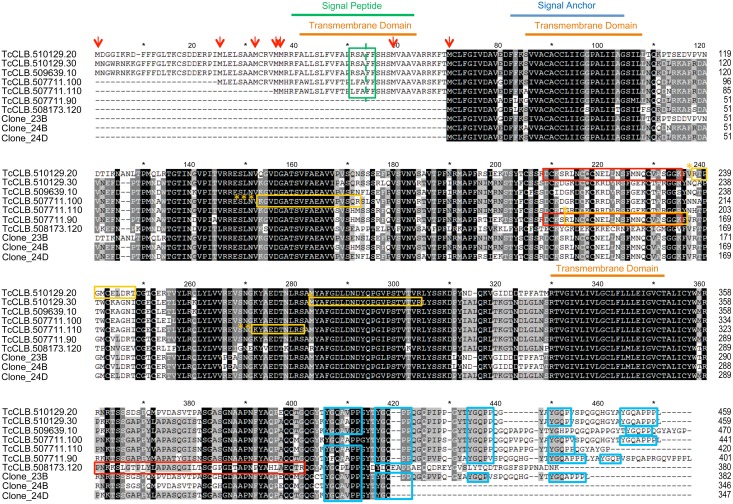
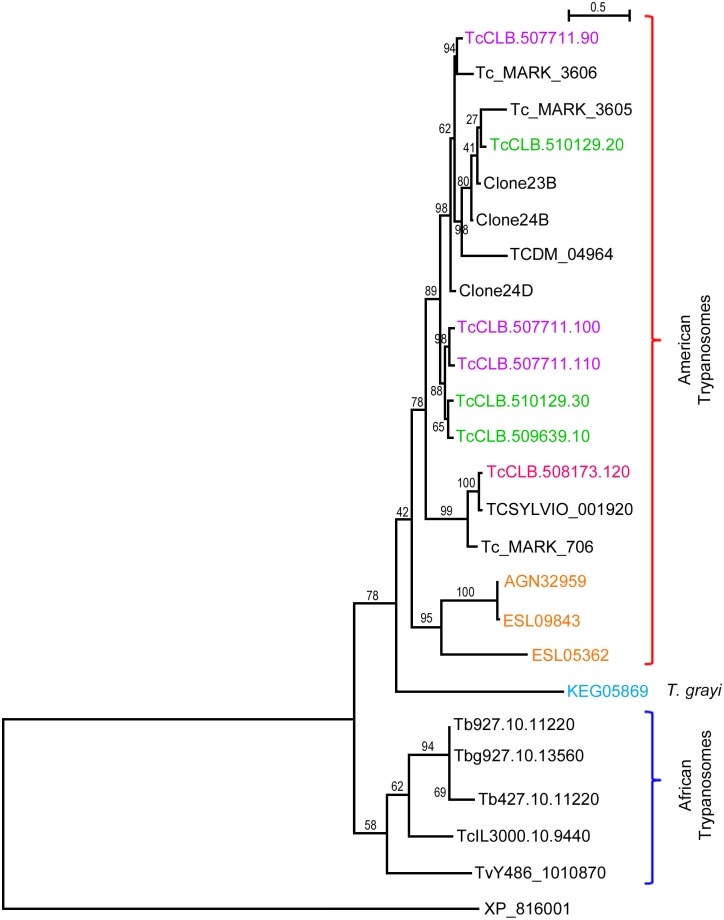
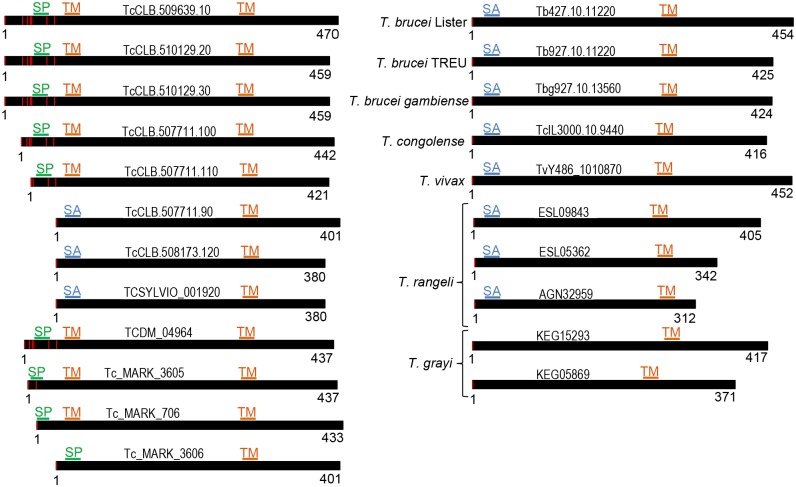
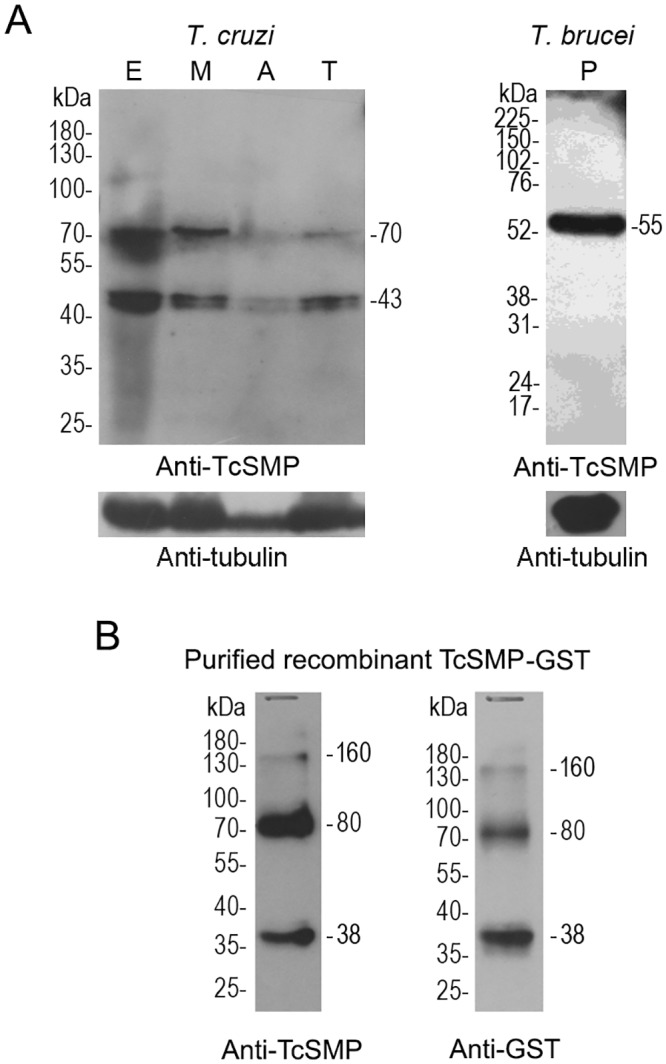
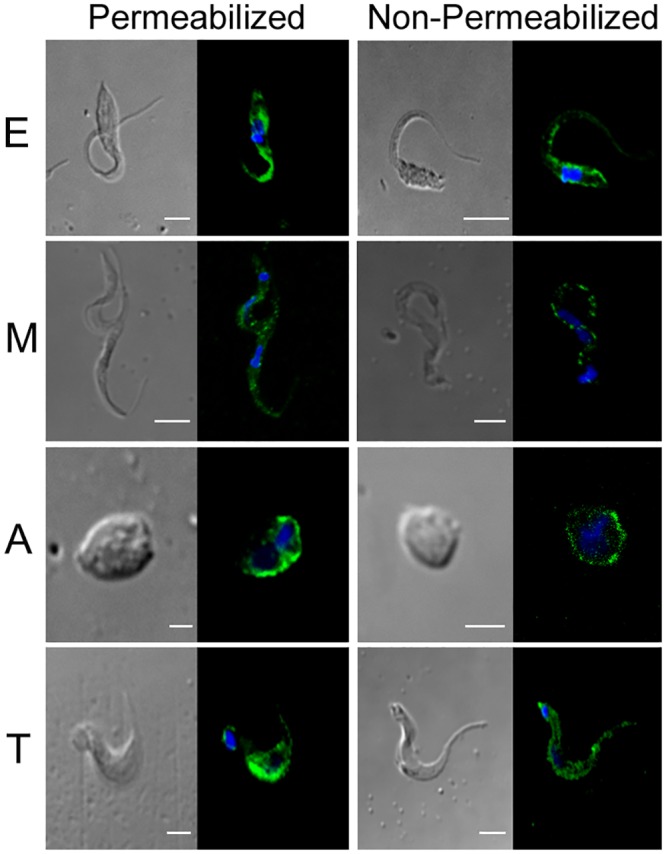
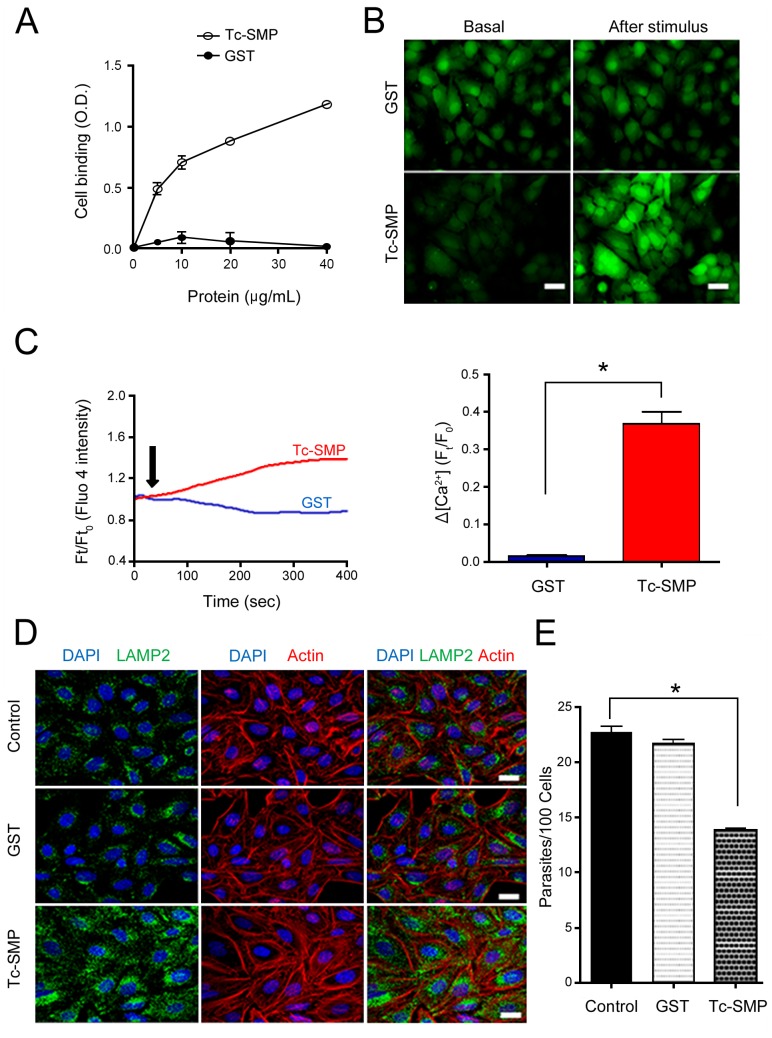
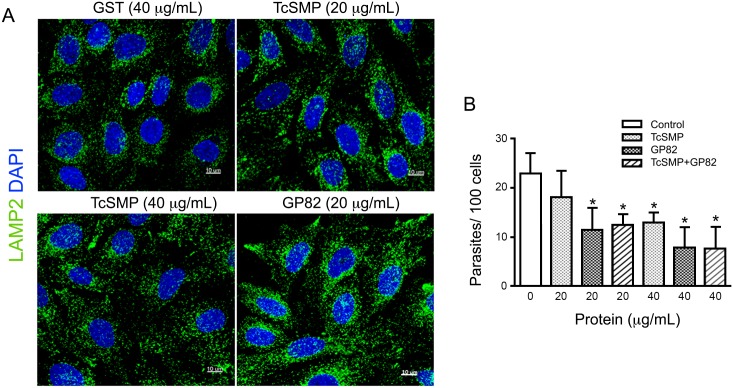
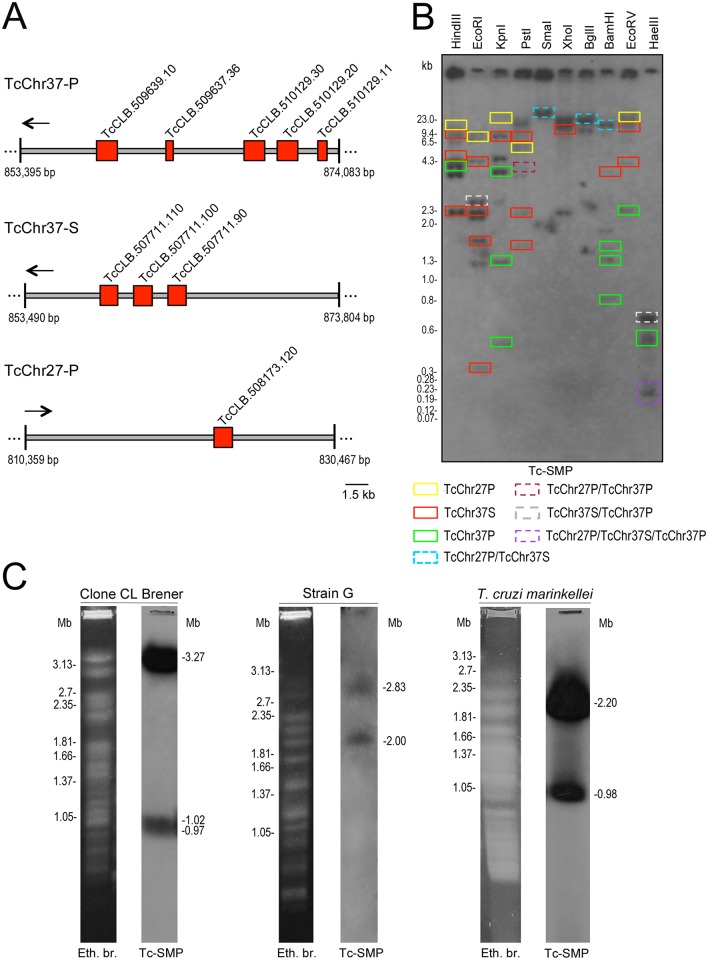
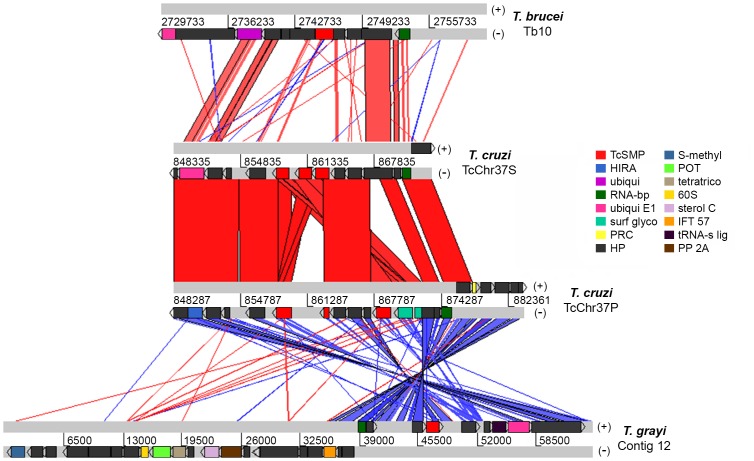
METHODOLOGY/ PRINCIPAL FINDINGS: Here, we described a novel family of T. cruzi surface membrane proteins (TcSMP), which are conserved among different T. cruzi lineages and have orthologs in other Trypanosoma species. TcSMP genes are densely clustered within the genome, suggesting that they could have originated by tandem gene duplication. Several lines of evidence indicate that TcSMP is a membrane-spanning protein located at the cellular surface and is released into the extracellular milieu. TcSMP exhibited the key elements typical of surface proteins (N-terminal signal peptide or signal anchor) and a C-terminal hydrophobic sequence predicted to be a trans-membrane domain. Immunofluorescence of live parasites showed that anti-TcSMP antibodies clearly labeled the surface of all T. cruzi developmental forms. TcSMP peptides previously found in a membrane-enriched fraction were identified by proteomic analysis in membrane vesicles as well as in soluble forms in the T. cruzi secretome. TcSMP proteins were also located intracellularly likely associated with membrane-bound structures. We demonstrated that TcSMP proteins were capable of inhibiting metacyclic trypomastigote entry into host cells. TcSMP bound to mammalian cells and triggered Ca2+ signaling and lysosome exocytosis, events that are required for parasitophorous vacuole biogenesis. The effects of TcSMP were of lower magnitude compared to gp82, the major adhesion protein of metacyclic trypomastigotes, suggesting that TcSMP may play an auxiliary role in host cell invasion.
CONCLUSION/SIGNIFICANCE: We hypothesized that the productive interaction of T. cruzi with host cells that effectively results in internalization may depend on diverse adhesion molecules. In the metacyclic forms, the signaling induced by TcSMP may be additive to that triggered by the major surface molecule gp82, further increasing the host cell responses required for infection.
克氏锥虫的表面被膜主要由糖基磷脂酰肌醇锚定蛋白组成,这些蛋白已被广泛表征。然而,对于丰度较低的表面蛋白及其在宿主 - 寄生虫相互作用中的作用知之甚少。
方法/主要发现:在此,我们描述了一个新的克氏锥虫表面膜蛋白家族(TcSMP),其在不同的克氏锥虫谱系中保守,并且在其他锥虫物种中有直系同源物。TcSMP基因在基因组中密集聚类,表明它们可能起源于串联基因复制。多条证据表明TcSMP是一种跨膜蛋白,位于细胞表面并释放到细胞外环境中。TcSMP展示了表面蛋白的典型关键元件(N端信号肽或信号锚)以及预测为跨膜结构域的C端疏水序列。活寄生虫的免疫荧光显示,抗TcSMP抗体清晰地标记了所有克氏锥虫发育形式的表面。先前在富含膜的组分中发现的TcSMP肽通过蛋白质组学分析在膜泡以及克氏锥虫分泌组的可溶性形式中被鉴定出来。TcSMP蛋白也位于细胞内,可能与膜结合结构相关。我们证明TcSMP蛋白能够抑制循环后期锥鞭毛体进入宿主细胞。TcSMP与哺乳动物细胞结合并触发Ca2+信号传导和溶酶体胞吐作用,这些是寄生泡生物发生所必需的事件。与循环后期锥鞭毛体的主要粘附蛋白gp82相比,TcSMP的作用程度较低,表明TcSMP可能在宿主细胞入侵中起辅助作用。
结论/意义:我们推测克氏锥虫与宿主细胞有效导致内化的有效相互作用可能依赖于多种粘附分子。在循环后期形式中,TcSMP诱导的信号传导可能与主要表面分子gp82触发的信号传导相加,进一步增加感染所需的宿主细胞反应。