Tilly Ann-Kathrin, Thiede Jenny, Metwally Nahla, Lubiana Pedro, Bachmann Anna, Roeder Thomas, Rockliffe Nichola, Lorenzen Stephan, Tannich Egbert, Gutsmann Thomas, Bruchhaus Iris
Bernhard Nocht Institute for Tropical Medicine, Bernhard-Nocht-Str. 74, 20359 Hamburg, Germany.
Zoological Institute, Molecular Physiology, Christian-Albrechts University Kiel, Olshausenstraße 40, 24098 Kiel, Germany.
Sci Rep. 2015 Nov 16;5:16766. doi: 10.1038/srep16766.
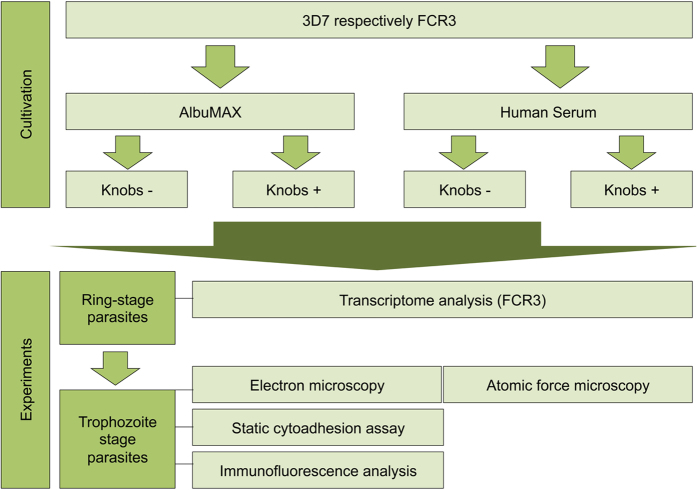
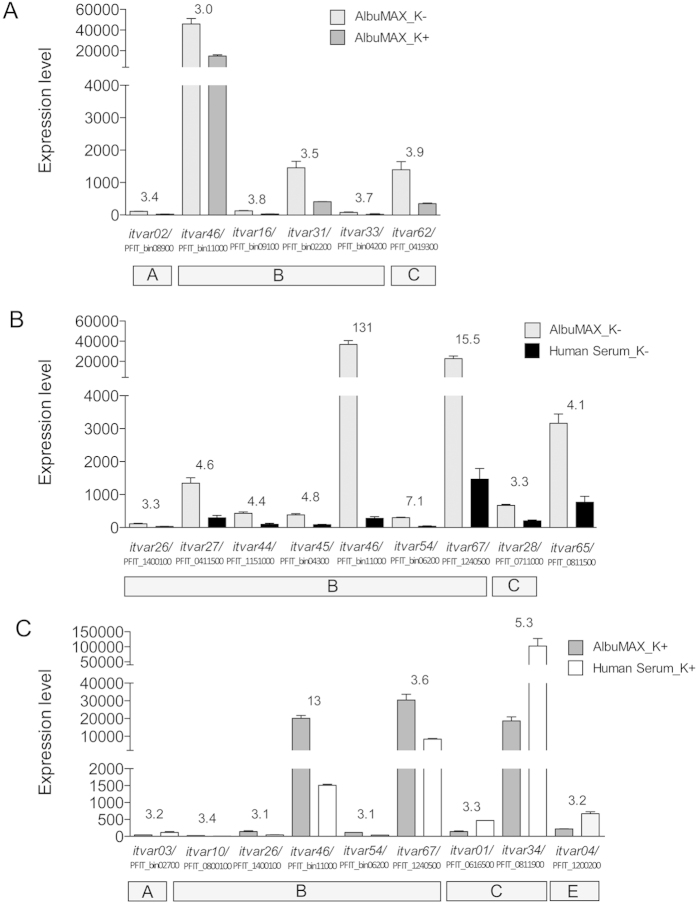
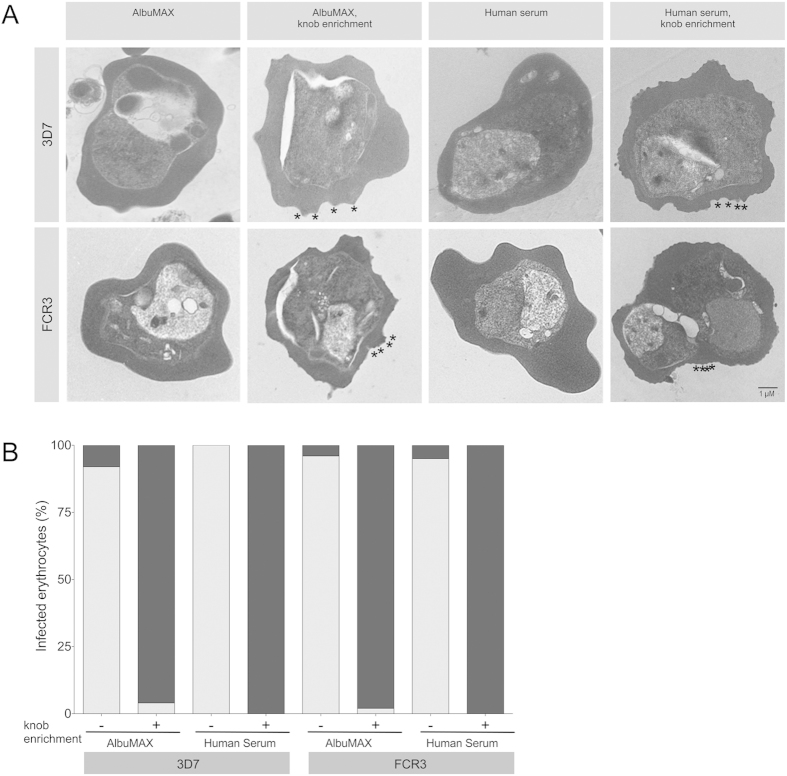
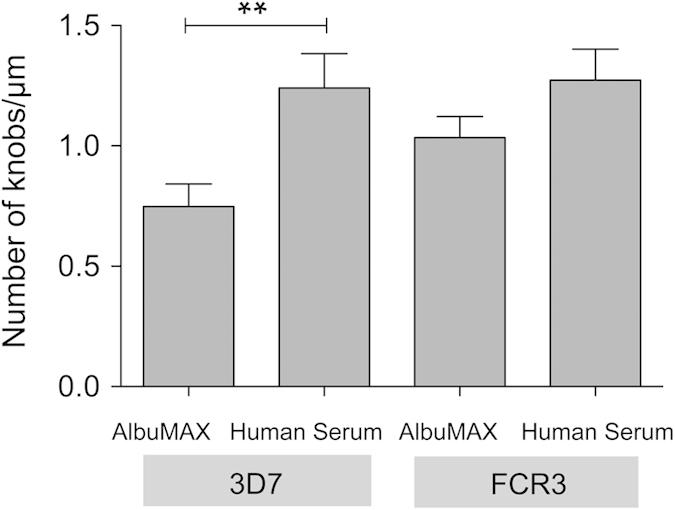
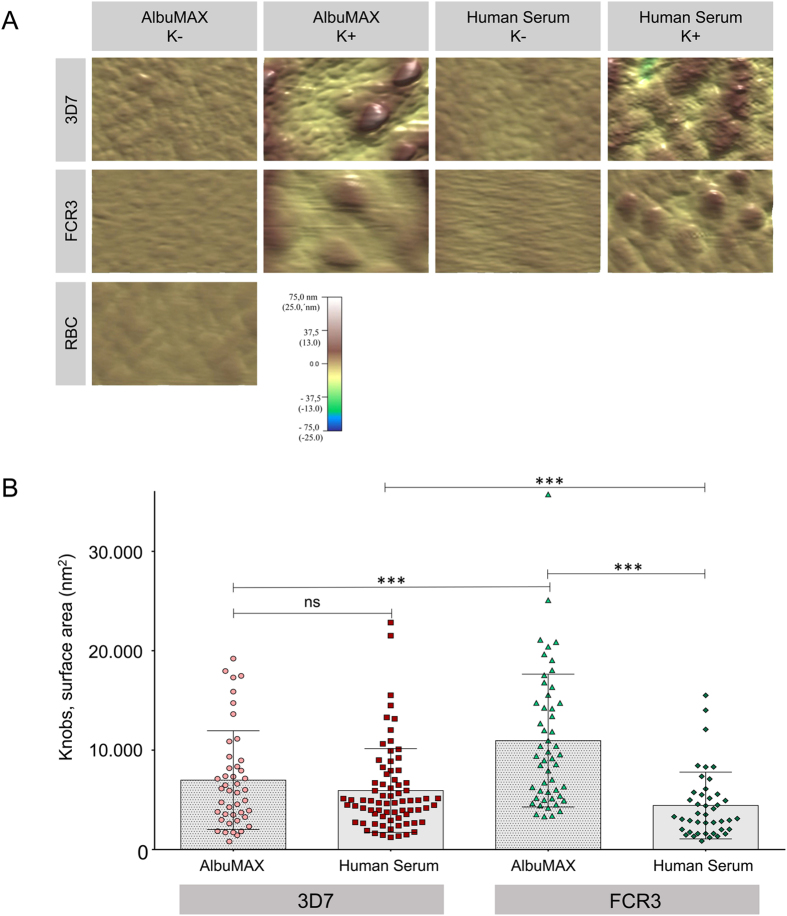
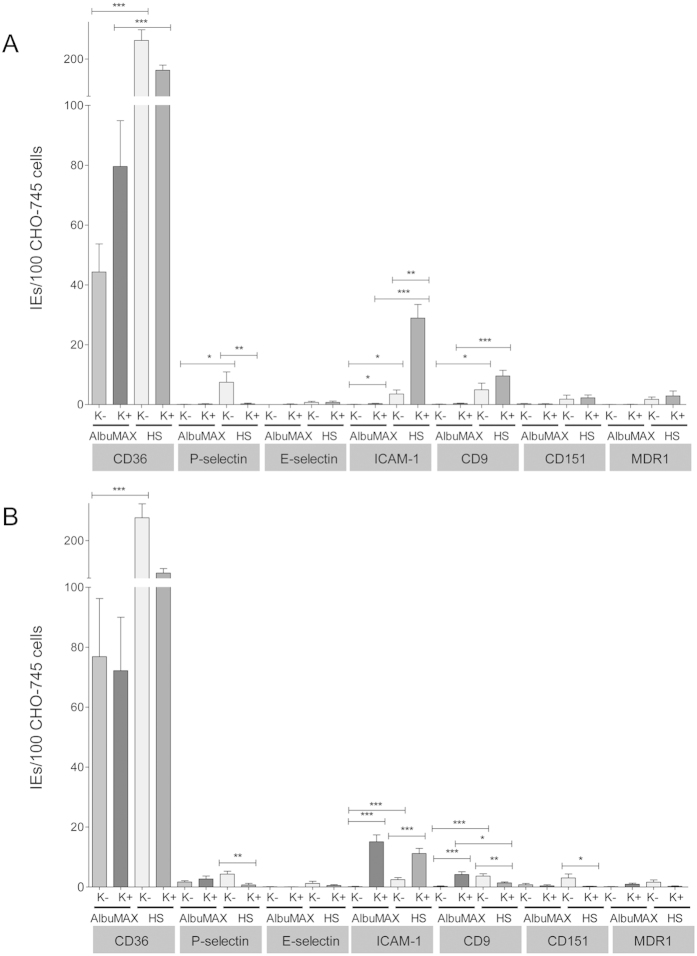
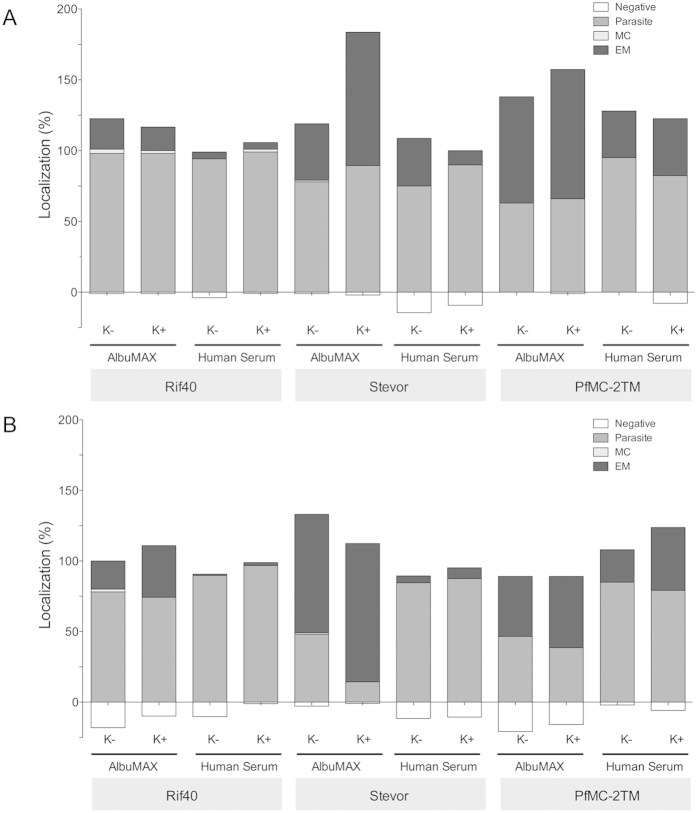
In vitro cultivation of Plasmodium falciparum is critical for studying the biology of this parasite. However, it is likely that different in vitro cultivation conditions influence various aspects of the parasite's life cycle. In the present study two P. falciparum isolates were cultivated using the two most common methods, in which AlbuMAX or human serum as additives are used, and the results were compared. The type of cultivation influenced the knob structure of P. falciparum-infected erythrocytes (IEs). IEs cultivated with AlbuMAX had fewer knobs than those cultivated with human serum. Furthermore, knob size varied between isolates and is also depended on the culture medium. In addition, there was a greater reduction in the cytoadhesion of IEs to various endothelial receptors in the presence of AlbuMAX than in the presence of human serum. Surprisingly, cytoadhesion did not correlate with the presence or absence of knobs. Greater numbers of the variant surface antigen families RIFIN, STEVOR, and PfMC-2TM were found at the IE membrane when cultivated in the presence of AlbuMAX. Moreover, the type of cultivation had a marked influence on the transcriptome profile. Compared with cultivation with human serum, cultivation with AlbuMAX increased the expression of approximately 500-870 genes.
恶性疟原虫的体外培养对于研究该寄生虫的生物学特性至关重要。然而,不同的体外培养条件可能会影响寄生虫生命周期的各个方面。在本研究中,使用两种最常用的方法培养了两株恶性疟原虫分离株,这两种方法分别使用白蛋白(AlbuMAX)或人血清作为添加剂,并对结果进行了比较。培养类型影响了恶性疟原虫感染红细胞(IEs)的凸起结构。用AlbuMAX培养的IEs的凸起比用人血清培养的少。此外,不同分离株的凸起大小不同,并且还取决于培养基。此外,与用人血清培养相比,在AlbuMAX存在的情况下,IEs与各种内皮受体的细胞黏附性降低得更多。令人惊讶的是,细胞黏附性与凸起的有无无关。在AlbuMAX存在的情况下培养时,在IE膜上发现了更多数量的可变表面抗原家族RIFIN、STEVOR和PfMC-2TM。此外,培养类型对转录组图谱有显著影响。与用人血清培养相比,用AlbuMAX培养使大约500 - 870个基因的表达增加。