Brücken Anne, Derwall Matthias, Bleilevens Christian, Stoppe Christian, Götzenich Andreas, Gaisa Nadine T, Weis Joachim, Nolte Kay Wilhelm, Rossaint Rolf, Ichinose Fumito, Fries Michael
Department of Anesthesiology, University Hospital RWTH Aachen, Pauwelsstr. 30, 52074, Aachen, Germany.
Department of Thoracic, Cardiac and Vascular Surgery, University Hospital RWTH Aachen, Pauwelsstr. 30, 52074, Aachen, Germany.
Crit Care. 2015 Nov 17;19:408. doi: 10.1186/s13054-015-1128-x.
Inhaled nitric oxide (iNO) improves outcomes when given post systemic ischemia/reperfusion injury. iNO given during cardiopulmonary resuscitation (CPR) may therefore improve return of spontaneous circulation (ROSC) rates and functional outcome after cardiac arrest (CA).
Thirty male Sprague-Dawley rats were subjected to 10 minutes of CA and at least 3 minutes of CPR. Animals were randomized to receive either 0 (n = 10, Control), 20 (n = 10, 20 ppm), or 40 (n = 10, 40 ppm) ppm iNO during CPR until 30 minutes after ROSC. A neurological deficit score was assessed daily for seven days following the experiment. On day 7, brains, hearts, and blood were sampled for histological and biochemical evaluation.
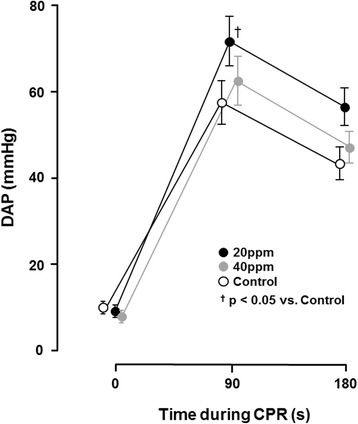
During CPR, 20 ppm iNO significantly increased diastolic arterial pressure (
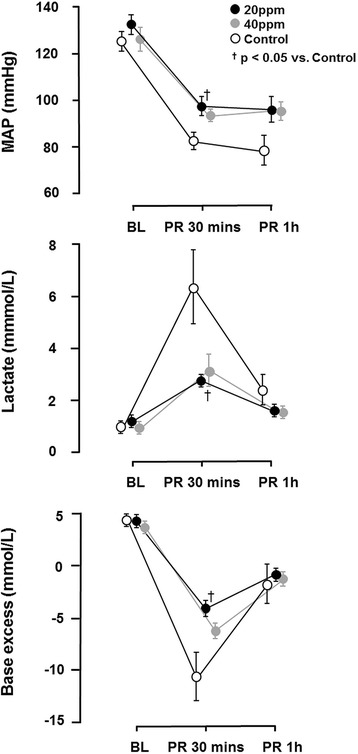
57 ± 5.04 mmHg; 20 ppm: 71.57 ± 57.3 mmHg, p < 0.046) and decreased time to ROSC (CONTROL: 842 ± 21 s; 20 ppm: 792 ± 5 s, (p = 0.02)). Thirty minutes following ROSC, 20 ppm iNO resulted in an increase in mean arterial pressure (
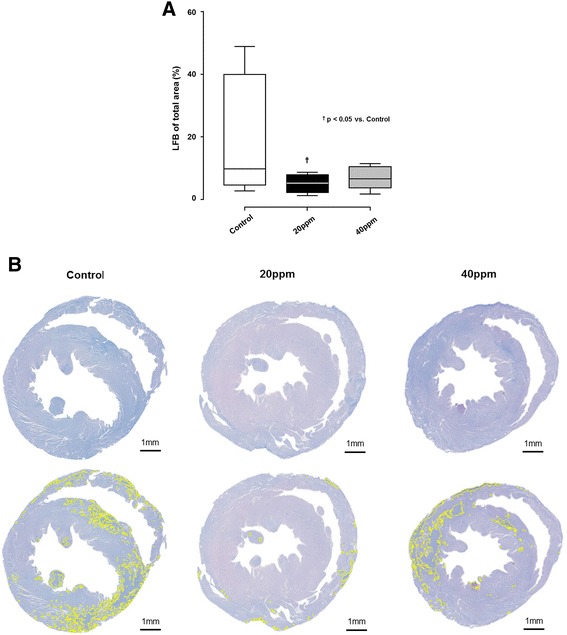
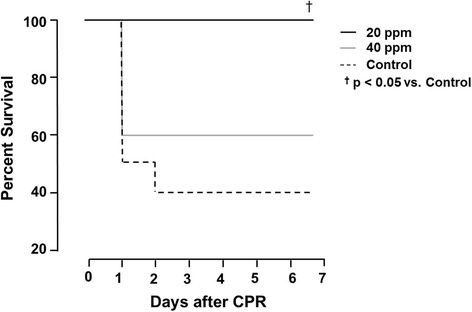
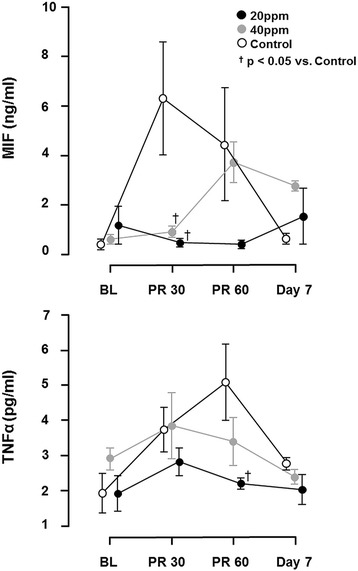
83 ± 4 mmHg; 20 ppm: 98 ± 4 mmHg, p = 0.035), a less pronounced rise in lactate and inflammatory cytokine levels, and attenuated cardiac damage. Inhalation of NO at 20 ppm improved neurological outcomes in rats 2 to 7 days after CA and CPR. This translated into increases in 7 day survival (
4; 20 ppm: 10; 40 ppm 6, (p ≤ 0.05 20 ppm vs CONTROL and 40 ppm).
Our study revealed that breathing NO during CPR markedly improved resuscitation success, 7-day neurological outcomes and survival in a rat model of VF-induced cardiac arrest and CPR. These results support the beneficial effects of NO inhalation after cardiac arrest and CPR.
吸入一氧化氮(iNO)在全身性缺血/再灌注损伤后给予时可改善预后。因此,在心肺复苏(CPR)期间给予iNO可能会提高心脏骤停(CA)后的自主循环恢复(ROSC)率和功能预后。
30只雄性Sprague-Dawley大鼠经历10分钟的心脏骤停及至少3分钟的心肺复苏。动物被随机分为在心肺复苏期间接受0(n = 10,对照组)、20(n = 10,20 ppm)或40(n = 10,40 ppm)ppm的iNO,直至自主循环恢复后30分钟。实验后连续7天每天评估神经功能缺损评分。在第7天,采集脑、心脏和血液样本进行组织学和生化评估。
在心肺复苏期间,20 ppm的iNO显著提高了舒张压(对照组:57 ± 5.04 mmHg;20 ppm:71.57 ± 57.3 mmHg,p < 0.046)并缩短了自主循环恢复时间(对照组:842 ± 21秒;20 ppm:792 ± 5秒,(p = 0.02))。自主循环恢复后30分钟,20 ppm的iNO导致平均动脉压升高(对照组:83 ± 4 mmHg;20 ppm:98 ± 4 mmHg,p = 0.035),乳酸和炎症细胞因子水平升高不明显,并减轻了心脏损伤。吸入20 ppm的NO可改善心脏骤停和心肺复苏后2至7天大鼠的神经功能预后。这转化为7天生存率的提高(对照组:4只;20 ppm:10只;40 ppm:6只,(20 ppm与对照组和40 ppm相比,p≤0.05))。
我们的研究表明,在心肺复苏期间吸入NO可显著提高室颤诱导的心脏骤停和心肺复苏大鼠模型的复苏成功率、7天神经功能预后和生存率。这些结果支持心脏骤停和心肺复苏后吸入NO的有益作用。