Adams Rachael V, Burg Theresa M
University of Lethbridge, Department of Biological Sciences, Lethbridge, Alberta, Canada.
PLoS One. 2015 Nov 18;10(11):e0140938. doi: 10.1371/journal.pone.0140938. eCollection 2015.
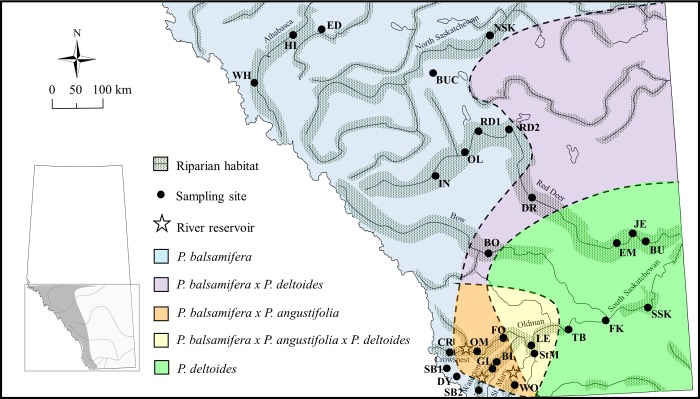
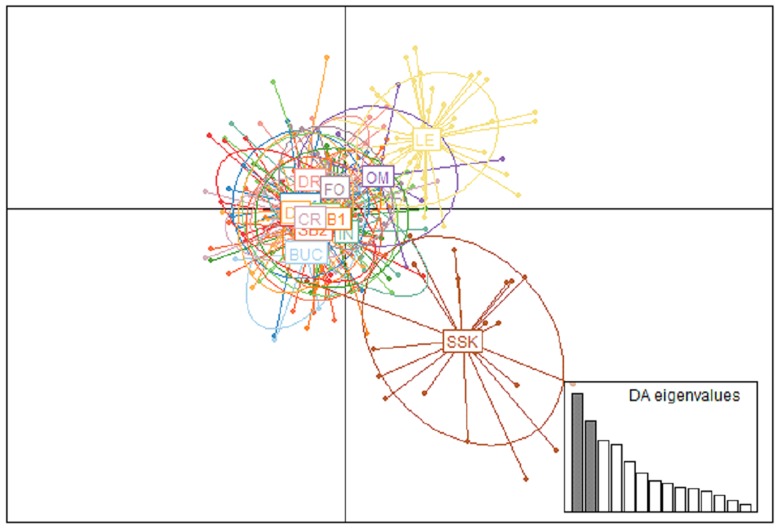
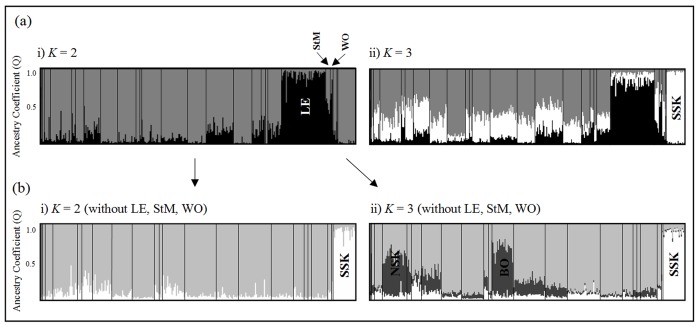
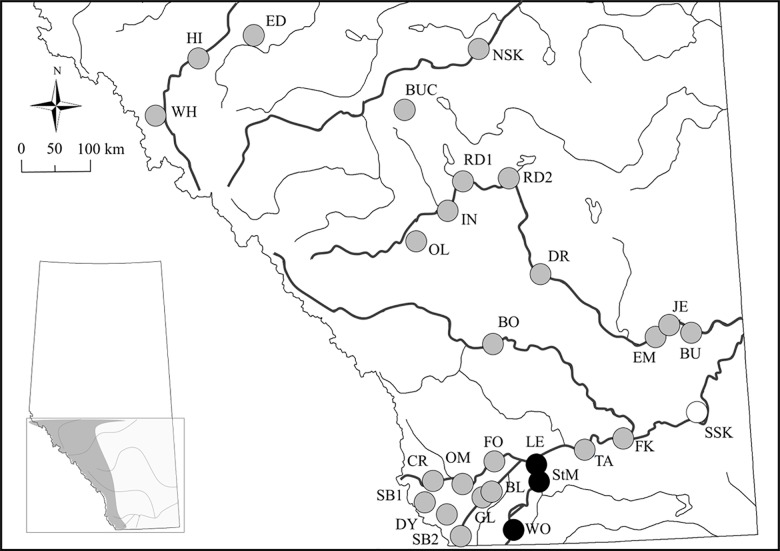
Habitat loss and fragmentation can affect the persistence of populations by reducing connectivity and restricting the ability of individuals to disperse across landscapes. Dispersal corridors promote population connectivity and therefore play important roles in maintaining gene flow in natural populations inhabiting fragmented landscapes. In the prairies, forests are restricted to riparian areas along river systems which act as important dispersal corridors for forest dependent species across large expanses of unsuitable grassland habitat. However, natural and anthropogenic barriers within riparian systems have fragmented these forested habitats. In this study, we used microsatellite markers to assess the fine-scale genetic structure of a forest-dependent species, the black-capped chickadee (Poecile atricapillus), along 10 different river systems in Southern Alberta. Using a landscape genetic approach, landscape features (e.g., land cover) were found to have a significant effect on patterns of genetic differentiation. Populations are genetically structured as a result of natural breaks in continuous habitat at small spatial scales, but the artificial barriers we tested do not appear to restrict gene flow. Dispersal between rivers is impeded by grasslands, evident from isolation of nearby populations (~ 50 km apart), but also within river systems by large treeless canyons (>100 km). Significant population genetic differentiation within some rivers corresponded with zones of different cottonwood (riparian poplar) tree species and their hybrids. This study illustrates the importance of considering the impacts of habitat fragmentation at small spatial scales as well as other ecological processes to gain a better understanding of how organisms respond to their environmental connectivity. Here, even in a common and widespread songbird with high dispersal potential, small breaks in continuous habitats strongly influenced the spatial patterns of genetic variation.
栖息地丧失和破碎化会通过降低连通性和限制个体在景观中扩散的能力来影响种群的存续。扩散廊道促进种群连通性,因此在维持栖息于破碎化景观中的自然种群的基因流动方面发挥着重要作用。在大草原地区,森林仅限于沿河流系统的河岸区域,这些区域是依赖森林的物种在大片不适宜的草原栖息地之间的重要扩散廊道。然而,河岸系统内的自然和人为屏障已经使这些森林栖息地破碎化。在本研究中,我们使用微卫星标记评估了依赖森林的黑头山雀(Poecile atricapillus)在艾伯塔省南部10条不同河流系统沿线的精细尺度遗传结构。采用景观遗传学方法发现,景观特征(如土地覆盖)对遗传分化模式有显著影响。由于连续栖息地在小空间尺度上的自然断裂,种群形成了遗传结构,但我们测试的人工屏障似乎并未限制基因流动。河流之间的扩散受到草原的阻碍,这从附近种群(相距约50公里)的隔离中可以明显看出,而且在河流系统内也受到大型无树峡谷(>100公里)的阻碍。一些河流内显著的种群遗传分化与不同三角叶杨(河岸杨树)树种及其杂种的区域相对应。这项研究说明了考虑小空间尺度上栖息地破碎化的影响以及其他生态过程对于更好地理解生物体如何响应其环境连通性的重要性。在这里,即使是一种具有高扩散潜力的常见且分布广泛的鸣禽,连续栖息地的小断裂也强烈影响了遗传变异的空间模式。