
心脏间充质基质细胞是致心律失常性心肌病中脂肪细胞的一个来源。
Cardiac mesenchymal stromal cells are a source of adipocytes in arrhythmogenic cardiomyopathy.
作者信息
Sommariva E, Brambilla S, Carbucicchio C, Gambini E, Meraviglia V, Dello Russo A, Farina F M, Casella M, Catto V, Pontone G, Chiesa M, Stadiotti I, Cogliati E, Paolin A, Ouali Alami N, Preziuso C, d'Amati G, Colombo G I, Rossini A, Capogrossi M C, Tondo C, Pompilio G
机构信息
Vascular Biology and Regenerative Medicine Unit, Centro Cardiologico Monzino IRCCS, via Parea 4, Milan 20138, Italy
Vascular Biology and Regenerative Medicine Unit, Centro Cardiologico Monzino IRCCS, via Parea 4, Milan 20138, Italy.
出版信息
Eur Heart J. 2016 Jun 14;37(23):1835-46. doi: 10.1093/eurheartj/ehv579. Epub 2015 Nov 20.
AIM
Arrhythmogenic cardiomyopathy (ACM) is a genetic disorder mainly due to mutations in desmosomal genes, characterized by progressive fibro-adipose replacement of the myocardium, arrhythmias, and sudden death. It is still unclear which cell type is responsible for fibro-adipose substitution and which molecular mechanisms lead to this structural change. Cardiac mesenchymal stromal cells (C-MSC) are the most abundant cells in the heart, with propensity to differentiate into several cell types, including adipocytes, and their role in ACM is unknown. The aim of the present study was to investigate whether C-MSC contributed to excess adipocytes in patients with ACM.
METHODS AND RESULTS
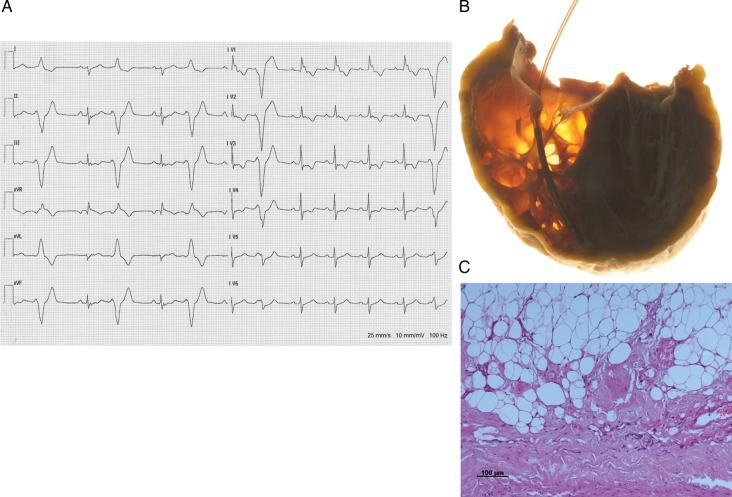
We found that, in ACM patients' explanted heart sections, cells actively differentiating into adipocytes are of mesenchymal origin. Therefore, we isolated C-MSC from endomyocardial biopsies of ACM and from not affected by arrhythmogenic cardiomyopathy (NON-ACM) (control) patients. We found that both ACM and control C-MSC express desmosomal genes, with ACM C-MSC showing lower expression of plakophilin (PKP2) protein vs.
CONTROLS
Arrhythmogenic cardiomyopathy C-MSC cultured in adipogenic medium accumulated more lipid droplets than controls. Accordingly, the expression of adipogenic genes was higher in ACM vs. NON-ACM C-MSC, while expression of cell cycle and anti-adipogenic genes was lower. Both lipid accumulation and transcription reprogramming were dependent on PKP2 deficiency.
CONCLUSIONS
Cardiac mesenchymal stromal cells contribute to the adipogenic substitution observed in ACM patients' hearts. Moreover, C-MSC from ACM patients recapitulate the features of ACM adipogenesis, representing a novel, scalable, patient-specific in vitro tool for future mechanistic studies.
目的
致心律失常性心肌病(ACM)是一种主要由桥粒基因突变引起的遗传性疾病,其特征为心肌进行性纤维脂肪替代、心律失常和猝死。目前仍不清楚哪种细胞类型导致纤维脂肪替代,以及哪些分子机制导致这种结构变化。心脏间充质基质细胞(C-MSC)是心脏中最丰富的细胞,具有分化为多种细胞类型(包括脂肪细胞)的倾向,其在ACM中的作用尚不清楚。本研究的目的是调查C-MSC是否促成了ACM患者体内过多的脂肪细胞形成。
方法与结果
我们发现,在ACM患者的心脏外植体切片中,积极分化为脂肪细胞的细胞来源于间充质。因此,我们从ACM患者的心内膜活检组织以及未患致心律失常性心肌病(NON-ACM)(对照)患者的心内膜活检组织中分离出C-MSC。我们发现ACM和对照C-MSC均表达桥粒基因,与对照相比,ACM C-MSC中桥粒斑蛋白(PKP2)蛋白的表达较低。
对照
在成脂培养基中培养的致心律失常性心肌病C-MSC比对照积累了更多的脂滴。相应地,与NON-ACM C-MSC相比,ACM中脂肪生成基因的表达更高,而细胞周期和抗脂肪生成基因的表达更低。脂质积累和转录重编程均依赖于PKP2缺乏。
结论
心脏间充质基质细胞促成了在ACM患者心脏中观察到的脂肪生成替代。此外,ACM患者的C-MSC概括了ACM脂肪生成的特征,代表了一种用于未来机制研究的新型、可扩展、患者特异性的体外工具。



 Zotero 插件