Isdory Augustino, Mureithi Eunice W, Sumpter David J T
Department of Mathematics, University of Dar es Salaam, Dar es Salaam, Tanzania.
Department of Mathematics, Uppsala University, Uppsala, Sweden.
PLoS One. 2015 Nov 24;10(11):e0142805. doi: 10.1371/journal.pone.0142805. eCollection 2015.
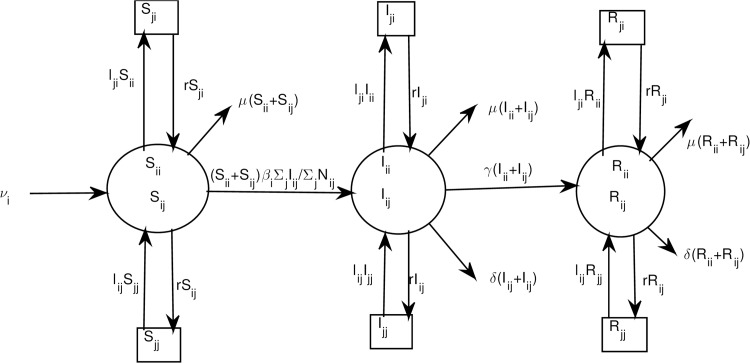
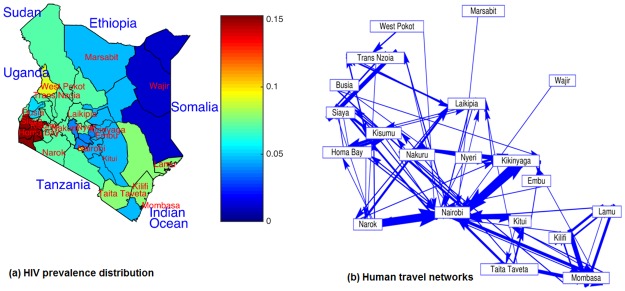
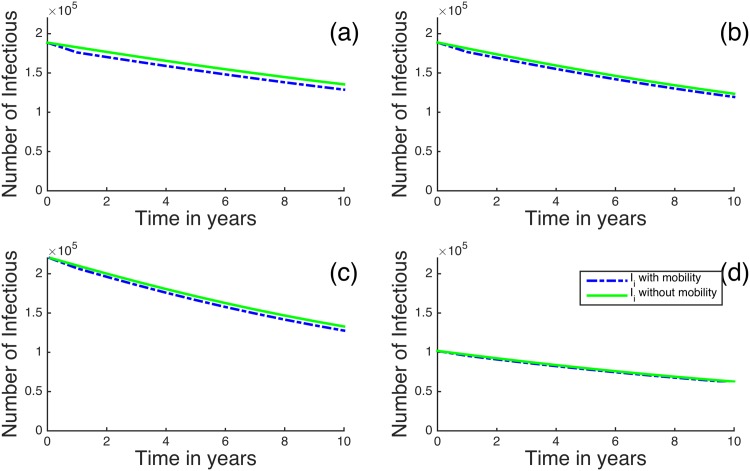
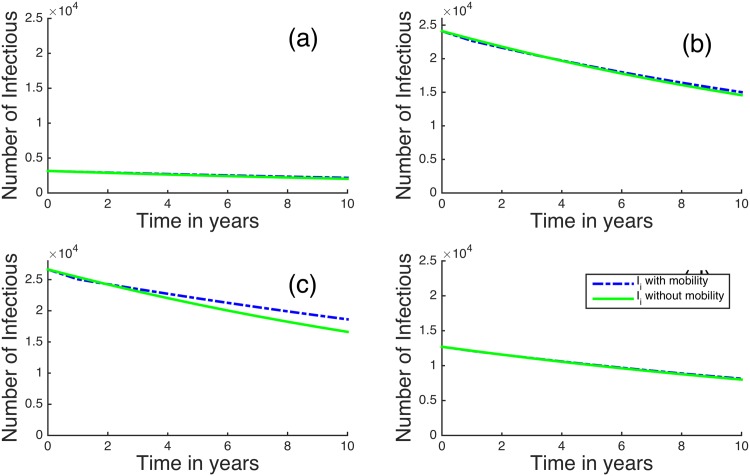
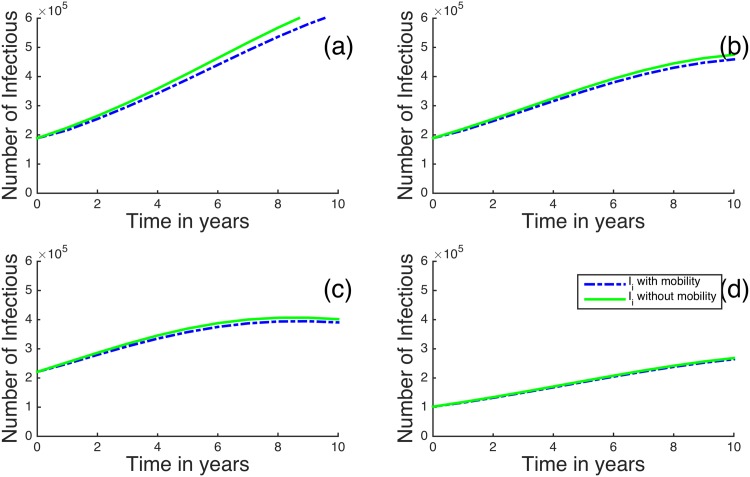
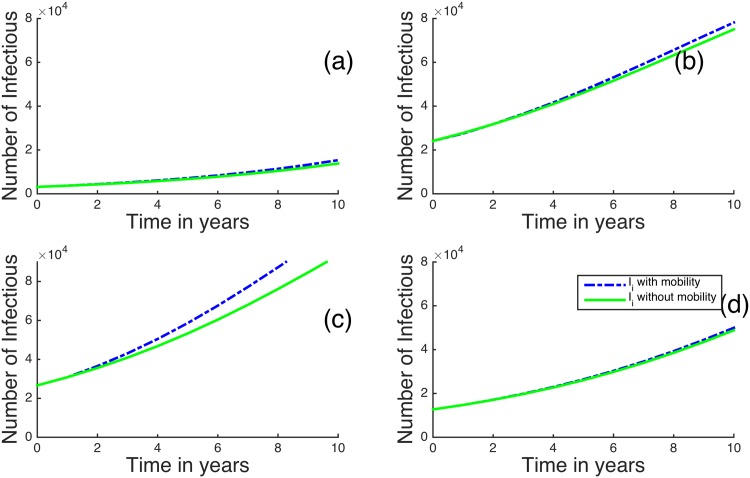
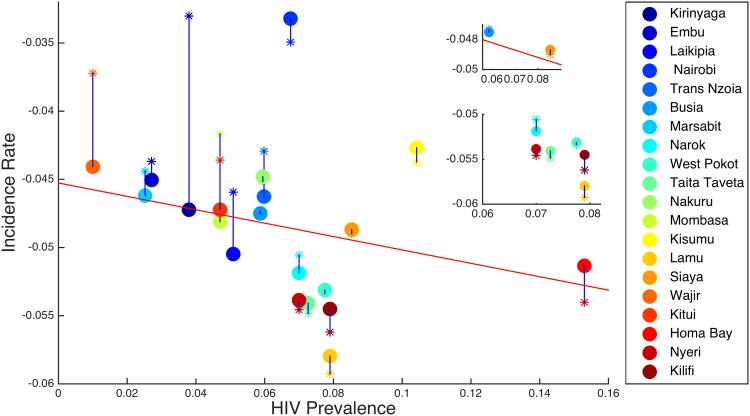
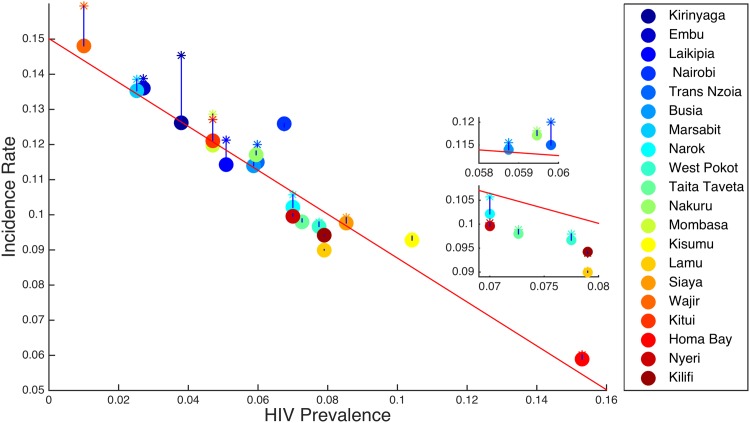
Disease spreads as a result of people moving and coming in contact with each other. Thus the mobility patterns of individuals are crucial in understanding disease dynamics. Here we study the impact of human mobility on HIV transmission in different parts of Kenya. We build an SIR metapopulation model that incorporates the different regions within the country. We parameterise the model using census data, HIV data and mobile phone data adopted to track human mobility. We found that movement between different regions appears to have a relatively small overall effect on the total increase in HIV cases in Kenya. However, the most important consequence of movement patterns was transmission of the disease from high infection to low prevalence areas. Mobility slightly increases HIV incidence rates in regions with initially low HIV prevalences and slightly decreases incidences in regions with initially high HIV prevalence. We discuss how regional HIV models could be used in public-health planning. This paper is a first attempt to model spread of HIV using mobile phone data, and we also discuss limitations to the approach.
疾病的传播是人们相互走动和接触的结果。因此,个体的流动模式对于理解疾病动态至关重要。在此,我们研究人类流动对肯尼亚不同地区艾滋病毒传播的影响。我们构建了一个包含该国不同地区的SIR集合种群模型。我们使用人口普查数据、艾滋病毒数据以及用于追踪人类流动的手机数据对模型进行参数化。我们发现,不同地区之间的流动对肯尼亚艾滋病毒病例总数的增加总体影响相对较小。然而,流动模式最重要的后果是疾病从高感染地区传播到低流行地区。流动略微提高了艾滋病毒初始患病率较低地区的发病率,而略微降低了艾滋病毒初始患病率较高地区的发病率。我们讨论了区域艾滋病毒模型如何可用于公共卫生规划。本文是首次尝试使用手机数据对艾滋病毒传播进行建模,我们还讨论了该方法的局限性。