Pang Hong-Bo, Braun Gary B, Ruoslahti Erkki
Cancer Center, Sanford Burnham Prebys Medical Discovery Institute, 10901 N. Torrey Pines Road, La Jolla, CA 92037, USA.
Cancer Center, Sanford Burnham Prebys Medical Discovery Institute, 10901 N. Torrey Pines Road, La Jolla, CA 92037, USA. ; Center for Nanomedicine and Department of Molecular, Cellular, and Developmental Biology, University of California, Santa Barbara, Santa Barbara, CA 93106-9610, USA.
Sci Adv. 2015 Nov 6;1(10):e1500821. doi: 10.1126/sciadv.1500821. eCollection 2015 Nov.
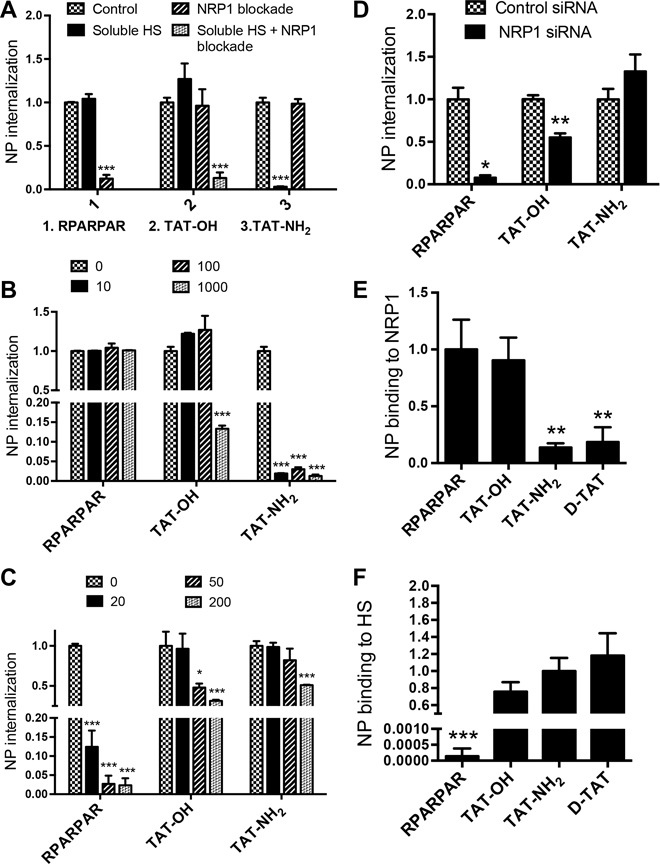
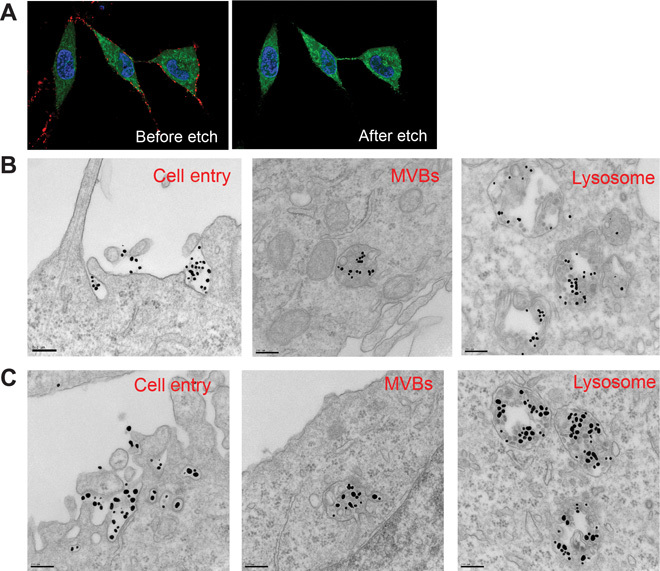
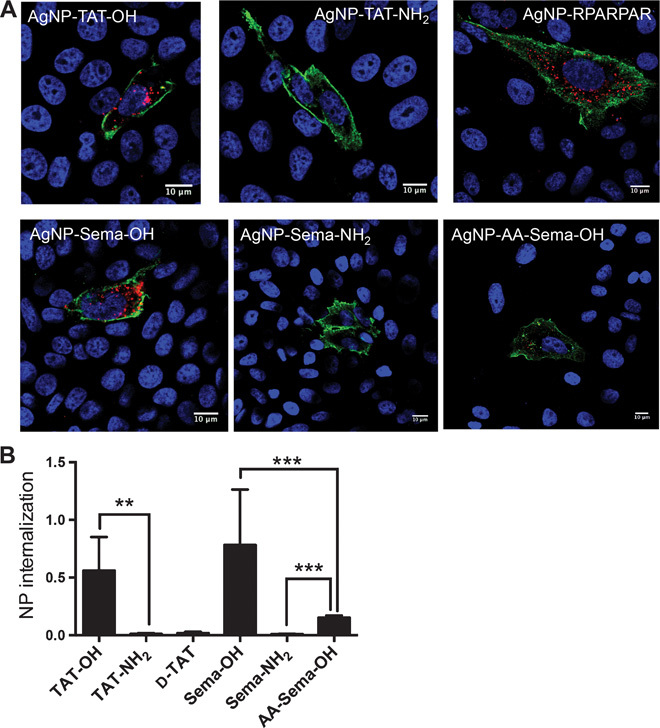
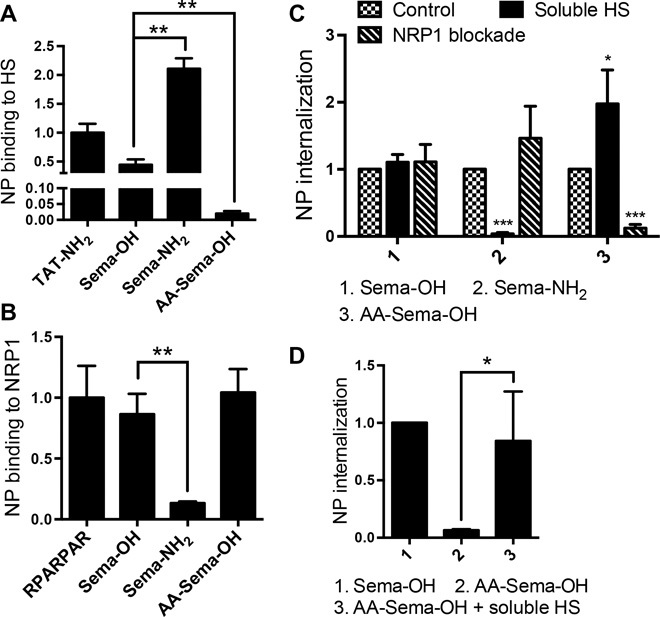
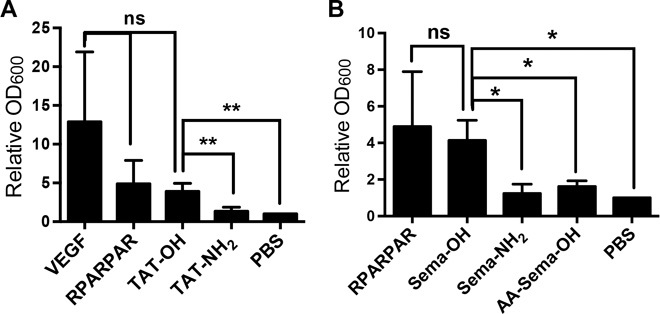
Cell-penetrating peptides (CPPs) have been widely used to deliver nanomaterials and other types of macromolecules into mammalian cells for therapeutic and diagnostic use. Cationic CPPs that bind to heparan sulfate (HS) proteoglycans on the cell surface induce potent endocytosis; however, the role of other surface receptors in this process is unclear. We describe the convergence of an HS-dependent pathway with the C-end rule (CendR) mechanism that enables peptide ligation with neuropilin-1 (NRP1), a cell surface receptor known to be involved in angiogenesis and vascular permeability. NRP1 binds peptides carrying a positive residue at the carboxyl terminus, a feature that is compatible with cationic CPPs, either intact or after proteolytic processing. We used CPP and CendR peptides, as well as HS- and NRP1-binding motifs from semaphorins, to explore the commonalities and differences of the HS and NRP1 pathways. We show that the CendR-NRP1 interaction determines the ability of CPPs to induce vascular permeability. We also show at the ultrastructural level, using a novel cell entry synchronization method, that both the HS and NRP1 pathways can initiate a macropinocytosis-like process and visualize these CPP-cargo complexes going through various endosomal compartments. Our results provide new insights into how CPPs exploit multiple surface receptor pathways for intracellular delivery.
细胞穿透肽(CPPs)已被广泛用于将纳米材料和其他类型的大分子递送至哺乳动物细胞,用于治疗和诊断。与细胞表面硫酸乙酰肝素(HS)蛋白聚糖结合的阳离子CPPs可诱导有效的内吞作用;然而,其他表面受体在此过程中的作用尚不清楚。我们描述了一种HS依赖性途径与C端规则(CendR)机制的融合,该机制使肽能够与神经纤毛蛋白-1(NRP1)连接,NRP1是一种已知参与血管生成和血管通透性的细胞表面受体。NRP1结合在羧基末端带有正电荷残基的肽,这一特征与完整的或经过蛋白水解处理后的阳离子CPPs兼容。我们使用CPP和CendR肽,以及来自信号素的HS和NRP1结合基序,来探索HS和NRP1途径的异同。我们表明,CendR-NRP1相互作用决定了CPPs诱导血管通透性的能力。我们还使用一种新型的细胞内吞同步方法在超微结构水平上表明,HS和NRP1途径都可以启动类似巨胞饮作用的过程,并观察到这些CPP-货物复合物通过各种内体区室。我们的结果为CPPs如何利用多种表面受体途径进行细胞内递送提供了新的见解。