Chiba Shuntaro, Ikeda Kazuyoshi, Ishida Takashi, Gromiha M Michael, Taguchi Y-H, Iwadate Mitsuo, Umeyama Hideaki, Hsin Kun-Yi, Kitano Hiroaki, Yamamoto Kazuki, Sugaya Nobuyoshi, Kato Koya, Okuno Tatsuya, Chikenji George, Mochizuki Masahiro, Yasuo Nobuaki, Yoshino Ryunosuke, Yanagisawa Keisuke, Ban Tomohiro, Teramoto Reiji, Ramakrishnan Chandrasekaran, Thangakani A Mary, Velmurugan D, Prathipati Philip, Ito Junichi, Tsuchiya Yuko, Mizuguchi Kenji, Honma Teruki, Hirokawa Takatsugu, Akiyama Yutaka, Sekijima Masakazu
Education Academy of Computational Life Sciences (ACLS), Tokyo Institute of Technology, 4259 Nagatsutacho, Midori-ku, Yokohama 226-8501 Japan.
Level Five Co. Ltd., Shiodome Shibarikyu Bldg., 1-2-3 Kaigan, Minato-ku, Tokyo 105-0022, Japan.
Sci Rep. 2015 Nov 26;5:17209. doi: 10.1038/srep17209.
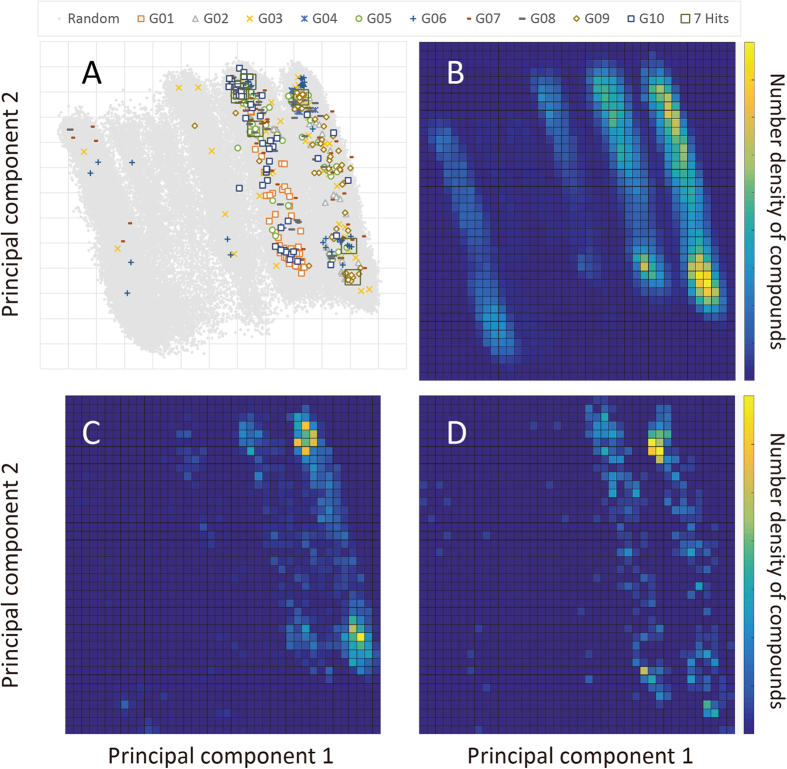
A search of broader range of chemical space is important for drug discovery. Different methods of computer-aided drug discovery (CADD) are known to propose compounds in different chemical spaces as hit molecules for the same target protein. This study aimed at using multiple CADD methods through open innovation to achieve a level of hit molecule diversity that is not achievable with any particular single method. We held a compound proposal contest, in which multiple research groups participated and predicted inhibitors of tyrosine-protein kinase Yes. This showed whether collective knowledge based on individual approaches helped to obtain hit compounds from a broad range of chemical space and whether the contest-based approach was effective.
对更广泛的化学空间进行搜索对于药物发现很重要。已知不同的计算机辅助药物发现(CADD)方法会在不同的化学空间中提出化合物作为同一靶蛋白的命中分子。本研究旨在通过开放式创新使用多种CADD方法,以实现任何特定单一方法都无法达到的命中分子多样性水平。我们举办了一场化合物提案竞赛,多个研究小组参与其中并预测了酪氨酸蛋白激酶Yes的抑制剂。这表明基于个体方法的集体知识是否有助于从广泛的化学空间中获得命中化合物,以及基于竞赛的方法是否有效。