Sepanlou Sadaf Ghajarieh, Malekzadeh Fatemeh, Delavari Farnaz, Naghavi Mohsen, Forouzanfar Mohammad Hossein, Moradi-Lakeh Maziar, Malekzadeh Reza, Poustchi Hossein, Pourshams Akram
Digestive Diseases Research Center, Digestive Diseases Research Institute, Tehran University of Medical Sciences, Tehran, Iran ; Liver and Pancreatobilliary Diseases Research Center, Digestive Diseases Research Institute, Shariati Hospital, Tehran University of Medical Sciences, Tehran, Iran.
Digestive Diseases Research Center, Digestive Diseases Research Institute, Tehran University of Medical Sciences, Tehran, Iran ; Non-Communicable Disease Research Center, Endocrine and Metabolism Research Institute, Shariati Hospital, Tehran University of Medical Sciences, Tehran, Iran.
Middle East J Dig Dis. 2015 Oct;7(4):201-15.
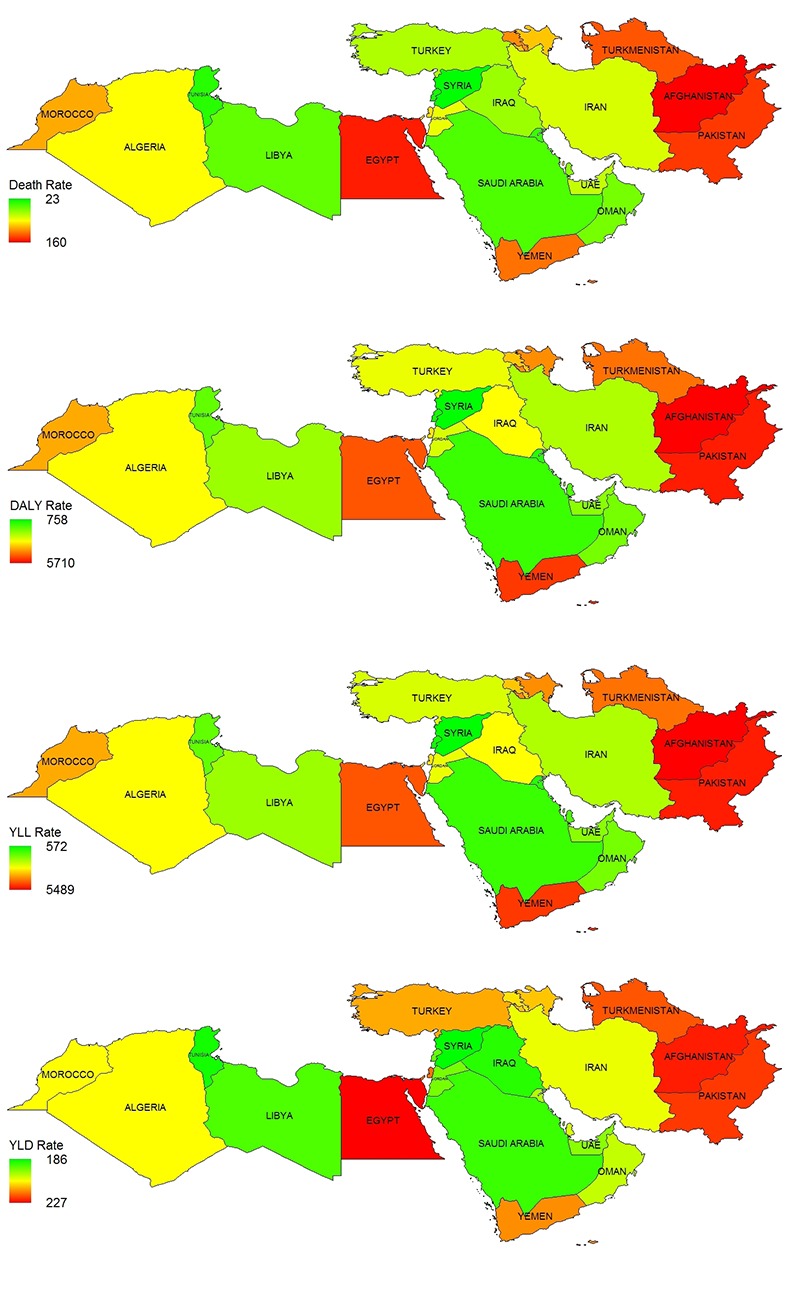
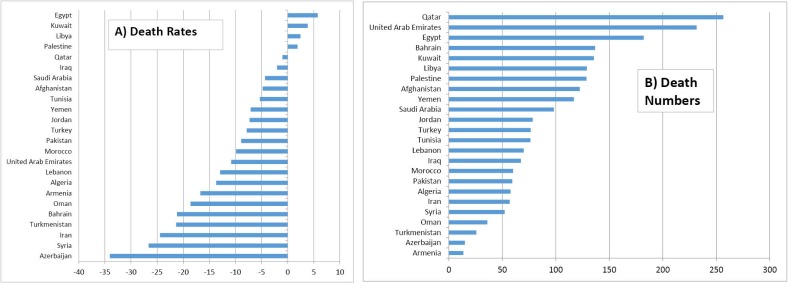
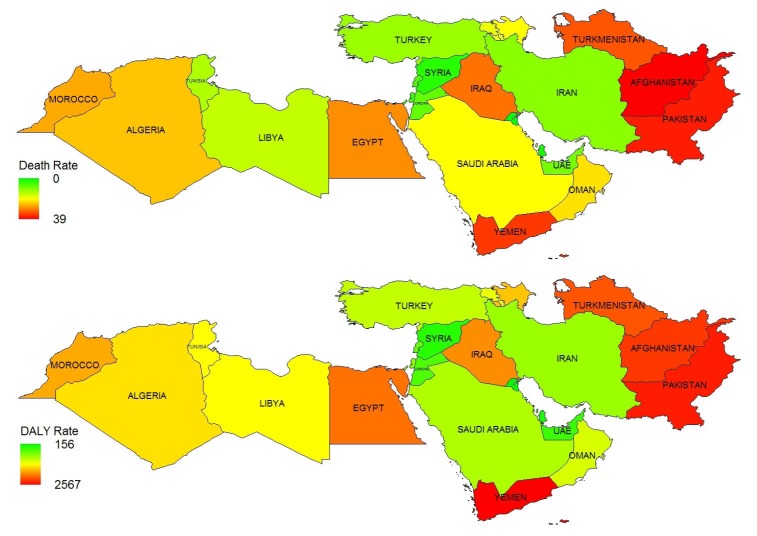
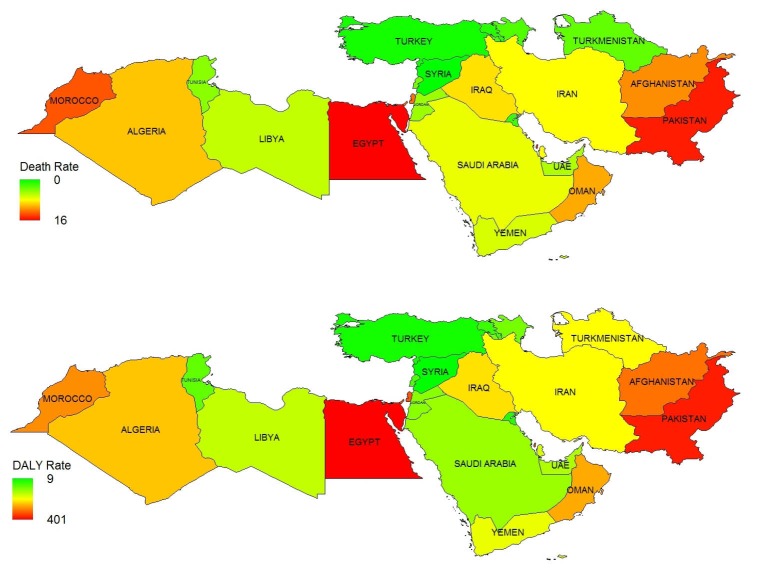
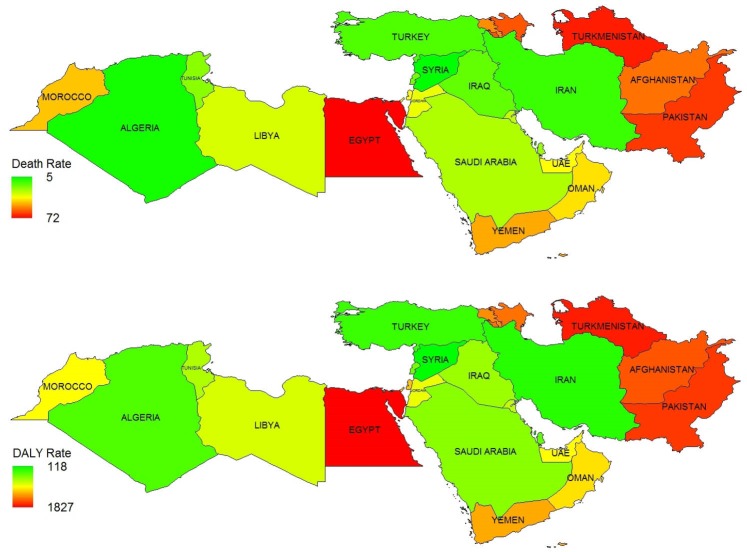
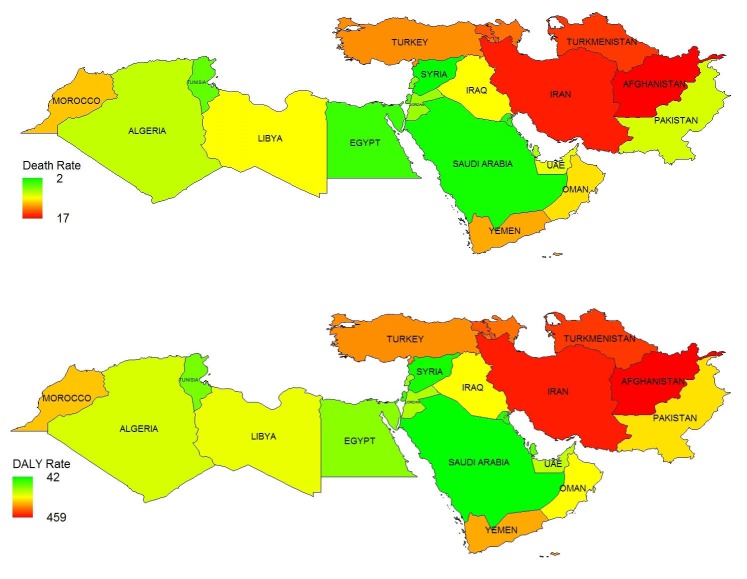
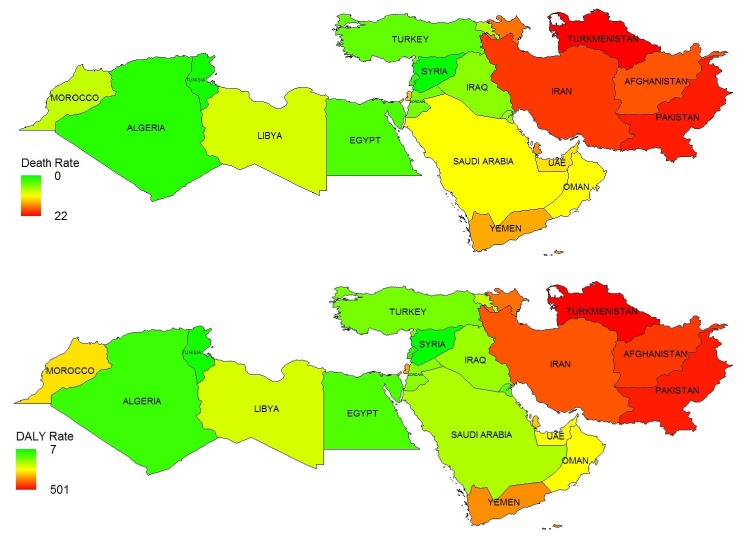
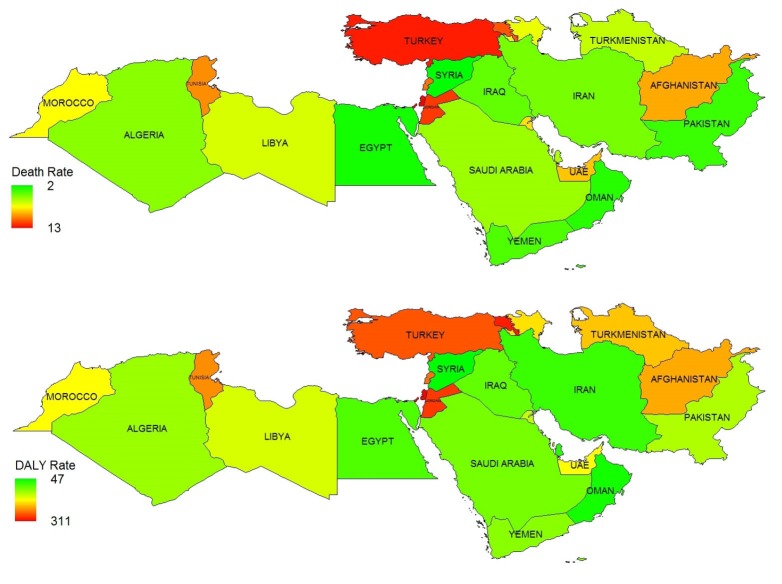
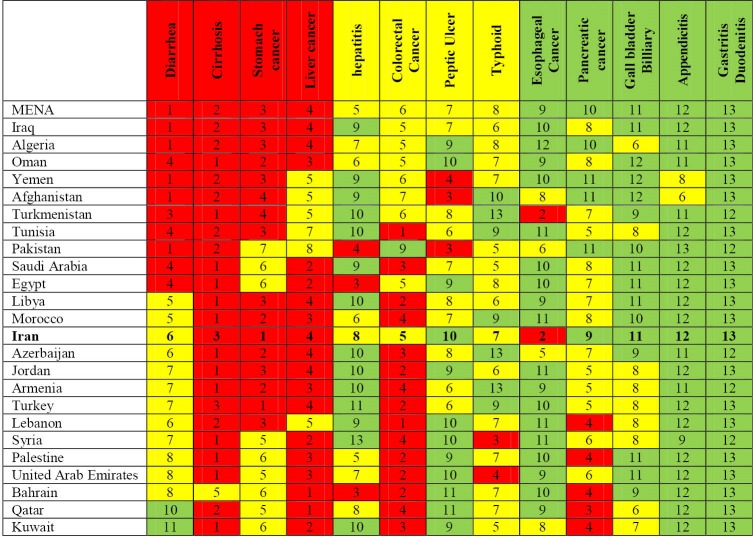
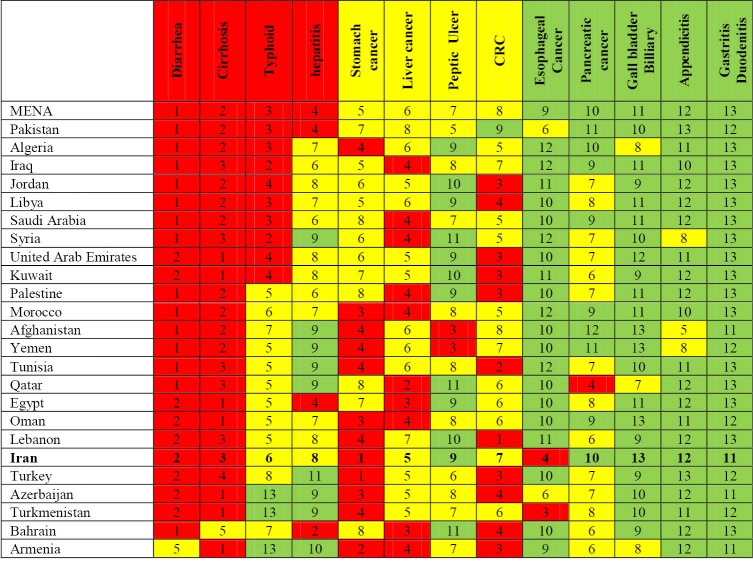
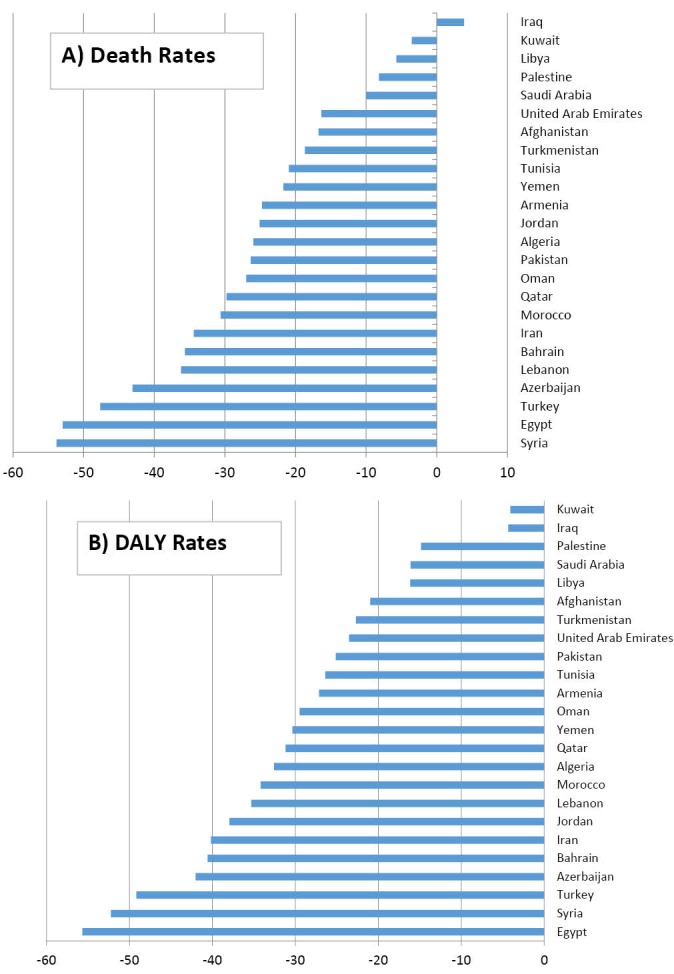
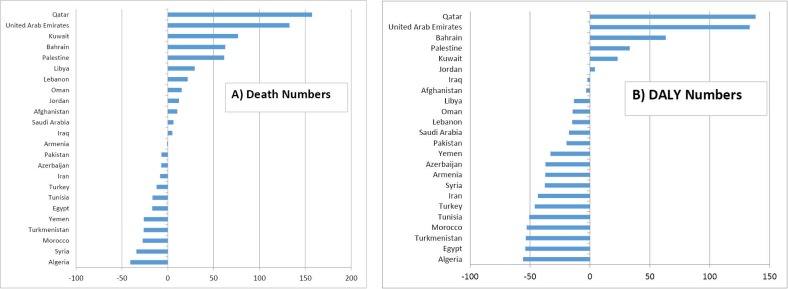
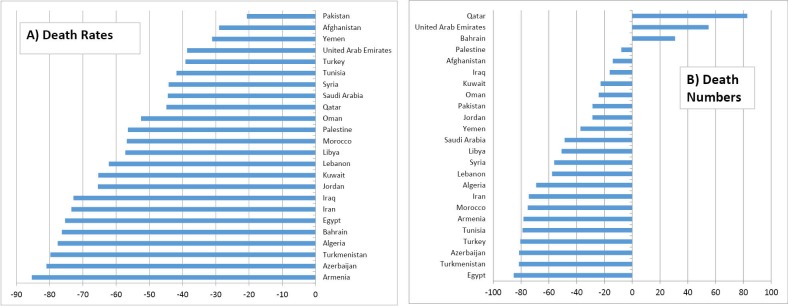
BACKGROUND Gastrointestinal and liver diseases (GILDs) are major causes of death and disability in Middle East and North Africa (MENA). However, they have different patterns in countries with various geographical, cultural, and socio-economic status. We aimed to compare the burden of GILDs in Iran with its neighboring countries using the results of the Global Burden of Disease (GBD) Study in 2010. METHODS Classic metrics of GBD have been used including: age-standardized rates (ASRs) of death, years of life lost due to premature death (YLL), years of life lost due to disability (YLD), and disability adjusted life years (DALY). All countries neighboring Iran have been selected. In addition, all other countries classified in the MENA region were included. Five major groups of gastrointestinal and hepatic diseases were studied including: infections of gastrointestinal tract, gastrointestinal and pancreatobilliary cancers, acute hepatitis, cirrhosis, and other digestive diseases. RESULTS The overall burden of GILDs is highest in Afghanistan, Pakistan, and Egypt. Diarrheal diseases have been replaced by gastrointestinal cancers and cirrhosis in most countries in the region. However, in a number of countries including Afghanistan, Pakistan, Turkmenistan, Egypt, and Yemen, communicable GILDs are still among top causes of mortality and morbidity in addition to non-communicable GILDs and cancers. These countries are experiencing the double burden. In Iran, burden caused by cancers of stomach and esophagus are considerably higher than other countries. Diseases that are mainly diagnosed in outpatient settings have not been captured by GBD. CONCLUSION Improving the infrastructure of health care system including cancer registries and electronic recording of outpatient care is a necessity for better surveillance of GILDs in MENA. In contrast to expensive treatment, prevention of most GILDs is feasible and inexpensive. The health care systems in the region can be strengthened for prevention and control.
背景 胃肠道和肝脏疾病(GILDs)是中东和北非(MENA)地区死亡和残疾的主要原因。然而,在具有不同地理、文化和社会经济地位的国家中,它们呈现出不同的模式。我们旨在利用2010年全球疾病负担(GBD)研究的结果,比较伊朗与其邻国的GILDs负担。方法 使用了GBD的经典指标,包括:年龄标准化死亡率(ASRs)、过早死亡导致的生命年损失(YLL)、残疾导致的生命年损失(YLD)以及残疾调整生命年(DALY)。选取了伊朗的所有邻国,此外,还纳入了MENA地区分类的所有其他国家。研究了胃肠道和肝脏疾病的五大类,包括:胃肠道感染、胃肠道和胰腺胆管癌、急性肝炎、肝硬化以及其他消化系统疾病。结果 GILDs的总体负担在阿富汗、巴基斯坦和埃及最高。该地区大多数国家的腹泻病已被胃肠道癌症和肝硬化所取代。然而,在包括阿富汗、巴基斯坦、土库曼斯坦、埃及和也门在内的一些国家,除了非传染性GILDs和癌症外,传染性GILDs仍然是死亡率和发病率的主要原因之一。这些国家正面临双重负担。在伊朗,胃癌和食管癌造成的负担明显高于其他国家。GBD未涵盖主要在门诊诊断的疾病。结论 改善医疗保健系统的基础设施,包括癌症登记和门诊护理的电子记录,对于更好地监测MENA地区的GILDs是必要的。与昂贵的治疗相比,大多数GILDs的预防是可行且廉价的。该地区的医疗保健系统可以加强预防和控制。