Ramamoorthy Sivapriya, Cidlowski John A
Signal Transduction Laboratory, Department of Health and Human Services, National Institute of Environmental Health Sciences, National Institutes of Health, Research Triangular Park, 111 T. W. Alexander Drive, NC 27709, USA.
Signal Transduction Laboratory, Department of Health and Human Services, National Institute of Environmental Health Sciences, National Institutes of Health, Research Triangular Park, 111 T. W. Alexander Drive, NC 27709, USA.
Rheum Dis Clin North Am. 2016 Feb;42(1):15-31, vii. doi: 10.1016/j.rdc.2015.08.002.
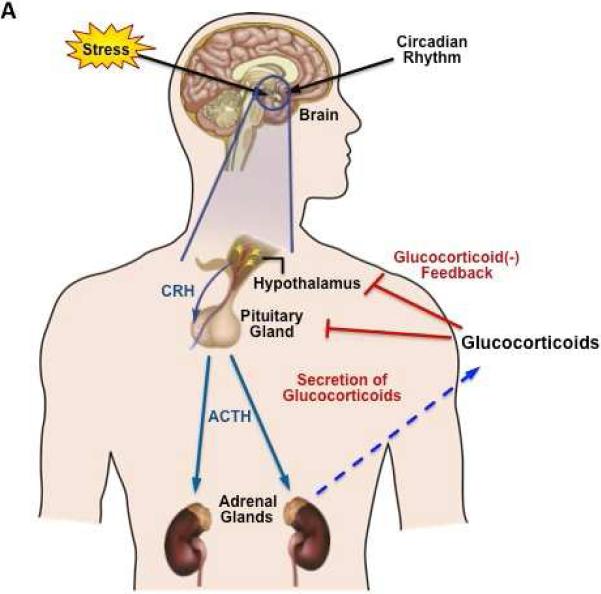
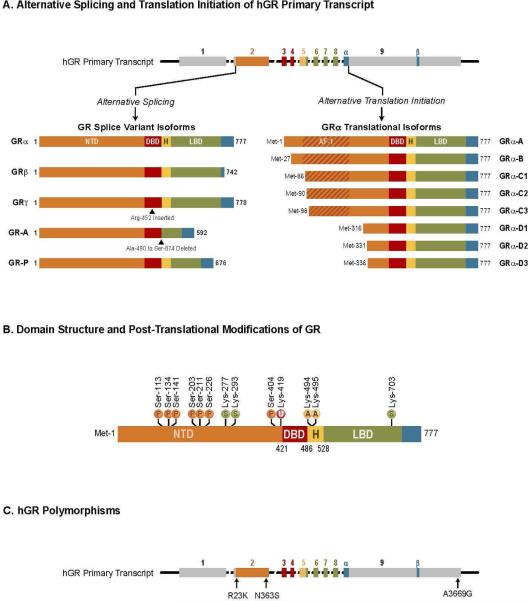
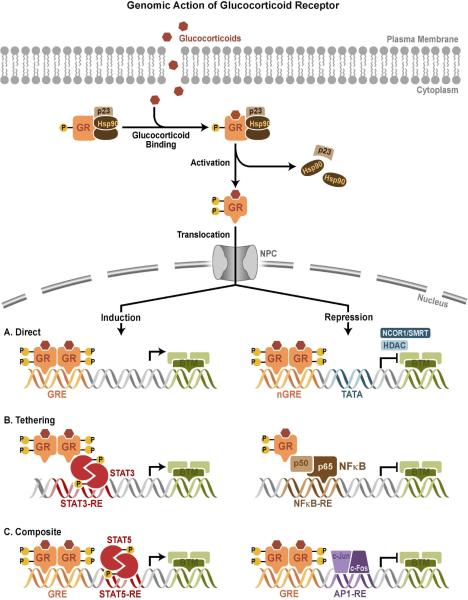
Glucocorticoids are primary stress hormones that regulate a variety of physiologic processes and are essential for life. The actions of glucocorticoids are predominantly mediated through the classic glucocorticoid receptor (GR). GRs are expressed throughout the body, but there is considerable heterogeneity in glucocorticoid sensitivity and biologic responses across tissues. The conventional belief that glucocorticoids act through a single GR protein has changed dramatically with the discovery of a diverse collection of receptor isoforms. This article provides an overview of the molecular mechanisms that regulate glucocorticoid actions, highlights the dynamic nature of hormone signaling, and discusses the molecular properties of the GR isoforms.
糖皮质激素是主要的应激激素,可调节多种生理过程,对生命至关重要。糖皮质激素的作用主要通过经典的糖皮质激素受体(GR)介导。GR在全身表达,但不同组织对糖皮质激素的敏感性和生物学反应存在很大差异。随着多种受体亚型的发现,传统观念中糖皮质激素通过单一GR蛋白发挥作用的观点发生了巨大变化。本文概述了调节糖皮质激素作用的分子机制,强调了激素信号传导的动态性质,并讨论了GR亚型的分子特性。