Liu Hui, Lamm Melissa S, Rutherford Kim, Black Michael A, Godwin John R, Gemmell Neil J
Department of Anatomy, University of Otago, Dunedin, New Zealand.
Department of Biological Sciences, North Carolina State University, Raleigh, NC USA ; W.M. Keck Center for Behavioral Biology, North Carolina State University, Raleigh, NC USA.
Biol Sex Differ. 2015 Nov 25;6:26. doi: 10.1186/s13293-015-0044-8. eCollection 2015.
Teleost fishes exhibit remarkably diverse and plastic sexual developmental patterns. One of the most astonishing is the rapid socially controlled female-to-male (protogynous) sex change observed in bluehead wrasses (Thalassoma bifasciatum). Such functional sex change is widespread in marine fishes, including species of commercial importance, yet its underlying molecular basis remains poorly explored.
RNA sequencing was performed to characterize the transcriptomic profiles and identify genes exhibiting sex-biased expression in the brain (forebrain and midbrain) and gonads of bluehead wrasses. Functional annotation and enrichment analysis were carried out for the sex-biased genes in the gonad to detect global differences in gene products and genetic pathways between males and females.
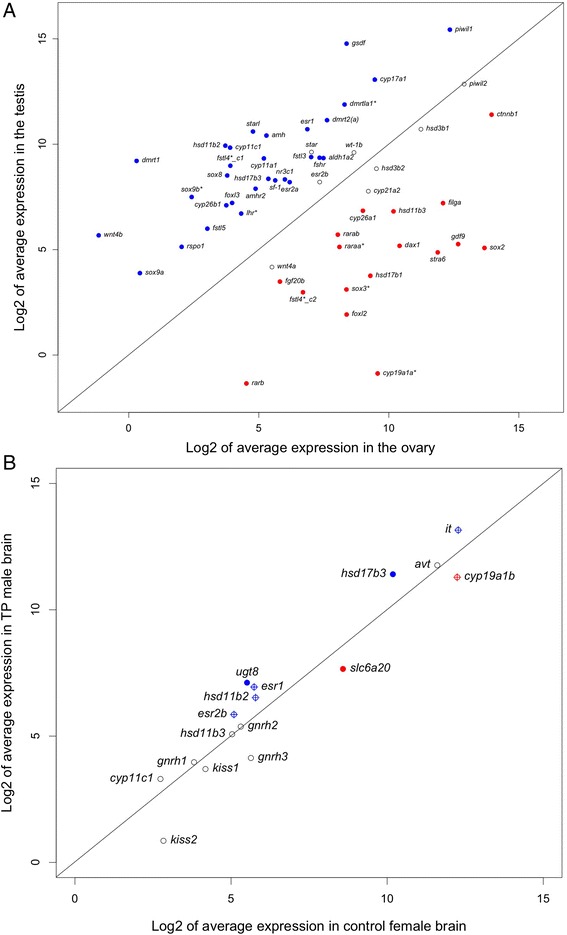
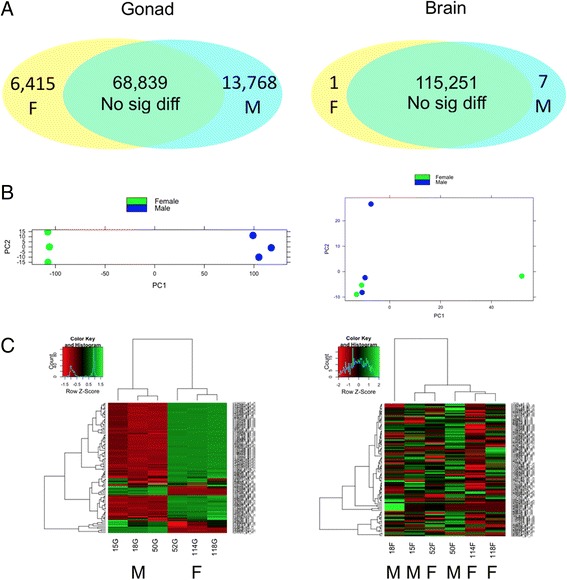
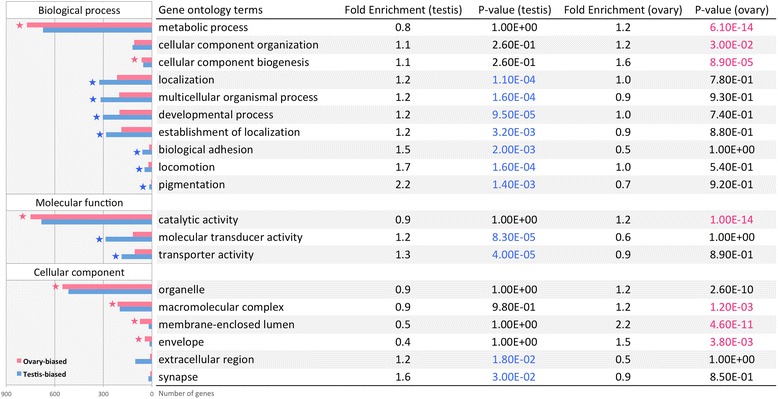
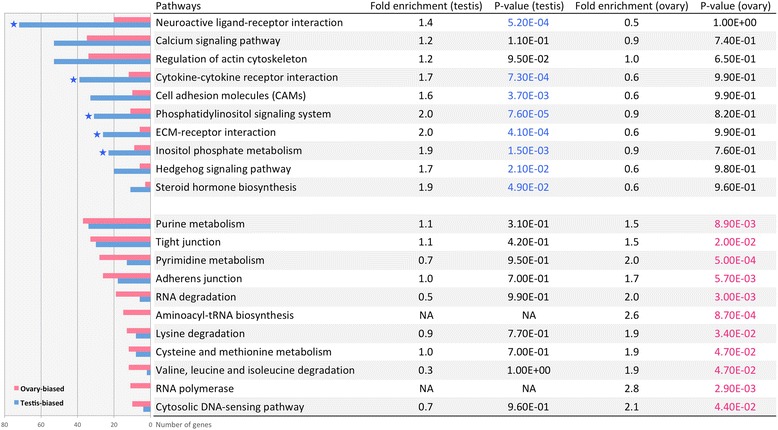
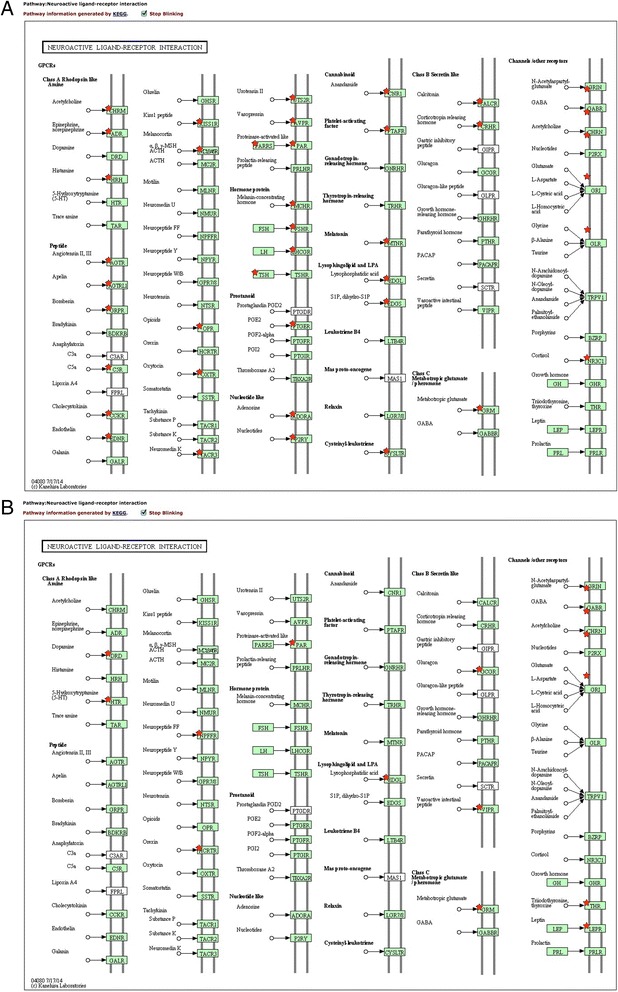
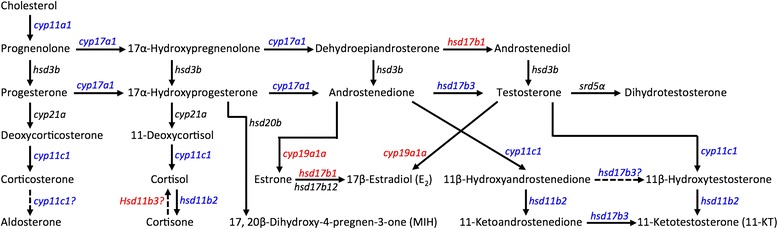
Here we report the first transcriptomic analysis for a protogynous fish. Expression comparison between males and females reveals a large set of genes with sex-biased expression in the gonad, but relatively few such sex-biased genes in the brain. Functional annotation and enrichment analysis suggested that ovaries are mainly enriched for metabolic processes and testes for signal transduction, particularly receptors of neurotransmitters and steroid hormones. When compared to other species, many genes previously implicated in male sex determination and differentiation pathways showed conservation in their gonadal expression patterns in bluehead wrasses. However, some critical female-pathway genes (e.g., rspo1 and wnt4b) exhibited unanticipated expression patterns. In the brain, gene expression patterns suggest that local neurosteroid production and signaling likely contribute to the sex differences observed.
Expression patterns of key sex-related genes suggest that sex-changing fish predominantly use an evolutionarily conserved genetic toolkit, but that subtle variability in the standard sex-determination regulatory network likely contributes to sexual plasticity in these fish. This study not only provides the first molecular data on a system ideally suited to explore the molecular basis of sexual plasticity and tissue re-engineering, but also sheds some light on the evolution of diverse sex determination and differentiation systems.
硬骨鱼类表现出极其多样且具有可塑性的性发育模式。其中最令人惊讶的之一是在蓝头濑鱼(双带锦鱼)中观察到的由社会控制的快速雌性向雄性(雌性先熟)的性转变。这种功能性性转变在海洋鱼类中很普遍,包括具有商业重要性的物种,但其潜在的分子基础仍未得到充分探索。
进行RNA测序以表征转录组概况,并鉴定在蓝头濑鱼的脑(前脑和中脑)和性腺中表现出性别偏向表达的基因。对性腺中的性别偏向基因进行功能注释和富集分析,以检测雄性和雌性之间基因产物和遗传途径的整体差异。
在此,我们报告了对一种雌性先熟鱼类的首次转录组分析。雄性和雌性之间的表达比较揭示了性腺中有大量具有性别偏向表达的基因,但脑中这类性别偏向基因相对较少。功能注释和富集分析表明,卵巢主要富集于代谢过程,而睾丸则富集于信号转导,特别是神经递质和类固醇激素的受体。与其他物种相比,许多先前涉及雄性性别决定和分化途径的基因在蓝头濑鱼的性腺表达模式中表现出保守性。然而,一些关键的雌性途径基因(如rspo1和wnt4b)表现出意想不到的表达模式。在脑中,基因表达模式表明局部神经类固醇的产生和信号传导可能导致了观察到的性别差异。
关键性别相关基因的表达模式表明,性转变鱼类主要使用进化上保守的遗传工具包,但标准性别决定调控网络中的细微变异可能导致这些鱼类的性可塑性。这项研究不仅提供了关于一个非常适合探索性可塑性和组织重塑分子基础的系统的首个分子数据,还为多样的性别决定和分化系统的进化提供了一些启示。