Liu Kai, Song Xilin, Zhu Meirong, Ma Heng
Department of Gastrointestinal Surgery, Shandong Tumor Hospital, Jinan, Shandong 250117, P.R. China.
Intensive Care Unit, Jinan Central Hospital, Jinan, Shandong 250013, P.R. China.
Oncol Lett. 2015 Oct;10(4):2003-2008. doi: 10.3892/ol.2015.3601. Epub 2015 Aug 12.
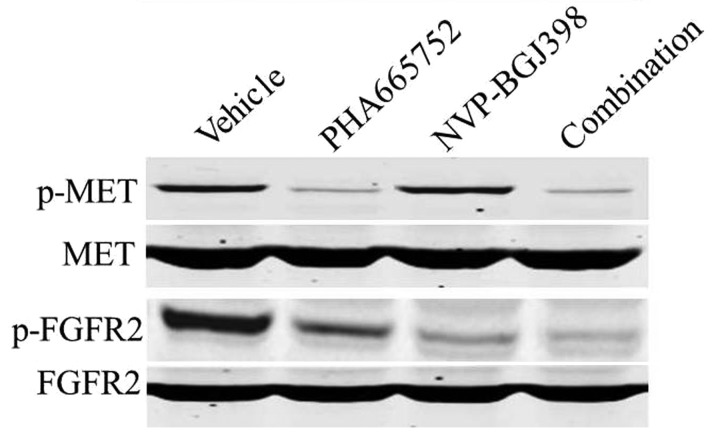
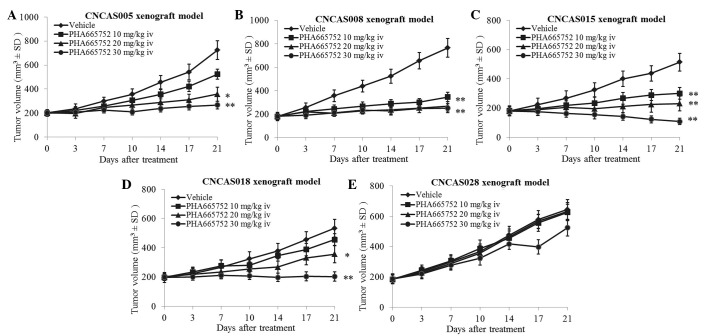
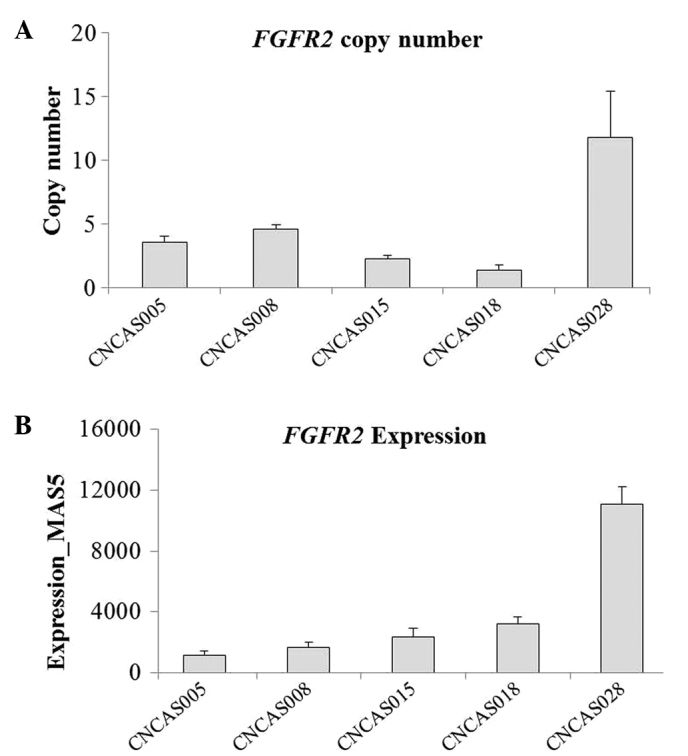
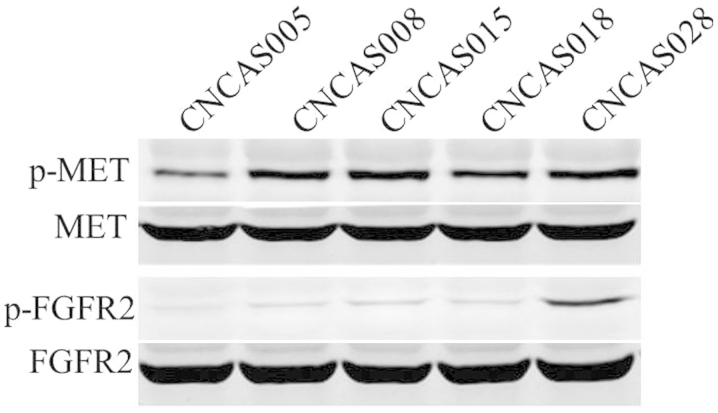
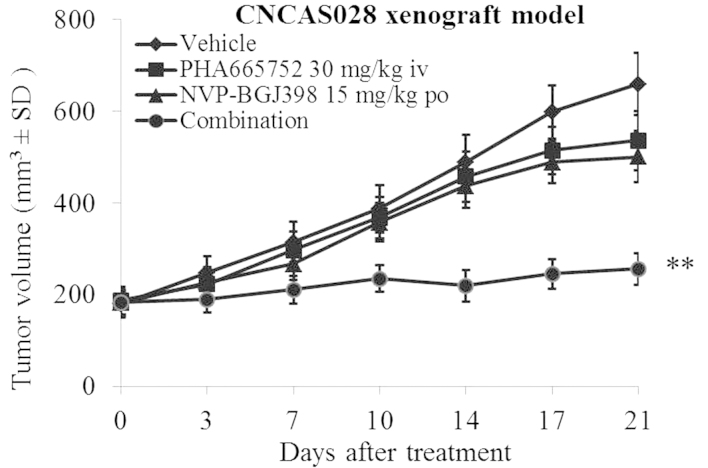
Gastric cancer is one of the most malignant diseases and one of the leading causes of cancer-associated mortality worldwide. Although advances have been made in surgical techniques, perioperative management and the combined use of surgery with chemotherapy and/or radiotherapy, patients with advanced stage gastric cancer continue to face poor outcomes. Furthermore, it was reported that gene amplification and overexpression predicted the sensitivity to MET inhibitors in gastric cancer. However, the identification of drug-resistant tumors has encouraged the pre-emptive elucidation of the possible mechanisms of clinical resistance. The current study assessed a number of patient-derived gastric cancer models with amplification and overexpression, including CNGAS028. The tumor tissues were subjected to microarray analysis (using single nucleotide polymorphism 6.0 and human genome U133 arrays) followed by western blotting. The results demonstrated that CNGAS028 xenograft tumors did not respond to treatment with a selective MET inhibitor. Additional analysis indicated that overexpression contributed to the resistance to MET inhibitors. Furthermore, treatment with a combination of fibroblast growth factor receptor 2 and MET inhibitors inhibited the growth of CNGAS028 xenograft tumors . In conclusion, the current results aid in understanding the mechanism of inherent resistance to selective MET inhibitors as well as provide important information for patient selection and clinical treatment strategies.
胃癌是最恶性的疾病之一,也是全球癌症相关死亡的主要原因之一。尽管手术技术、围手术期管理以及手术与化疗和/或放疗的联合应用取得了进展,但晚期胃癌患者的预后仍然很差。此外,有报道称基因扩增和过表达可预测胃癌对MET抑制剂的敏感性。然而,耐药肿瘤的鉴定促使人们抢先阐明临床耐药的可能机制。本研究评估了多种具有扩增和过表达的患者来源的胃癌模型,包括CNGAS028。对肿瘤组织进行微阵列分析(使用单核苷酸多态性6.0和人类基因组U133阵列),随后进行蛋白质印迹分析。结果表明,CNGAS028异种移植肿瘤对选择性MET抑制剂治疗无反应。进一步分析表明,过表达导致对MET抑制剂耐药。此外,成纤维细胞生长因子受体2和MET抑制剂联合治疗可抑制CNGAS028异种移植肿瘤的生长。总之,目前的结果有助于理解对选择性MET抑制剂的固有耐药机制,并为患者选择和临床治疗策略提供重要信息。