Wang Jichang, Li Guangyue, Wang Yaochun, Tang Shouching, Sun Xin, Feng Xuefei, Li Yan, Bao Gang, Li Pingping, Mao Xiaona, Wang Maode, Liu Peijun
Department of Neurosurgery, The First Affiliated Hospital of Xi'an Jiaotong University, Xi'an, Shaanxi Province, 710061, P.R.China.
Department of Vascular Surgery, The First Affiliated Hospital of Xi'an Jiaotong University, Xi'an, Shaanxi Province, 710061, P.R.China.
Oncotarget. 2015 Dec 29;6(42):44579-92. doi: 10.18632/oncotarget.6373.
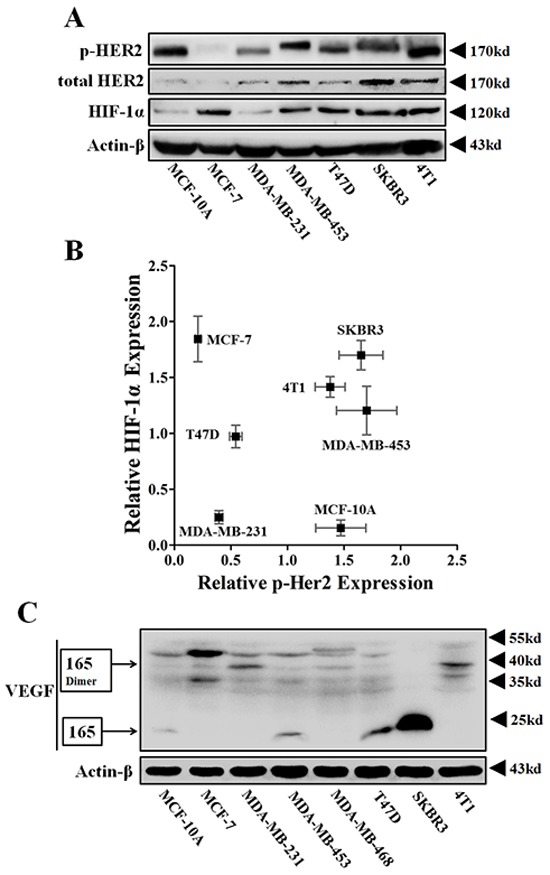
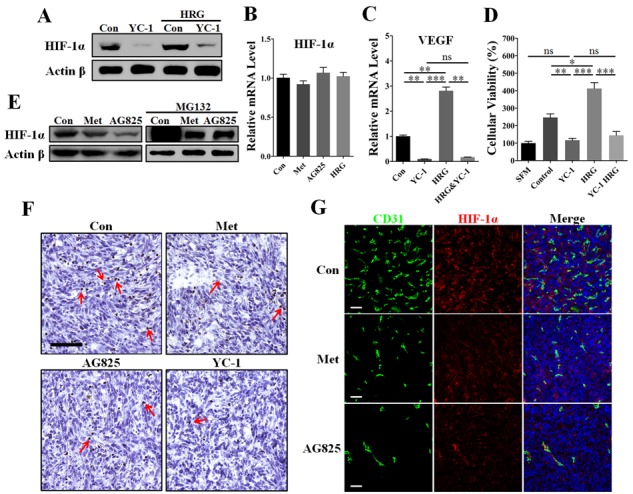
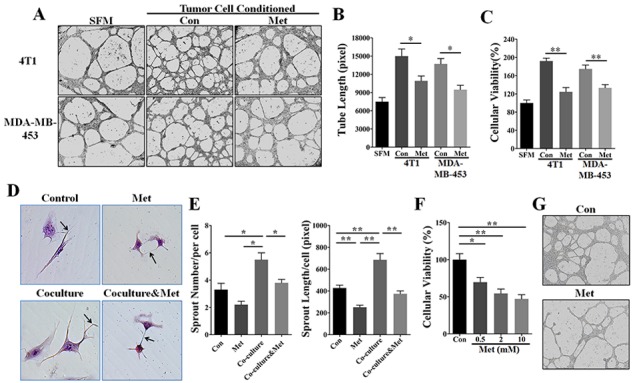
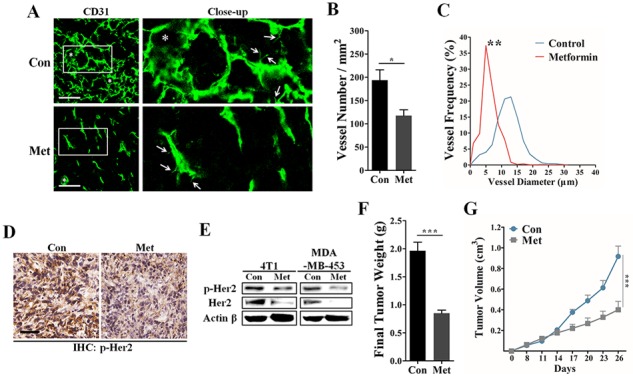
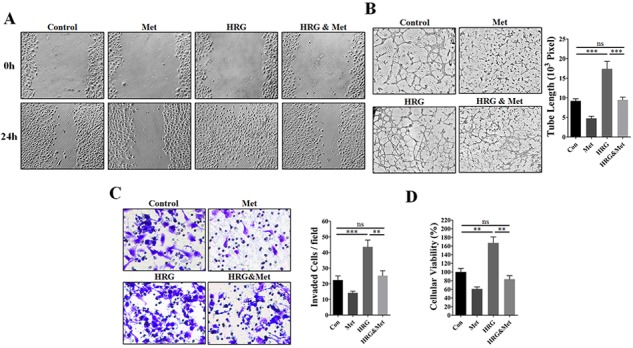
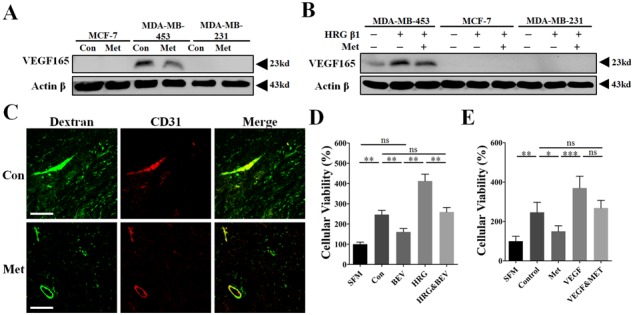
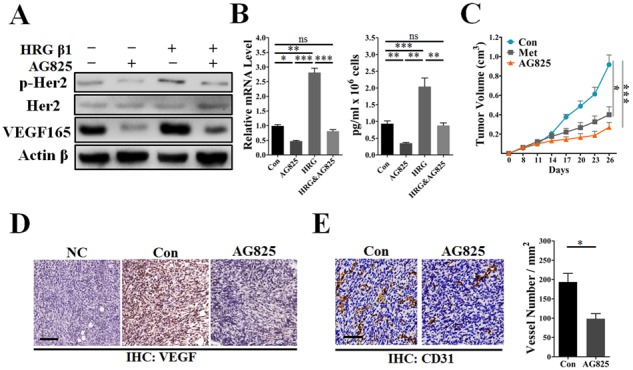
Anti-angiogenesis is currently considered as one of the major antitumor strategies for its protective effects against tumor emergency and later progression. The anti-diabetic drug metformin has been demonstrated to significantly inhibit tumor angiogenesis based on recent studies. However, the mechanism underlying this anti-angiogenic effect still remains an enigma. In this study, we investigated metformin-induced inhibitory effect on tumor angiogenesis in vitro and in vivo. Metformin pretreatment significantly suppressed tumor paracrine signaling-induced angiogenic promotion even in the presence of heregulin (HRG)-β1 (a co-activator of HER2) pretreatment of HER2+ tumor cells. Similar to that of AG825, a specific inhibitor of HER2 phosphorylation, metformin treatment decreased both total and phosphorylation (Tyr 1221/1222) levels of HER2 protein and significantly reduced microvessel density and the amount of Fitc-conjugated Dextran leaking outside the vessel. Furthermore, our results of VEGF-neutralizing and -rescuing tests showed that metformin markedly abrogated HER2 signaling-induced tumor angiogenesis by inhibiting VEGF secretion. Inhibition of HIF-1α signaling by using RNAi or YC-1, a specific inhibitor of HIF-1α synthesis, both completely diminished mRNA level of VEGF and greatly inhibited endothelial cell proliferation promoted by HER2+ tumor cell-conditioned medium in both the absence and presence of HRG-β1 pretreatment. Importantly, metformin treatment decreased the number of HIF-1α nucleus positive cells in 4T1 tumors, accompanied by decreased microvessel density. Our data thus provides novel insight into the mechanism underlying the metformin-induced inhibition of tumor angiogenesis and indicates possibilities of HIF-1α-VEGF signaling axis in mediating HER2-induced tumor angiogenesis.
抗血管生成因其对肿瘤急症及后续进展的保护作用,目前被视为主要的抗肿瘤策略之一。基于近期研究,抗糖尿病药物二甲双胍已被证明能显著抑制肿瘤血管生成。然而,这种抗血管生成作用的潜在机制仍是个谜。在本研究中,我们调查了二甲双胍在体外和体内对肿瘤血管生成的抑制作用。即使在HER2+肿瘤细胞经这里菌素(HRG)-β1(HER2的一种共激活剂)预处理的情况下,二甲双胍预处理仍能显著抑制肿瘤旁分泌信号诱导的血管生成促进作用。与HER2磷酸化的特异性抑制剂AG825类似,二甲双胍处理降低了HER2蛋白的总量和磷酸化(酪氨酸1221/1222)水平,并显著降低了微血管密度以及血管外渗漏的异硫氰酸荧光素缀合葡聚糖的量。此外,我们的VEGF中和与挽救试验结果表明,二甲双胍通过抑制VEGF分泌显著消除了HER2信号诱导的肿瘤血管生成。使用RNAi或HIF-1α合成的特异性抑制剂YC-1抑制HIF-1α信号,在有无HRG-β1预处理的情况下,均完全降低了VEGF的mRNA水平,并极大地抑制了HER2+肿瘤细胞条件培养基促进的内皮细胞增殖。重要的是,二甲双胍处理减少了4T1肿瘤中HIF-1α核阳性细胞的数量,同时伴有微血管密度的降低。因此,我们的数据为二甲双胍诱导的肿瘤血管生成抑制机制提供了新的见解,并表明HIF-1α-VEGF信号轴在介导HER2诱导的肿瘤血管生成中的可能性。