Banda Richard, Fylkesnes Knut, Sandøy Ingvild Fossgard
Central Statistical Office, Lusaka, Zambia ; Centre for International Health, University of Bergen, Bergen, Norway.
Centre for International Health, University of Bergen, Bergen, Norway.
Popul Health Metr. 2015 Nov 30;13:32. doi: 10.1186/s12963-015-0066-9. eCollection 2015.
The use of census data to measure maternal mortality is a recent phenomenon, implemented in settings with non-functional vital registration systems and driven by needs for trend data. The 2010 round of population and housing censuses recorded a significant increase in the number of countries collecting maternal mortality data. The objective of this study was to estimate rural-urban differentials in pregnancy-related mortality in Zambia using census data.
We used data from the Zambia 2000 and 2010 censuses. Both censuses recorded the female population by age, the number of children ever born, and live births 12 months prior to the census. The 2010 census further recorded, by age, household, and pregnancy-related deaths 12 months prior to the census. We evaluated and adjusted recorded live births using the cohort Parity Fertility ratio method, and household deaths using deaths distribution methods (General Growth Balance and Synthetic Extinct Generation). Adult female mortality and pregnancy-related mortality for rural and urban areas were estimated for the period October 2009 to October 2010.
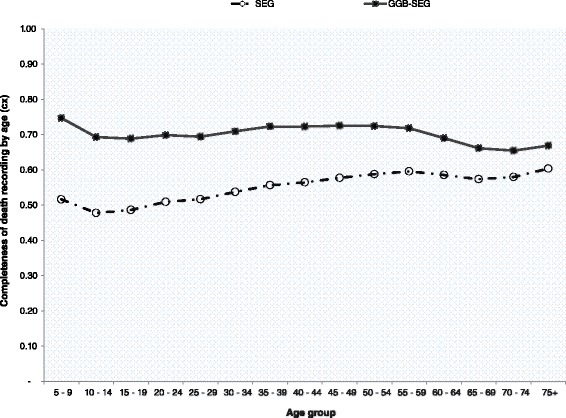
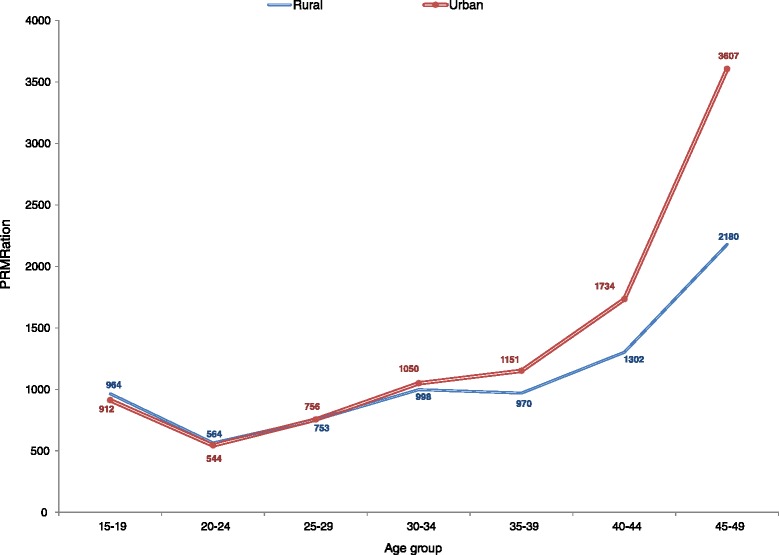
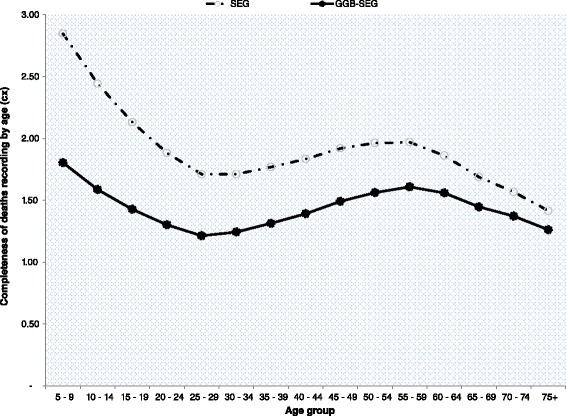
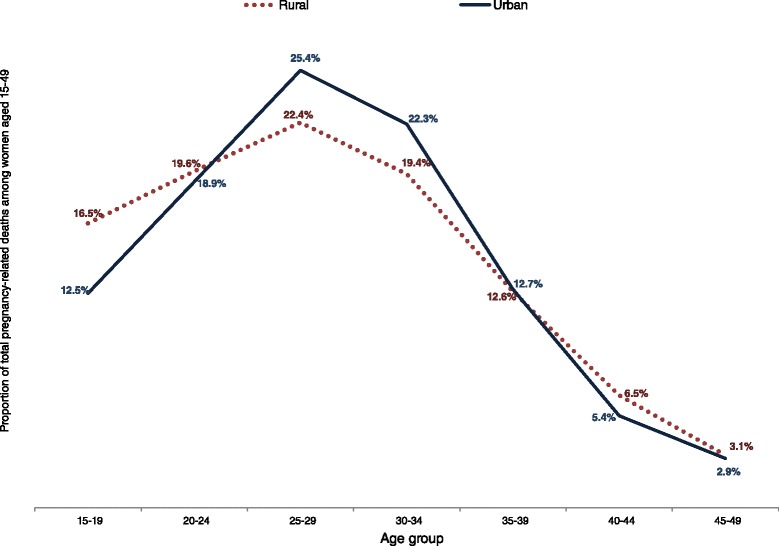
Data evaluation showed errors in recorded population age, age-at-death, live births, and deaths, and appropriate adjustments were made. Adjusted adult female mortality was high; an adolescent aged 15 years had a one-in-three chance of dying before her 50th birthday in rural areas and one-in-four chance in urban areas. Pregnancy-related deaths comprised 15.3 % of all deaths among reproductive-age women overall; 17.9 % in rural areas and 9.8 % in urban areas. The pregnancy-related mortality ratio for the period was 789 deaths/100,000 live births overall: 960/100,000 live births in rural areas and 470/100,000 live births in urban areas.
Census-based estimates show very high adult female mortality and particularly high pregnancy-related mortality in both rural and urban areas of Zambia 12 months prior to the 2010 census. Future censuses should pay greater attention to strategies for improving data quality.
利用人口普查数据来衡量孕产妇死亡率是最近才出现的现象,在生命登记系统无法正常运行的地区实施,并受趋势数据需求的推动。2010年的人口与住房普查显示,收集孕产妇死亡率数据的国家数量显著增加。本研究的目的是利用普查数据估算赞比亚城乡妊娠相关死亡率的差异。
我们使用了赞比亚2000年和2010年人口普查的数据。两次普查都记录了按年龄划分的女性人口、曾生育子女数以及普查前12个月的活产数。2010年人口普查还按年龄、家庭记录了普查前12个月的与妊娠相关的死亡情况。我们使用队列胎次生育率法评估并调整记录的活产数,使用死亡分布方法(总体增长平衡法和合成灭绝世代法)评估并调整家庭死亡数。估算了2009年10月至2010年10月期间农村和城市地区成年女性死亡率及妊娠相关死亡率。
数据评估显示记录的人口年龄、死亡年龄、活产数和死亡数存在误差,并进行了适当调整。调整后的成年女性死亡率很高;农村地区15岁的青少年在50岁前死亡的几率为三分之一,城市地区为四分之一。妊娠相关死亡占育龄妇女所有死亡人数的15.3%;农村地区为17.9%,城市地区为9.8%。该时期的妊娠相关死亡率为每10万活产789例死亡:农村地区为每10万活产960例,城市地区为每10万活产470例。
基于普查的估算显示,在2010年人口普查前12个月,赞比亚城乡成年女性死亡率非常高,尤其是妊娠相关死亡率。未来的人口普查应更加关注提高数据质量的策略。