Painter Meghan M, Morrison James H, Zoecklein Laurie J, Rinkoski Tommy A, Watzlawik Jens O, Papke Louisa M, Warrington Arthur E, Bieber Allan J, Matchett William E, Turkowski Kari L, Poeschla Eric M, Rodriguez Moses
Mayo Graduate School of Medicine, Mayo Clinic, Rochester, Minnesota, United States of America.
Department of Molecular Medicine, University of Colorado School of Medicine, Aurora, Colorado, United States of America.
PLoS Pathog. 2015 Dec 3;11(12):e1005311. doi: 10.1371/journal.ppat.1005311. eCollection 2015 Dec.
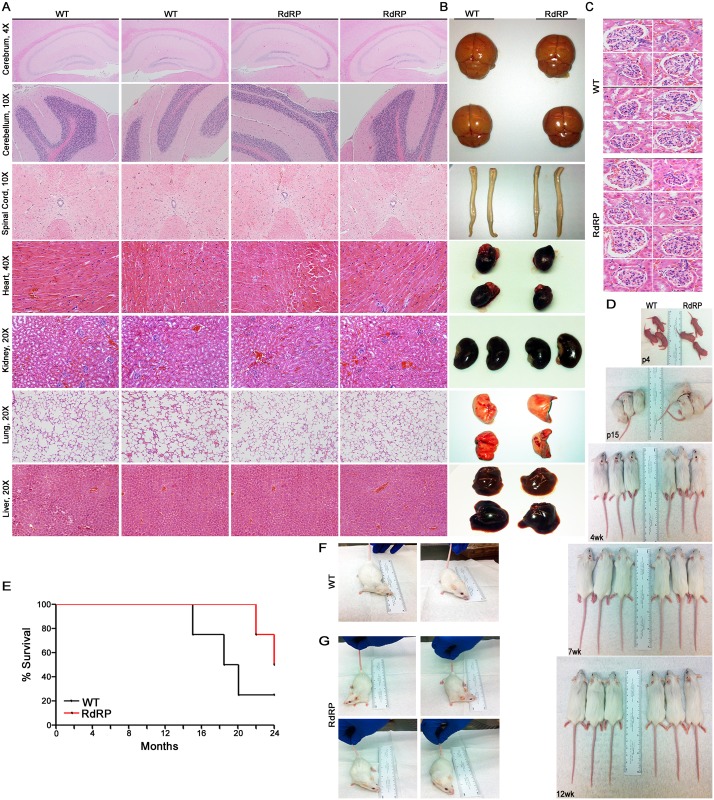
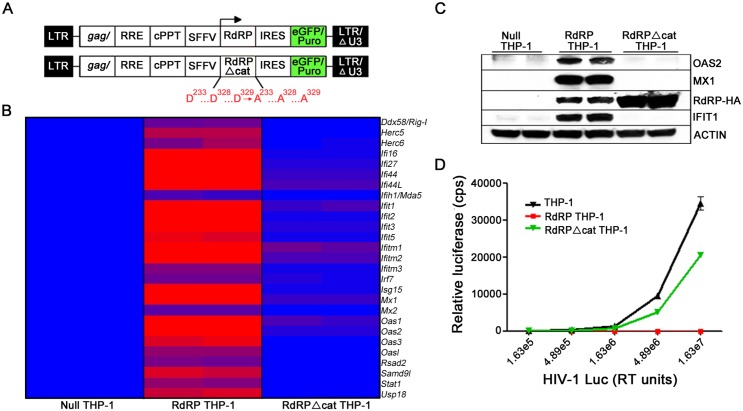
For many emerging and re-emerging infectious diseases, definitive solutions via sterilizing adaptive immunity may require years or decades to develop, if they are even possible. The innate immune system offers alternative mechanisms that do not require antigen-specific recognition or a priori knowledge of the causative agent. However, it is unclear whether effective stable innate immune system activation can be achieved without triggering harmful autoimmunity or other chronic inflammatory sequelae. Here, we show that transgenic expression of a picornavirus RNA-dependent RNA polymerase (RdRP), in the absence of other viral proteins, can profoundly reconfigure mammalian innate antiviral immunity by exposing the normally membrane-sequestered RdRP activity to sustained innate immune detection. RdRP-transgenic mice have life-long, quantitatively dramatic upregulation of 80 interferon-stimulated genes (ISGs) and show profound resistance to normally lethal viral challenge. Multiple crosses with defined knockout mice (Rag1, Mda5, Mavs, Ifnar1, Ifngr1, and Tlr3) established that the mechanism operates via MDA5 and MAVS and is fully independent of the adaptive immune system. Human cell models recapitulated the key features with striking fidelity, with the RdRP inducing an analogous ISG network and a strict block to HIV-1 infection. This RdRP-mediated antiviral mechanism does not depend on secondary structure within the RdRP mRNA but operates at the protein level and requires RdRP catalysis. Importantly, despite lifelong massive ISG elevations, RdRP mice are entirely healthy, with normal longevity. Our data reveal that a powerfully augmented MDA5-mediated activation state can be a well-tolerated mammalian innate immune system configuration. These results provide a foundation for augmenting innate immunity to achieve broad-spectrum antiviral protection.
对于许多新出现和再次出现的传染病而言,通过产生杀菌性适应性免疫来找到最终解决方案可能需要数年甚至数十年的时间,甚至这是否可行都不确定。先天免疫系统提供了一些替代机制,这些机制不需要抗原特异性识别或对病原体的先验知识。然而,尚不清楚在不引发有害自身免疫或其他慢性炎症后遗症的情况下,是否能够实现有效的稳定先天免疫系统激活。在这里,我们表明,在没有其他病毒蛋白的情况下,微小核糖核酸病毒RNA依赖性RNA聚合酶(RdRP)的转基因表达可以通过将通常被膜隔离的RdRP活性暴露于持续的先天免疫检测中,从而深刻地重新配置哺乳动物的先天抗病毒免疫。RdRP转基因小鼠终身定量显著上调80种干扰素刺激基因(ISG),并对通常致命的病毒攻击表现出极强的抵抗力。与特定基因敲除小鼠(Rag1、Mda5、Mavs、Ifnar1、Ifngr1和Tlr3)进行的多次杂交实验表明,该机制通过MDA5和MAVS起作用,并且完全独立于适应性免疫系统。人类细胞模型以惊人的保真度重现了关键特征,RdRP诱导了类似的ISG网络,并对HIV-1感染形成了严格的阻断。这种RdRP介导的抗病毒机制不依赖于RdRP mRNA内的二级结构,而是在蛋白质水平起作用,并且需要RdRP催化。重要的是,尽管ISG终身大量升高,但RdRP小鼠完全健康,寿命正常。我们的数据表明,强大增强的MDA5介导的激活状态可以是一种耐受性良好的哺乳动物先天免疫系统配置。这些结果为增强先天免疫以实现广谱抗病毒保护提供了基础。