Institute for Glycomics, Griffith University, Gold Coast Campus, Southport, Queensland, Australia.
Institute of Technology, University of Tartu, Tartu, Estonia.
mBio. 2018 Aug 21;9(4):e00044-18. doi: 10.1128/mBio.00044-18.
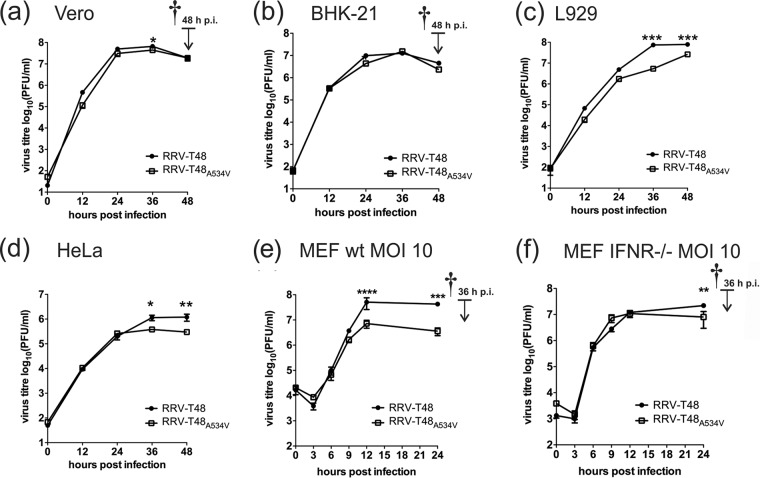
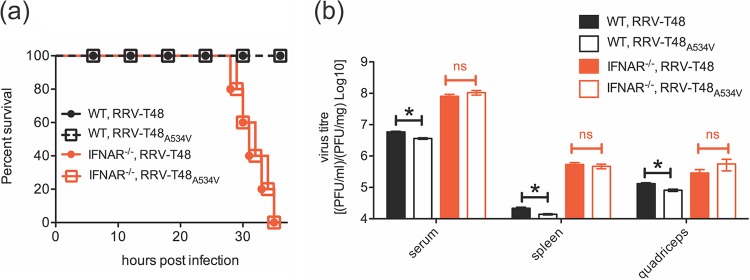
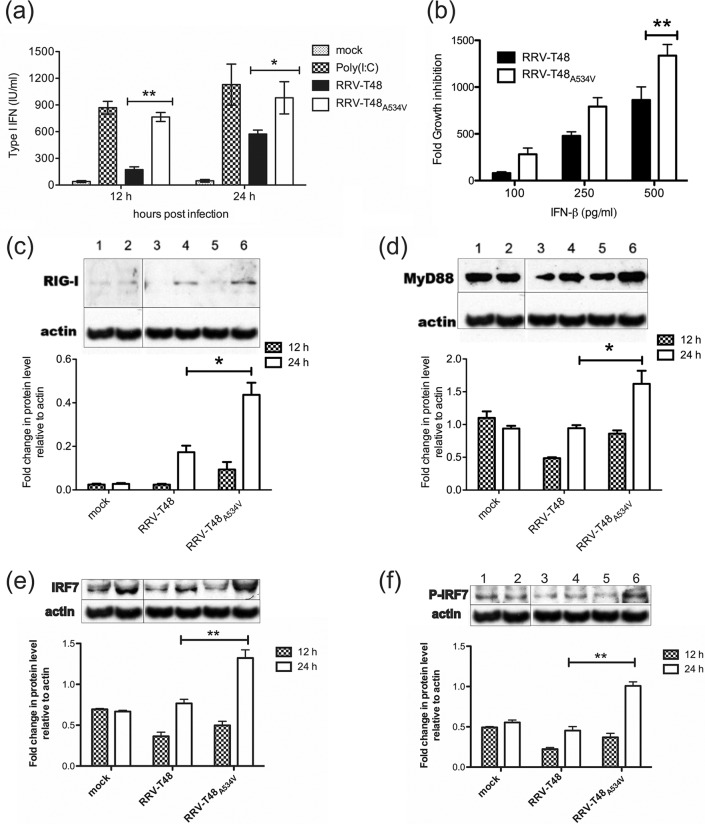
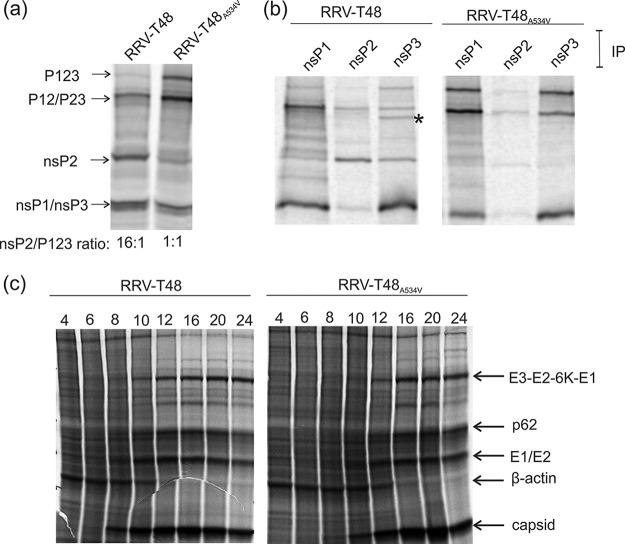
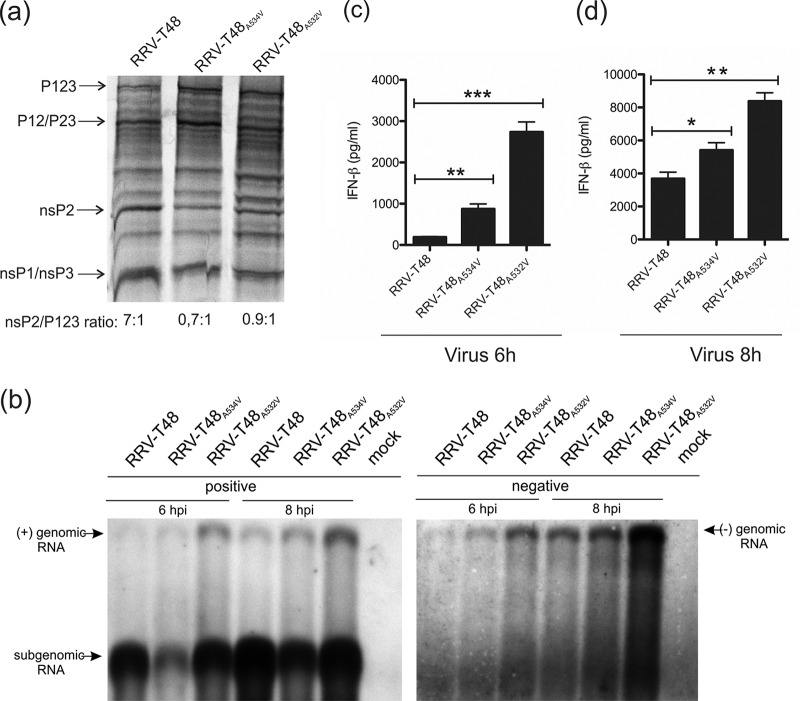
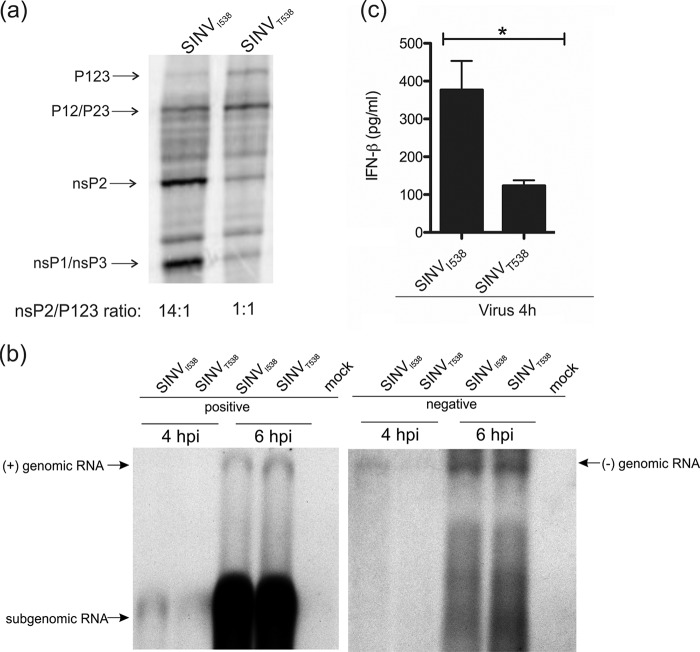
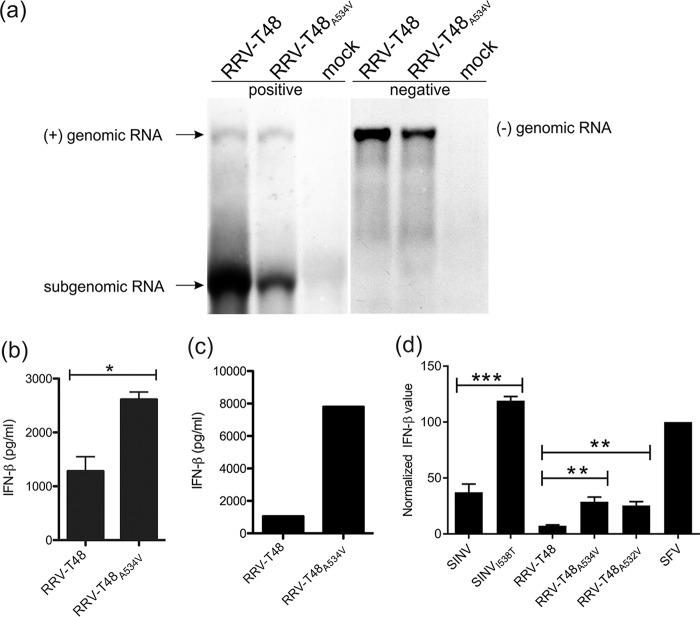
Infection with Ross River virus (RRV) causes debilitating polyarthritis and arthralgia in individuals. Alphaviruses are highly sensitive to type I interferon (IFN). Mutations at the conserved P3 position of the cleavage site between nonstructural protein 1 (nsP1) and nsP2 (1/2 site) modulate type I IFN induction for both RRV and Sindbis virus (SINV). We constructed and characterized RRV-T48, a mutant harboring an A534V substitution in the P1 position of the 1/2 site, and compared it to parental RRV-T48 and to RRV-T48, SINV and SINV harboring different substitutions in the same region. A534V substitution resulted in impaired processing of RRV nonstructural polyprotein and in elevated production of replicase-generated pathogen-associated molecular pattern (PAMP) RNAs that induce expression of type I IFN. Both A532V and A534V substitutions affected synthesis of viral RNAs, though the effects of these closely located mutations were drastically different affecting mostly either the viral negative-strand RNA or genomic and subgenomic RNA levels, respectively. Synthesis of PAMP RNAs was also observed for SINV replicase, and it was increased by I538T substitution. In comparison to RRV-T48, RRV-T48 was attenuated and Interestingly, when type I IFN-deficient cells and type I IFN receptor-deficient mice were infected with RRV-T48 or RRV-T48, differences between these viruses were no longer apparent. Compared to RRV-T48, RRV-T48 infection was associated with increased upregulation of type I IFN signaling proteins. We demonstrate novel mechanisms by which the A534V mutation affect viral nonstructural polyprotein processing that can impact PAMP RNA production, type I IFN induction/sensitivity, and disease. This study gives further insight into mechanisms of type I IFN modulation by the medically important alphaviruses Ross River virus (RRV) and Sindbis virus (SINV). By characterizing attenuated RRV mutants, the crucial role of amino acid residues in P1 and P3 positions (the first and third amino acid residues preceding the scissile bond) of the cleavage site between nsP1 and nsP2 regions was highlighted. The study uncovers a unique relationship between alphavirus nonstructural polyprotein processing, RNA replication, production of different types of pathogen-associated molecular pattern (PAMP) RNAs, type I IFN induction, and disease pathogenesis. This study also highlights the importance of the host innate immune response in RRV infections. The viral determinants of type I IFN modulation provide potential drug targets for clinical treatment of alphaviral disease and offer new approaches for rational attenuation of alphaviruses for construction of vaccine candidates.
感染罗斯河病毒 (RRV) 会导致个体出现衰弱性多发性关节炎和关节痛。甲病毒对 I 型干扰素 (IFN) 非常敏感。非结构蛋白 1 (nsP1) 和 nsP2 之间的切割位点 (1/2 位点) 保守 P3 位置的突变调节 RRV 和辛德比斯病毒 (SINV) 的 I 型 IFN 诱导。我们构建并表征了 RRV-T48,这是一种在 1/2 位点的 P1 位置具有 A534V 取代的突变体,并将其与亲本 RRV-T48 和具有相同区域中不同取代的 RRV-T48、SINV 和 SINV 进行了比较。A534V 取代导致 RRV 非结构多蛋白的加工受损,并导致复制酶产生的病原体相关分子模式 (PAMP) RNA 的产生升高,从而诱导 I 型 IFN 的表达。A532V 和 A534V 取代均影响病毒 RNA 的合成,尽管这些位置相近的突变的影响截然不同,主要影响病毒负链 RNA 或基因组和亚基因组 RNA 水平。SINV 复制酶也观察到 PAMP RNA 的合成,并且 I538T 取代增加了这种合成。与 RRV-T48 相比,RRV-T48 被削弱了。有趣的是,当用 RRV-T48 或 RRV-T48 感染 I 型 IFN 缺陷细胞和 I 型 IFN 受体缺陷小鼠时,这些病毒之间的差异不再明显。与 RRV-T48 相比,RRV-T48 感染与 I 型 IFN 信号蛋白的上调增加有关。我们证明了 A534V 突变影响病毒非结构多蛋白加工的新机制,这可能影响 PAMP RNA 的产生、I 型 IFN 的诱导/敏感性和疾病。这项研究进一步深入了解了医学上重要的甲病毒罗斯河病毒 (RRV) 和辛德比斯病毒 (SINV) 对 I 型 IFN 的调节机制。通过表征减毒的 RRV 突变体,突出了 nsP1 和 nsP2 区域之间的切割位点 (nsP1 和 nsP2 区域之间的第一个和第三个氨基酸残基) 中 P1 和 P3 位置 (切割位点前的第一个和第三个氨基酸残基) 中氨基酸残基的关键作用。该研究揭示了甲病毒非结构多蛋白加工、RNA 复制、不同类型病原体相关分子模式 (PAMP) RNA 产生、I 型 IFN 诱导和疾病发病机制之间的独特关系。这项研究还强调了宿主先天免疫反应在 RRV 感染中的重要性。I 型 IFN 调节的病毒决定因素为甲病毒病的临床治疗提供了潜在的药物靶点,并为构建疫苗候选物提供了合理减毒甲病毒的新方法。