Moyer Adam L, Wagner Kathryn R
The Hugo W. Moser Research Institute, Kennedy Krieger Institute, Baltimore, MD 21205 ; Graduate Program in Cellular and Molecular Medicine, Johns Hopkins School of Medicine, Baltimore, MD 21287.
The Hugo W. Moser Research Institute, Kennedy Krieger Institute, Baltimore, MD 21205 ; Graduate Program in Cellular and Molecular Medicine, Johns Hopkins School of Medicine, Baltimore, MD 21287 ; Departments of Neurology and Neuroscience, Johns Hopkins School of Medicine, Baltimore, MD 21287.
J Neuromuscul Dis. 2015;2(4):371-385. doi: 10.3233/JND-150119. Epub 2015 Sep 21.
The transforming growth factor β (TGF-β) signaling pathways modulate skeletal muscle growth, regeneration, and cellular metabolism. Several recent gene expression studies have shown that inhibition of myostatin and TGF-β1 signaling consistently leads to a significant reduction in expression of Mss51, also named Zmynd17. The function of mammalian Mss51 is unknown although a putative homolog in yeast is a mitochondrial translational activator.
The objective of this work was to characterize mammalian Mss51.
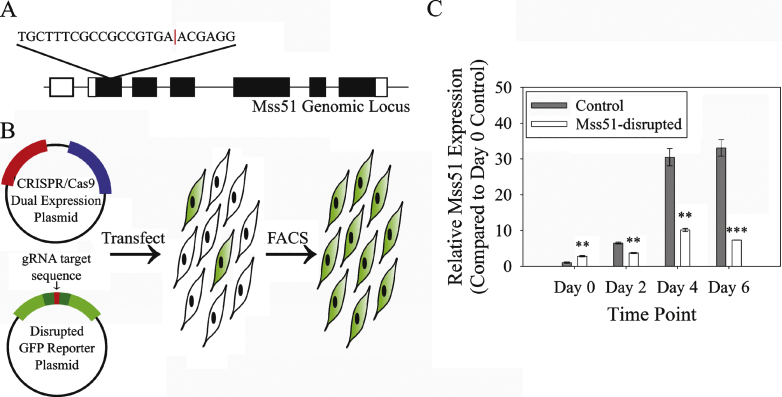
Quantitative RT-PCR and immunoblot of subcellular fractionation were used to determine expression patterns and localization of Mss51. The CRISPR/Cas9 system was used to reduce expression of Mss51 in C2C12 myoblasts and the function of Mss51 was evaluated in assays of proliferation, differentiation and cellular metabolism.
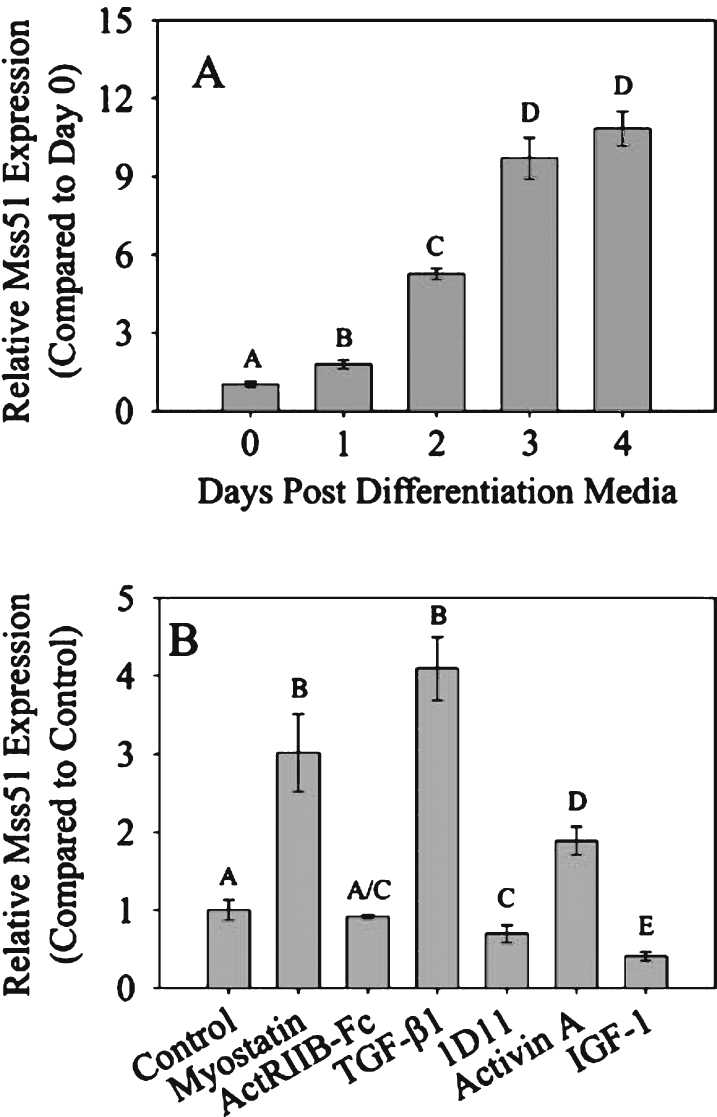
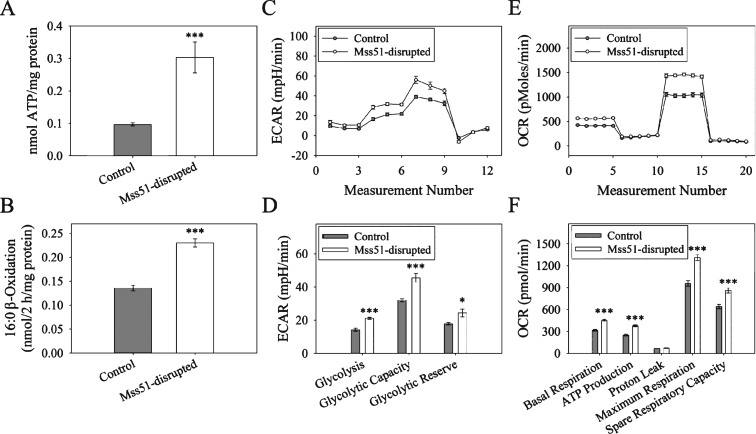
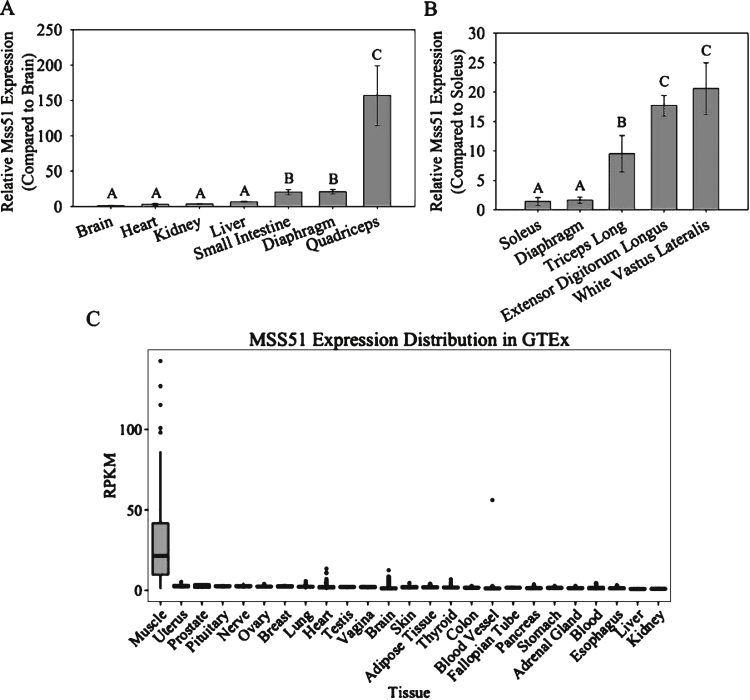
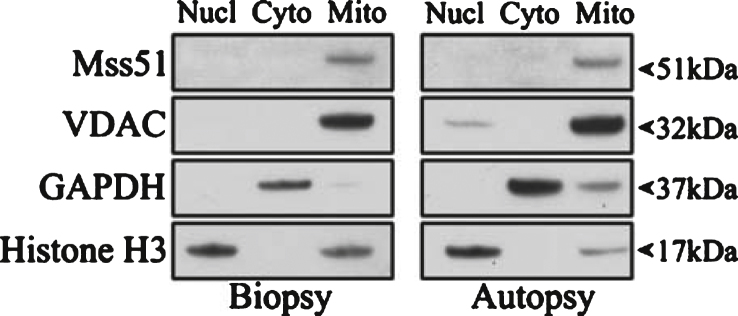
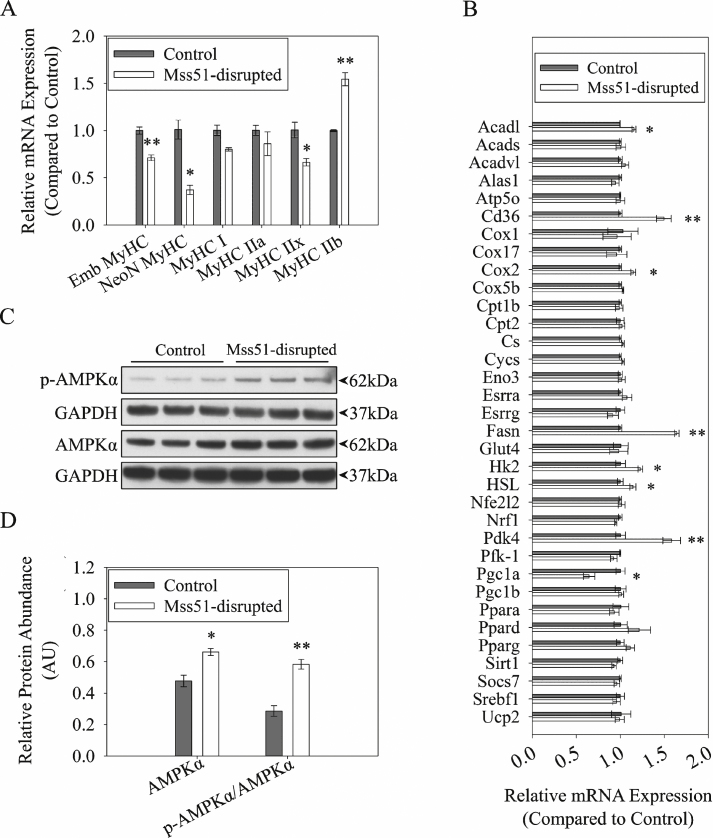
Mss51 was predominantly expressed in skeletal muscle and in those muscles dominated by fast-twitch fibers. , its expression was upregulated upon differentiation of C2C12 myoblasts into myotubes. Expression of Mss51 was modulated in response to altered TGF-β family signaling. In human muscle, Mss51 localized to the mitochondria. Its genetic disruption resulted in increased levels of cellular ATP, β-oxidation, glycolysis, and oxidative phosphorylation.
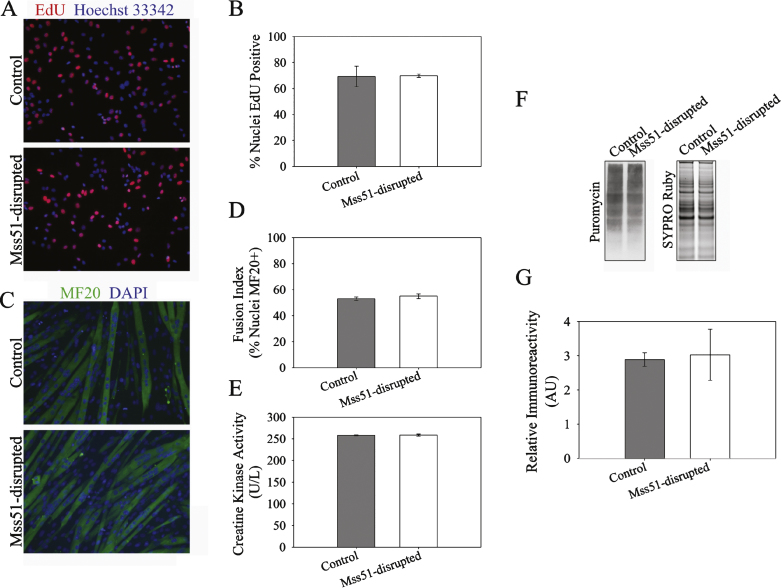
is a novel, skeletal muscle-specific gene and a key target of myostatin and TGF-β1 signaling. Unlike myostatin, TGF-β1 and IGF-1, Mss51 does not regulate myoblast proliferation or differentiation. Rather, Mss51 appears to be one of the effectors of these growth factors on metabolic processes including fatty acid oxidation, glycolysis and oxidative phosphorylation.
转化生长因子β(TGF-β)信号通路调节骨骼肌生长、再生和细胞代谢。最近的几项基因表达研究表明,抑制肌生成抑制素和TGF-β1信号通路会持续导致Mss51(也称为Zmynd17)的表达显著降低。哺乳动物Mss51的功能尚不清楚,尽管酵母中的一个假定同源物是线粒体翻译激活剂。
本研究旨在对哺乳动物Mss51进行表征。
采用定量逆转录聚合酶链反应(RT-PCR)和亚细胞分级分离免疫印迹法来确定Mss51的表达模式和定位。利用CRISPR/Cas9系统降低C2C12成肌细胞中Mss51的表达,并在增殖、分化和细胞代谢试验中评估Mss51的功能。
Mss51主要在骨骼肌和以快肌纤维为主的肌肉中表达。此外,在C2C12成肌细胞分化为肌管时其表达上调。Mss51的表达受TGF-β家族信号改变的调节。在人类肌肉中,Mss51定位于线粒体。其基因破坏导致细胞ATP、β-氧化、糖酵解和氧化磷酸化水平升高。
Mss51是一种新型的骨骼肌特异性基因,是肌生成抑制素和TGF-β1信号通路的关键靶点。与肌生成抑制素、TGF-β1和胰岛素样生长因子-1不同,Mss51不调节成肌细胞的增殖或分化。相反,Mss51似乎是这些生长因子对包括脂肪酸氧化、糖酵解和氧化磷酸化在内的代谢过程的效应器之一。