National Institute on Aging-Intramural Research Program, National Institutes of Health, Baltimore, MD, USA.
Nat Commun. 2021 Apr 1;12(1):2014. doi: 10.1038/s41467-021-22168-2.
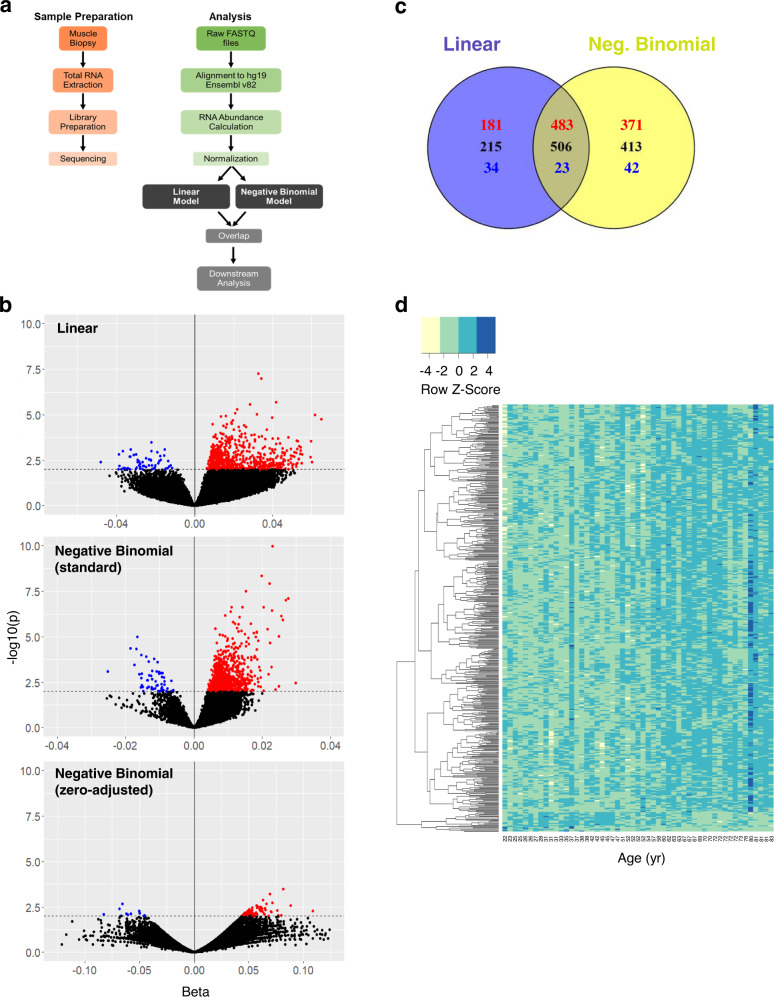
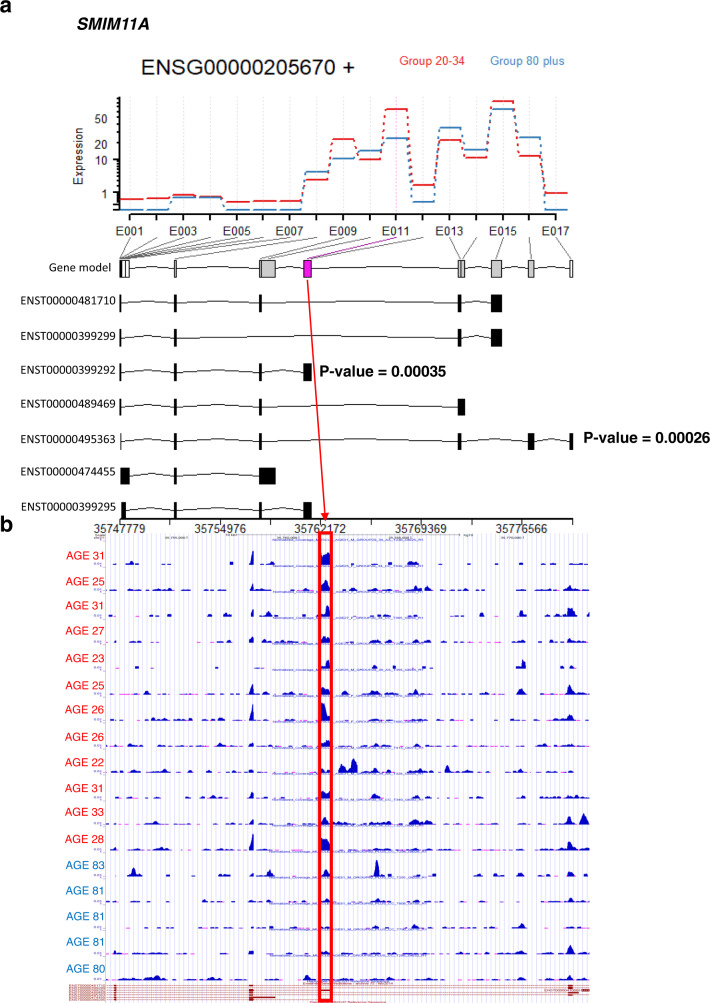
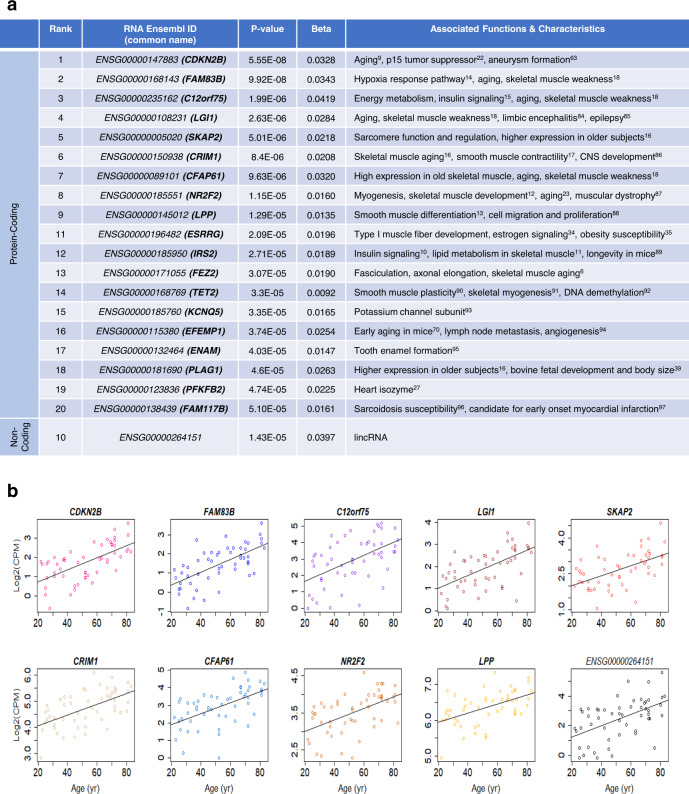
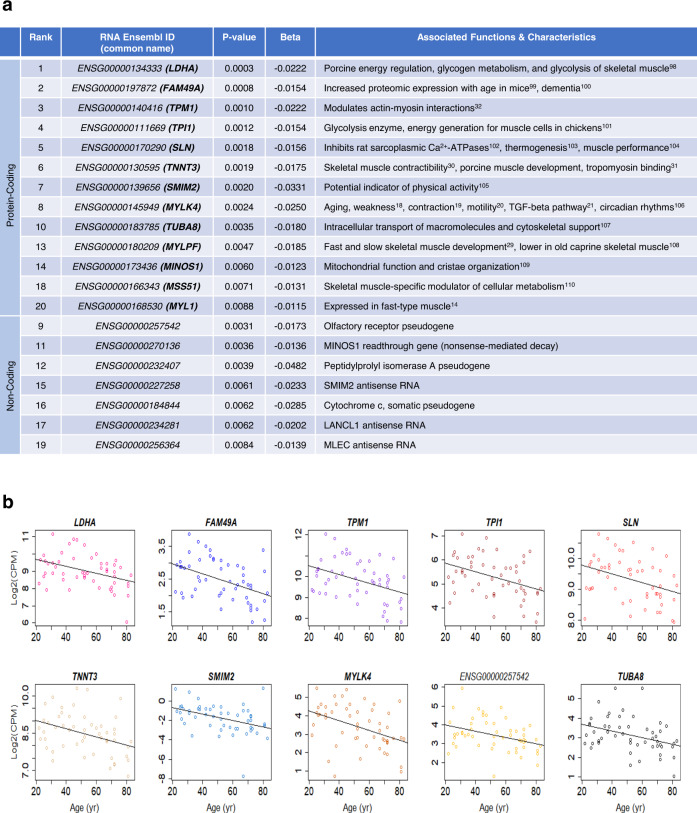
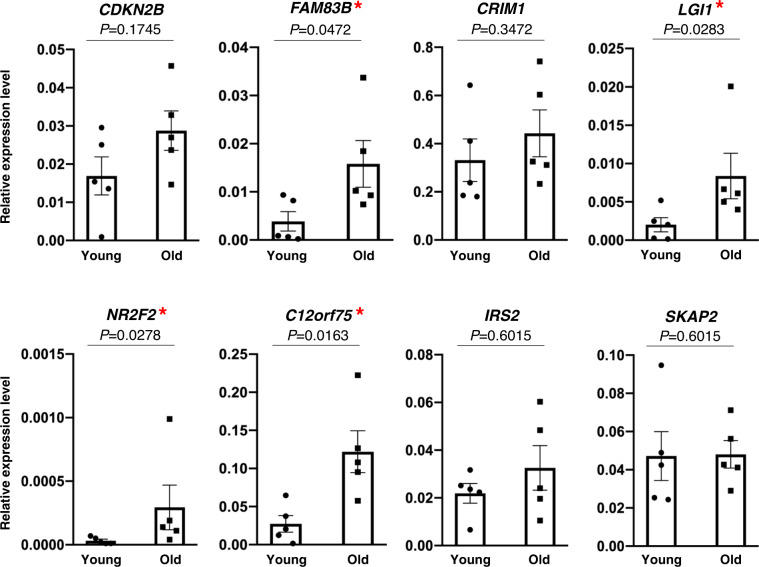
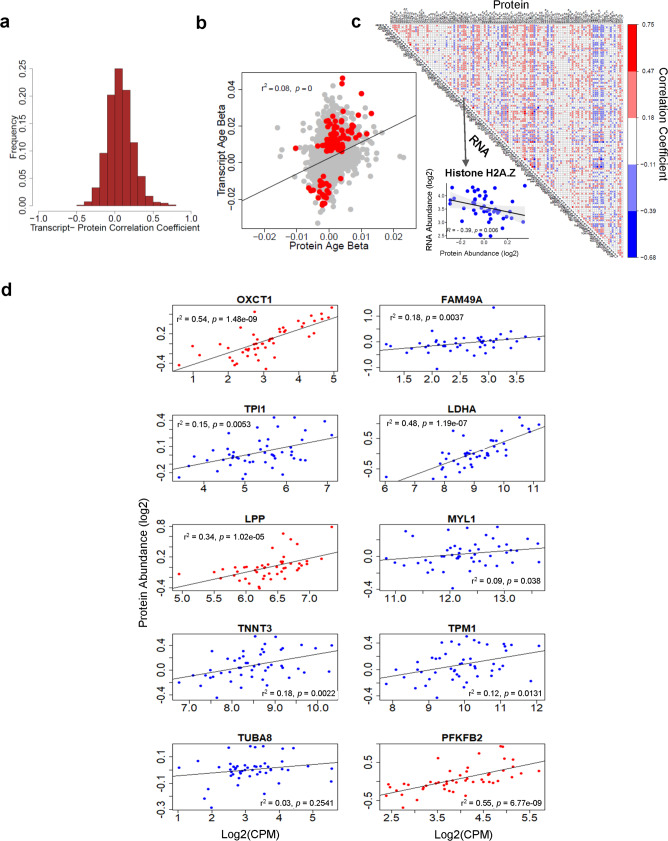
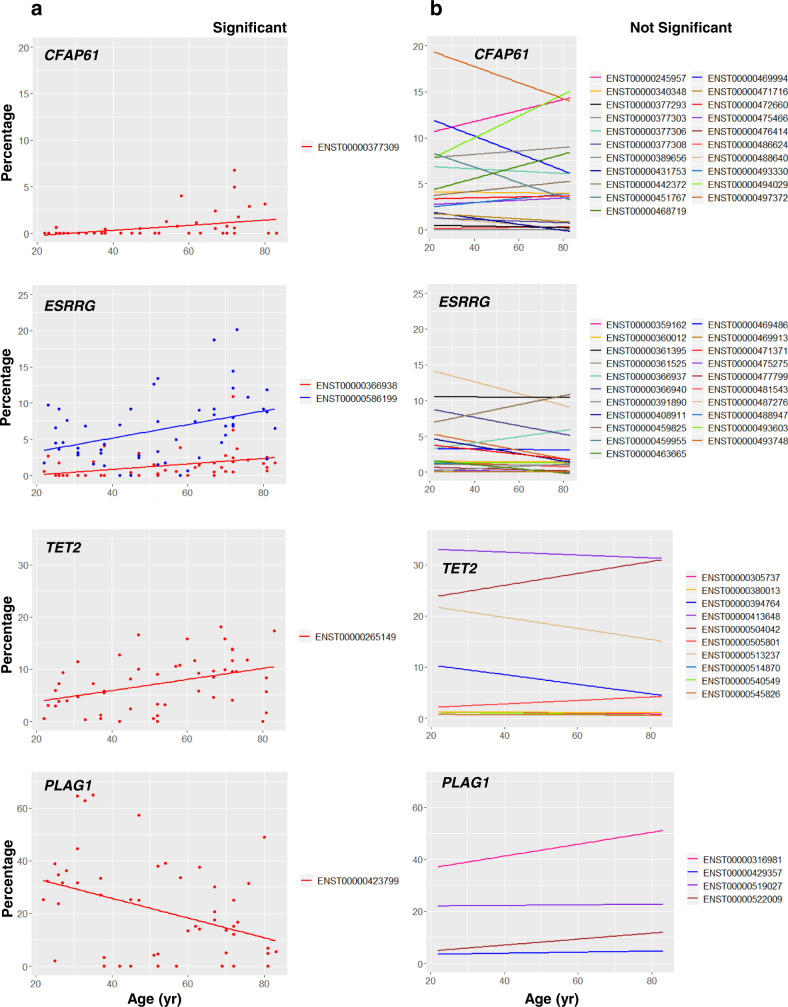
Age-associated changes in gene expression in skeletal muscle of healthy individuals reflect accumulation of damage and compensatory adaptations to preserve tissue integrity. To characterize these changes, RNA was extracted and sequenced from muscle biopsies collected from 53 healthy individuals (22-83 years old) of the GESTALT study of the National Institute on Aging-NIH. Expression levels of 57,205 protein-coding and non-coding RNAs were studied as a function of aging by linear and negative binomial regression models. From both models, 1134 RNAs changed significantly with age. The most differentially abundant mRNAs encoded proteins implicated in several age-related processes, including cellular senescence, insulin signaling, and myogenesis. Specific mRNA isoforms that changed significantly with age in skeletal muscle were enriched for proteins involved in oxidative phosphorylation and adipogenesis. Our study establishes a detailed framework of the global transcriptome and mRNA isoforms that govern muscle damage and homeostasis with age.
健康个体骨骼肌中与年龄相关的基因表达变化反映了损伤的积累和代偿适应,以维持组织完整性。为了描述这些变化,我们从美国国立卫生研究院老龄化研究所(NIA)的 GESTALT 研究中收集的 53 名健康个体(22-83 岁)的肌肉活检中提取并测序了 RNA。我们通过线性和负二项回归模型研究了 57205 种蛋白质编码和非编码 RNA 的表达水平随年龄的变化。这两种模型都发现 1134 种 RNA 随年龄显著变化。差异表达丰度最高的 mRNAs 编码的蛋白质涉及多种与年龄相关的过程,包括细胞衰老、胰岛素信号和肌发生。在骨骼肌中随年龄显著变化的特定 mRNA 亚型富含参与氧化磷酸化和脂肪生成的蛋白质。我们的研究建立了一个详细的框架,描述了控制肌肉损伤和衰老过程中平衡的全球转录组和 mRNA 亚型。