Mouhieddine Tarek H, Nokkari Amaly, Itani Muhieddine M, Chamaa Farah, Bahmad Hisham, Monzer Alissar, El-Merahbi Rabih, Daoud Georges, Eid Assaad, Kobeissy Firas H, Abou-Kheir Wassim
Department of Anatomy, Cell Biology and Physiological Sciences, Faculty of Medicine, American University of Beirut Beirut, Lebanon.
Department of Biochemistry and Molecular Genetics, Faculty of Medicine, American University of Beirut Beirut, Lebanon.
Front Neurosci. 2015 Nov 23;9:442. doi: 10.3389/fnins.2015.00442. eCollection 2015.
Gliomas and neuroblastomas pose a great health burden worldwide with a poor and moderate prognosis, respectively. Many studies have tried to find effective treatments for these primary malignant brain tumors. Of interest, the AMP-activated protein kinase (AMPK) pathway was found to be associated with tumorigenesis and tumor survival, leading to many studies on AMPK drugs, especially Metformin, and their potential role as anti-cancer treatments. Cancer stem cells (CSCs) are a small population of slowly-dividing, treatment-resistant, undifferentiated cancer cells that are being discovered in a multitude of cancers. They are thought to be responsible for replenishing the tumor with highly proliferative cells and increasing the risk of recurrence.
Metformin and 9-β-d-Arabinofuranosyl Adenine (Ara-a) were used to study the role of the AMPK pathway in vitro on U251 (glioblastoma) and SH-SY5Y (neuroblastoma) cell lines.
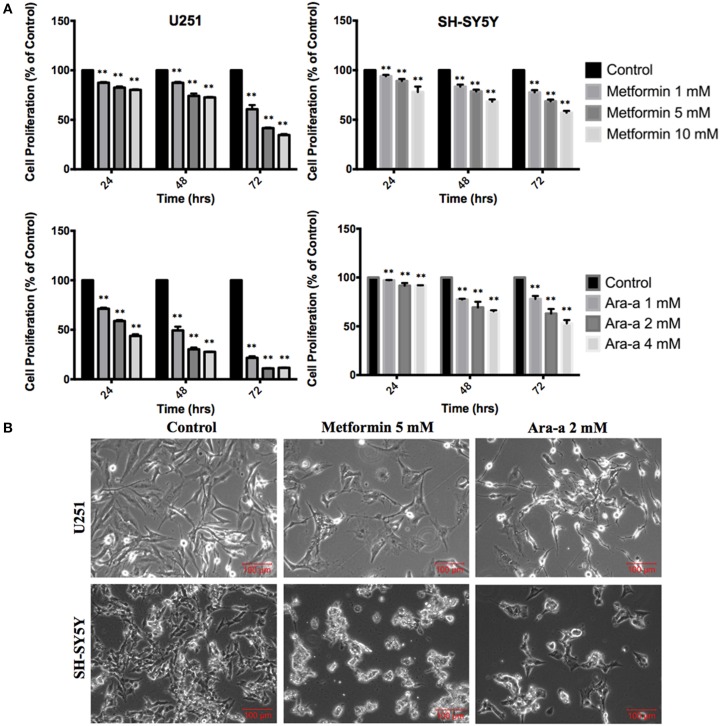
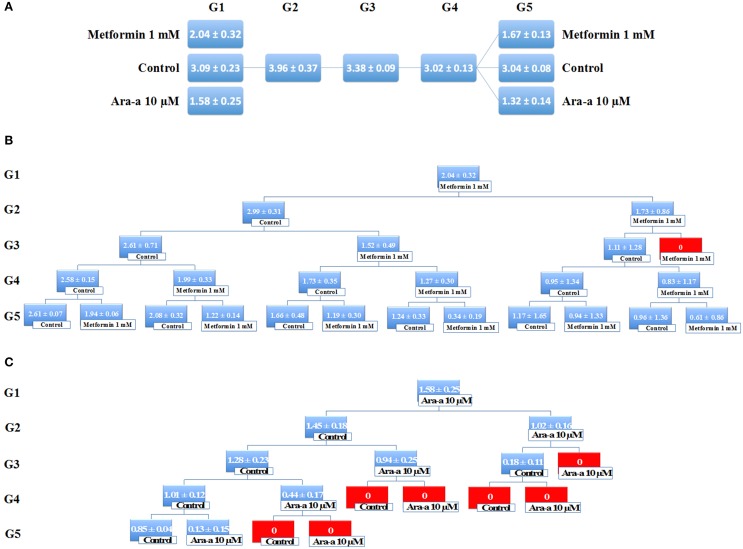
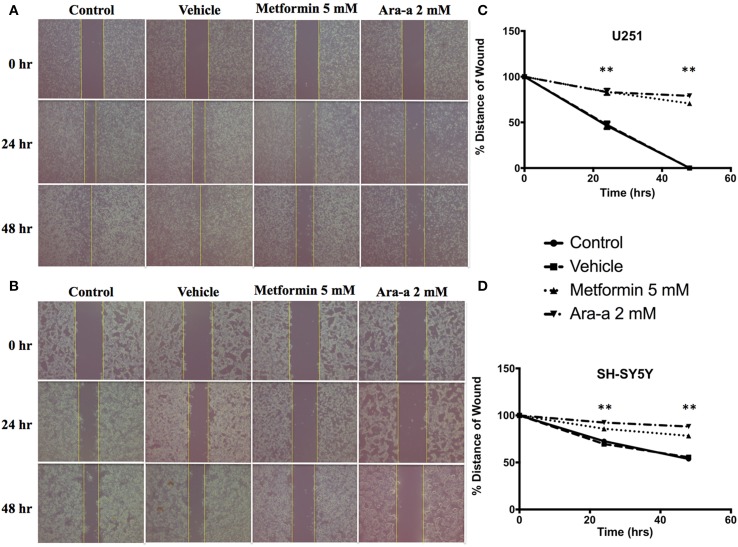
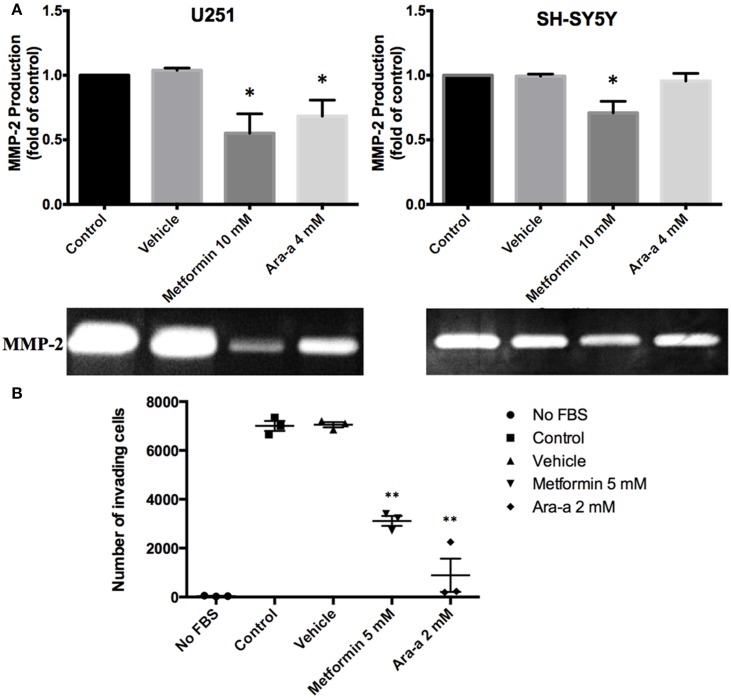
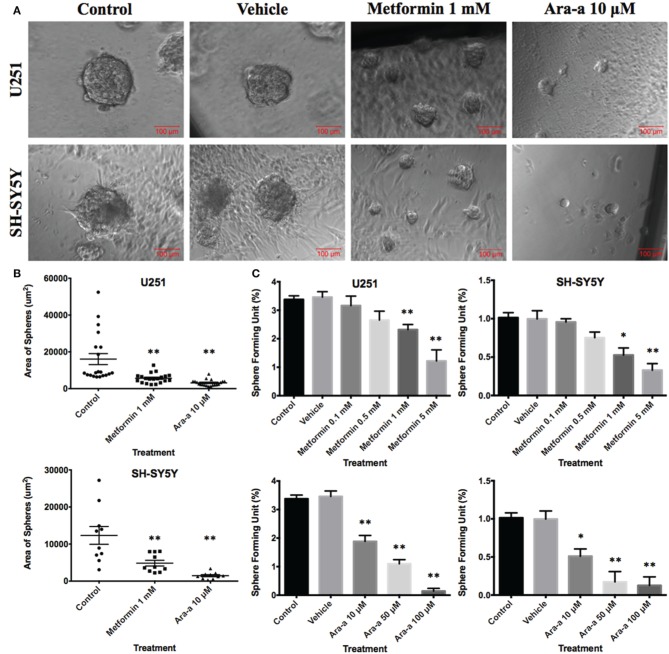
We found that both drugs are able to decrease the survival of U251 and SH-SY5Y cell lines in a 2D as well as a 3D culture model. Metformin and Ara-a significantly decreased the invasive ability of these cancer cell lines. Treatment with these drugs decreased the sphere-forming units (SFU) of U251 cells, with Ara-a being more efficient, signifying the extinction of the CSC population. However, if treatment is withdrawn before all SFUs are extinguished, the CSCs regain some of their sphere-forming capabilities in the case of Metformin but not Ara-a treatment.
Metformin and Ara-a have proved to be effective in the treatment of glioblastomas and neuroblastomas, in vitro, by targeting their cancer stem/progenitor cell population, which prevents recurrence.
胶质瘤和神经母细胞瘤在全球范围内分别造成严重和中度的健康负担,预后较差。许多研究试图寻找针对这些原发性恶性脑肿瘤的有效治疗方法。有趣的是,人们发现AMP激活的蛋白激酶(AMPK)信号通路与肿瘤发生及肿瘤存活相关,这引发了许多关于AMPK药物,尤其是二甲双胍,及其作为抗癌治疗潜在作用的研究。癌症干细胞(CSCs)是一小群增殖缓慢、对治疗耐药且未分化的癌细胞,在多种癌症中均有发现。它们被认为负责为肿瘤补充高增殖性细胞并增加复发风险。
使用二甲双胍和9-β-D-阿拉伯呋喃糖基腺嘌呤(Ara-a)在体外研究AMPK信号通路对U251(胶质母细胞瘤)和SH-SY5Y(神经母细胞瘤)细胞系的作用。
我们发现这两种药物在二维及三维培养模型中均能降低U251和SH-SY5Y细胞系的存活率。二甲双胍和Ara-a显著降低了这些癌细胞系的侵袭能力。用这些药物处理可降低U251细胞的成球单位(SFU),其中Ara-a更有效,这表明癌症干细胞群体的消亡。然而,如果在所有SFU消失之前停止治疗,对于二甲双胍处理的情况,癌症干细胞会恢复一些成球能力,但Ara-a处理则不会。
二甲双胍和Ara-a已被证明在体外通过靶向胶质母细胞瘤和神经母细胞瘤的癌症干细胞/祖细胞群体来有效治疗这些肿瘤,从而预防复发。