de Oliveira Haroldo C, Assato Patrícia A, Marcos Caroline M, Scorzoni Liliana, de Paula E Silva Ana C A, Da Silva Julhiany De Fátima, Singulani Junya de Lacorte, Alarcon Kaila M, Fusco-Almeida Ana M, Mendes-Giannini Maria J S
Faculdade de Ciências Farmacêuticas, UNESP - Universidade Estadual Paulista, Campus Araraquara, Departamento de Análises Clínicas, Laboratório de Micologia Clínica São Paulo, Brazil.
Front Microbiol. 2015 Nov 25;6:1319. doi: 10.3389/fmicb.2015.01319. eCollection 2015.
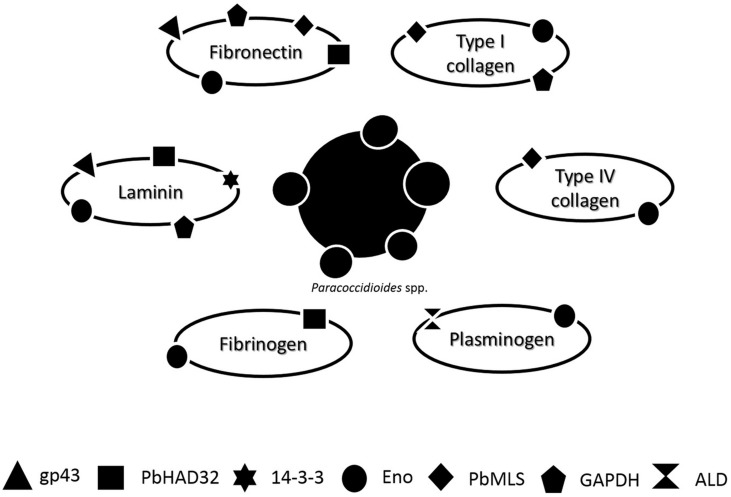
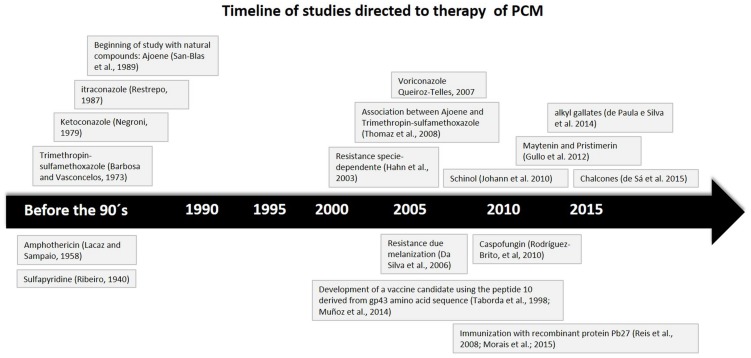
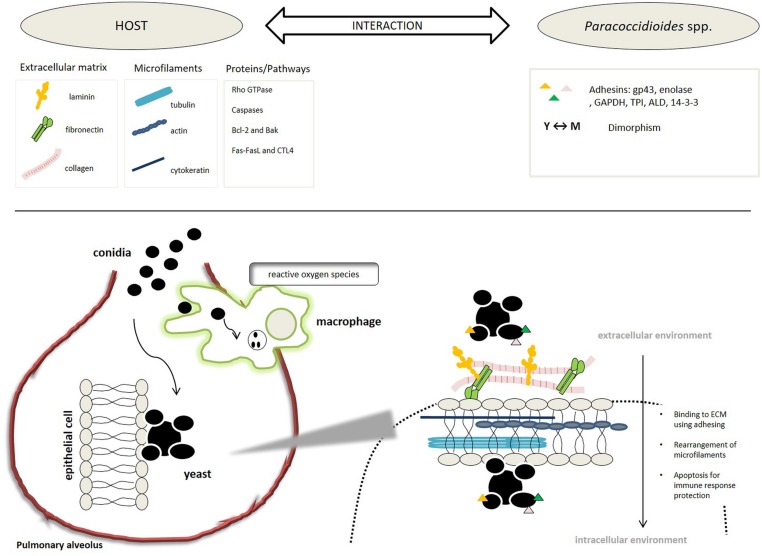
Paracoccidioides brasiliensis and P. lutzii are etiologic agents of paracoccidioidomycosis (PCM), an important endemic mycosis in Latin America. During its evolution, these fungi have developed characteristics and mechanisms that allow their growth in adverse conditions within their host through which they efficiently cause disease. This process is multi-factorial and involves host-pathogen interactions (adaptation, adhesion, and invasion), as well as fungal virulence and host immune response. In this review, we demonstrated the glycoproteins and polysaccharides network, which composes the cell wall of Paracoccidioides spp. These are important for the change of conidia or mycelial (26°C) to parasitic yeast (37°C). The morphological switch, a mechanism for the pathogen to adapt and thrive inside the host, is obligatory for the establishment of the infection and seems to be related to pathogenicity. For these fungi, one of the most important steps during the interaction with the host is the adhesion. Cell surface proteins called adhesins, responsible for the first contact with host cells, contribute to host colonization and invasion by mediating this process. These fungi also present the capacity to form biofilm and through which they may evade the host's immune system. During infection, Paracoccidioides spp. can interact with different host cell types and has the ability to modulate the host's adaptive and/or innate immune response. In addition, it participates and interferes in the coagulation system and phenomena like cytoskeletal rearrangement and apoptosis. In recent years, Paracoccidioides spp. have had their endemic areas expanding in correlation with the expansion of agriculture. In response, several studies were developed to understand the infection using in vitro and in vivo systems, including alternative non-mammal models. Moreover, new advances were made in treating these infections using both well-established and new antifungal agents. These included natural and/or derivate synthetic substances as well as vaccines, peptides, and anti-adhesins sera. Because of all the advances in the PCM study, this review has the objective to summarize all of the recent discoveries on Paracoccidioides-host interaction, with particular emphasis on fungi surface proteins (molecules that play a fundamental role in the adhesion and/or dissemination of the fungi to host-cells), as well as advances in the treatment of PCM with new and well-established antifungal agents and approaches.
巴西副球孢子菌和卢氏副球孢子菌是副球孢子菌病(PCM)的病原体,PCM是拉丁美洲一种重要的地方性真菌病。在其进化过程中,这些真菌形成了一些特性和机制,使其能够在宿主体内的不利条件下生长,并借此有效地引发疾病。这个过程是多因素的,涉及宿主与病原体的相互作用(适应、黏附及侵袭),以及真菌的毒力和宿主的免疫反应。在本综述中,我们阐述了构成副球孢子菌属细胞壁的糖蛋白和多糖网络。这些对于分生孢子或菌丝体(26°C)向寄生酵母(37°C)的转变很重要。形态转换是病原体在宿主体内适应并茁壮成长的一种机制,对于感染的建立是必不可少的,并且似乎与致病性有关。对于这些真菌而言,与宿主相互作用过程中最重要的步骤之一是黏附。称为黏附素的细胞表面蛋白负责与宿主细胞的首次接触,通过介导这一过程促进真菌在宿主体内的定植和侵袭。这些真菌还具有形成生物膜的能力,并借此逃避宿主的免疫系统。在感染过程中,副球孢子菌属可与不同类型的宿主细胞相互作用,并能够调节宿主的适应性和/或先天性免疫反应。此外,它还参与并干扰凝血系统以及细胞骨架重排和细胞凋亡等现象。近年来,随着农业的扩张,副球孢子菌属的流行区域也在扩大。作为回应,人们开展了多项研究,利用体外和体内系统,包括替代性非哺乳动物模型来了解感染情况。此外,在使用成熟的和新型抗真菌药物治疗这些感染方面也取得了新进展。这些药物包括天然和/或衍生合成物质以及疫苗、肽和抗黏附素血清。鉴于PCM研究取得的所有进展,本综述旨在总结副球孢子菌与宿主相互作用方面的所有最新发现,特别强调真菌表面蛋白(在真菌黏附于宿主细胞和/或在宿主体内传播中起关键作用的分子),以及使用新型和成熟抗真菌药物及方法治疗PCM方面的进展。