Yoon Ju Hee, Jeong Sung Hwan, Hong Jeong Hee
Department of Physiology, Graduate School of Medicine, Gachon University, 191 Hambakmeoro, Yeonsu-gu, Incheon 406-799, Republic of Korea.
Division of Pulmonary, Allergy and Critical Care Medicine, Gachon University, Gil Medical Center, Incheon 405-706, Republic of Korea.
Mediators Inflamm. 2015;2015:843024. doi: 10.1155/2015/843024. Epub 2015 Nov 10.
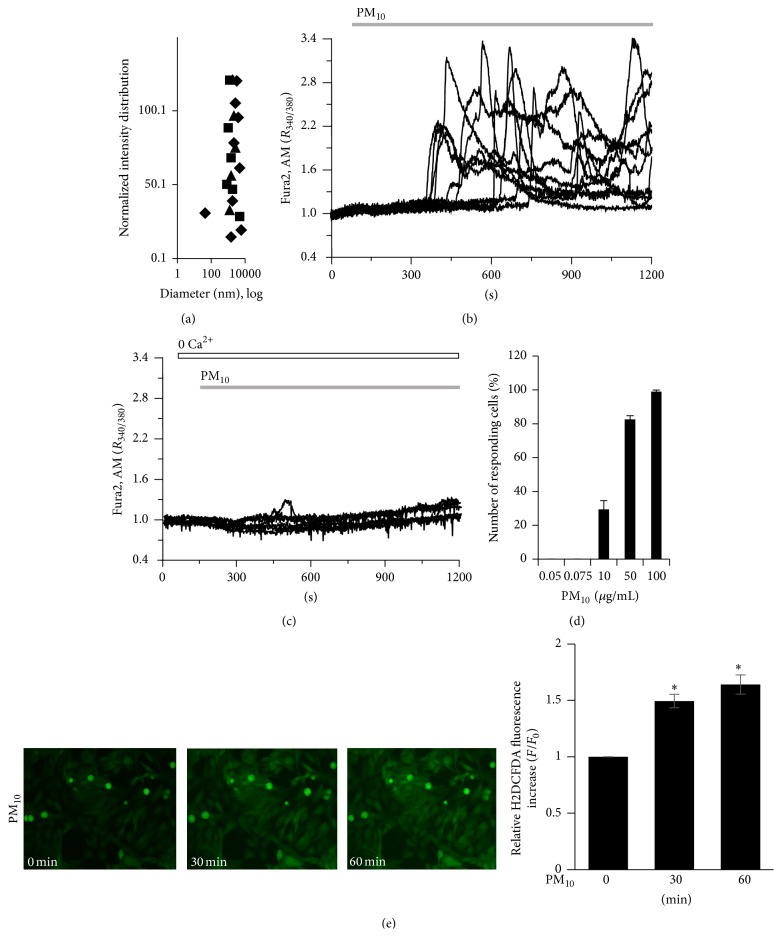
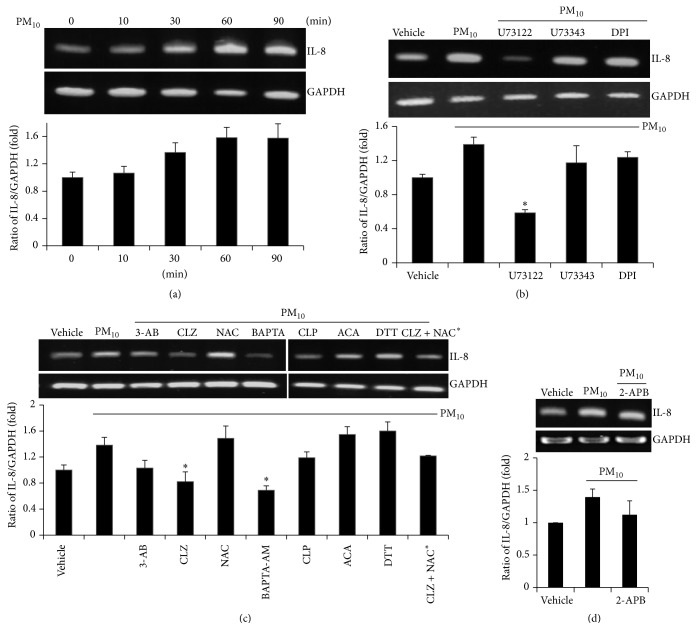
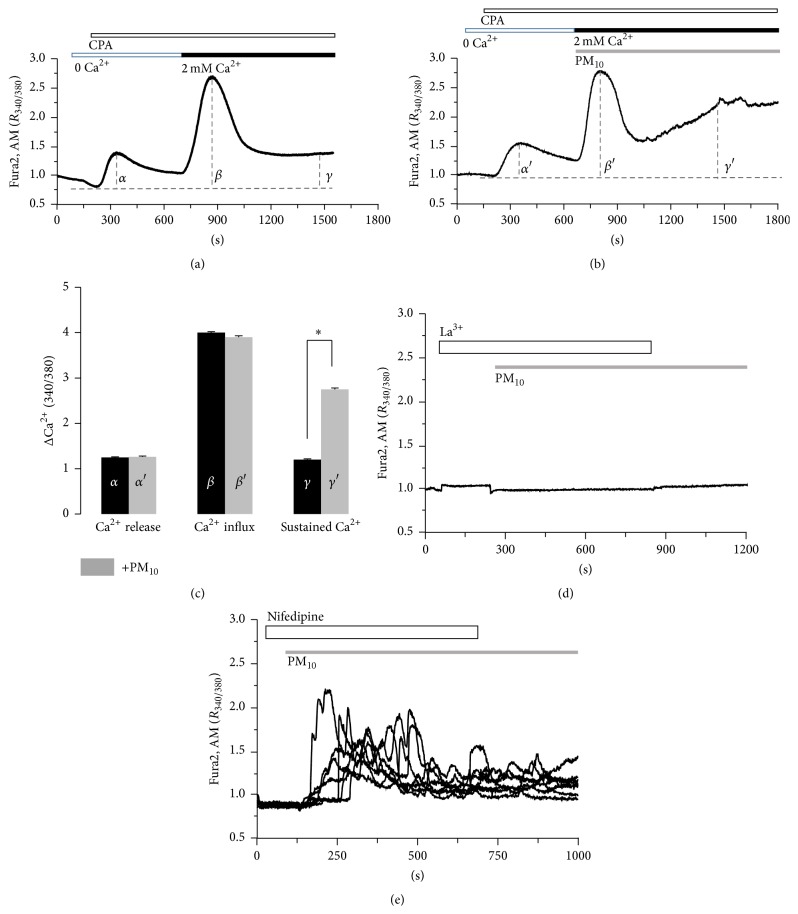
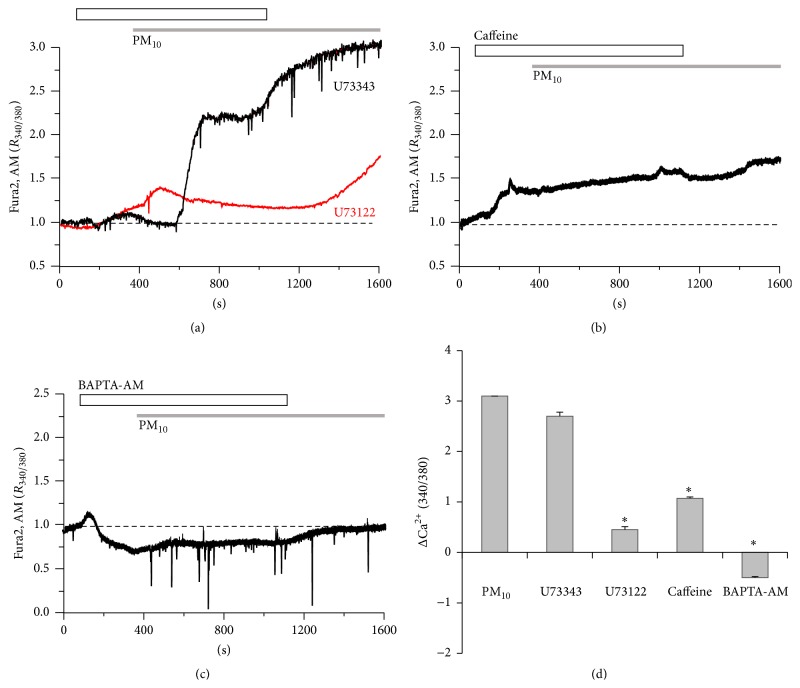
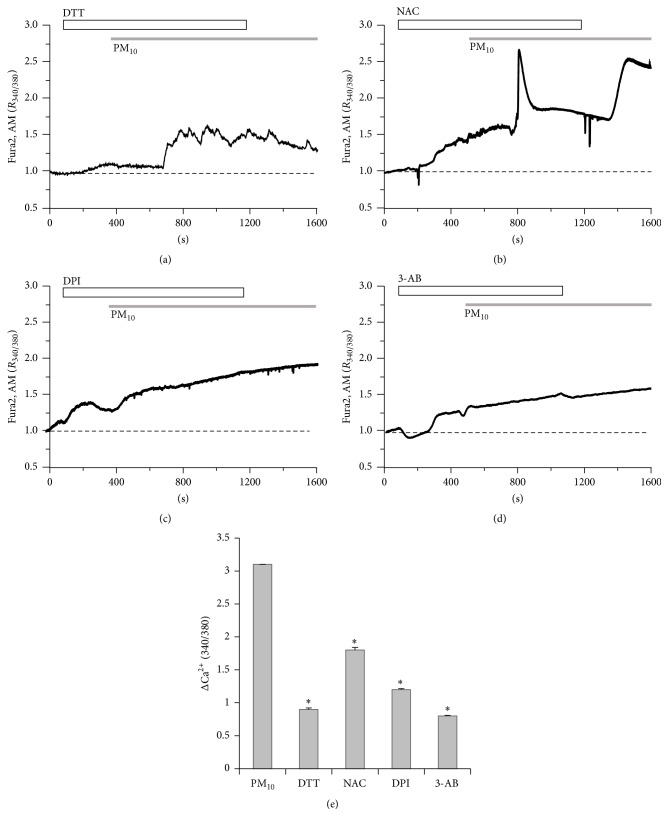
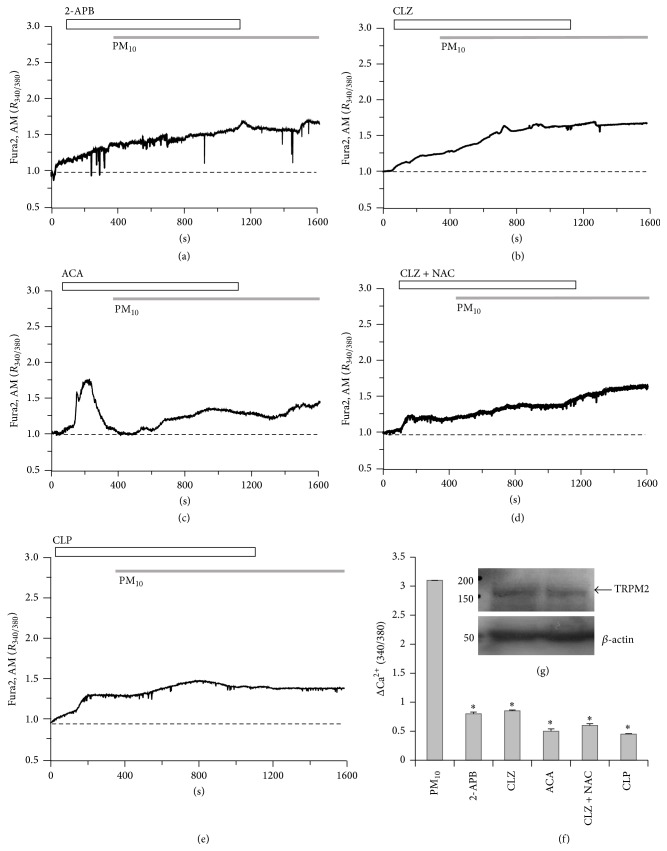
Bronchial epithelial cells are the first barrier of defense against respiratory pathogens. Dust particles as extracellular stimuli are associated with inflammatory reactions after inhalation. It has been reported that dust particles induce intracellular Ca(2+) signal, which subsequently increases cytokines production such as interleukin- (IL-) 8. However, the study of therapeutic blockades of Ca(2+) signaling induced by dust particles in human bronchial epithelial cells is poorly understood. We investigated how to modulate dust particles-induced Ca(2+) signaling and proinflammatory cytokine IL-8 expression. Bronchial epithelial BEAS-2B cells were exposed to PM10 dust particles and subsequent mediated intracellular Ca(2+) signaling and reactive oxygen species signal. Our results show that exposure to several inhibitors of Ca(2+) pathway attenuated the PM10-induced Ca(2+) response and subsequent IL-8 mRNA expression. PM10-mediated Ca(2+) signal and IL-8 expression were attenuated by several pharmacological blockades such as antioxidants, IP3-PLC blockers, and TRPM2 inhibitors. Our results show that blockades of PLC or TRPM2 reduced both of PM10-mediated Ca(2+) signal and IL-8 expression, suggesting that treatment with these blockades should be considered for potential therapeutic trials in pulmonary epithelium for inflammation caused by environmental events such as seasonal dust storm.
支气管上皮细胞是抵御呼吸道病原体的第一道防线。吸入后,作为细胞外刺激物的灰尘颗粒与炎症反应相关。据报道,灰尘颗粒可诱导细胞内Ca(2+)信号,随后增加细胞因子如白细胞介素-(IL-)8的产生。然而,关于人类支气管上皮细胞中灰尘颗粒诱导的Ca(2+)信号传导的治疗性阻断研究尚不清楚。我们研究了如何调节灰尘颗粒诱导的Ca(2+)信号传导和促炎细胞因子IL-8的表达。将支气管上皮BEAS-2B细胞暴露于PM10灰尘颗粒中,随后介导细胞内Ca(2+)信号传导和活性氧信号。我们的结果表明,暴露于几种Ca(2+)途径抑制剂可减弱PM10诱导的Ca(2+)反应以及随后的IL-8 mRNA表达。几种药理学阻断剂如抗氧化剂、IP3-PLC阻断剂和TRPM2抑制剂可减弱PM10介导的Ca(2+)信号和IL-8表达。我们的结果表明,PLC或TRPM2的阻断可同时降低PM10介导的Ca(2+)信号和IL-8表达,这表明对于由季节性沙尘暴等环境事件引起的肺部炎症,在肺上皮细胞进行潜在治疗试验时应考虑使用这些阻断剂进行治疗。