Clozato Camila L, Mazzoni Camila J, Moraes-Barros Nadia, Morgante João S, Sommer Simone
Laboratório de Biologia Evolutiva e Conservação de Vertebrados Departamento de Genética e Biologia Evolutiva Instituto de Biociências Universidade de São Paulo R. do Matão, 277 05508-090 São Paulo Brasil ; Leibniz-Institute for Zoo and Wildlife Research (IZW) Evolutionary Genetics Alfred- Kowalke-Straße 17 D-10315 Berlin Germany.
Leibniz-Institute for Zoo and Wildlife Research (IZW) Evolutionary Genetics Alfred- Kowalke-Straße 17 D-10315 Berlin Germany ; Berlin Center for Genomics in Biodiversity Research (BeGenDiv) Koenigin-Luise-Straße. 6-8 D-14195 Berlin Germany.
Ecol Evol. 2015 Oct 15;5(21):4932-48. doi: 10.1002/ece3.1656. eCollection 2015 Nov.
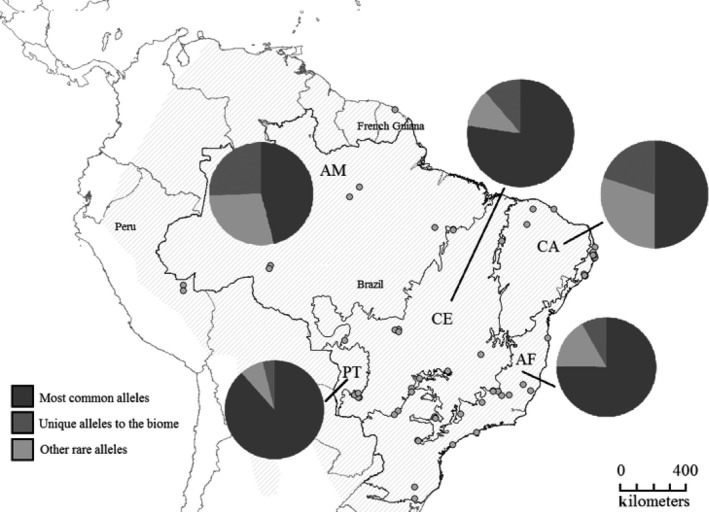
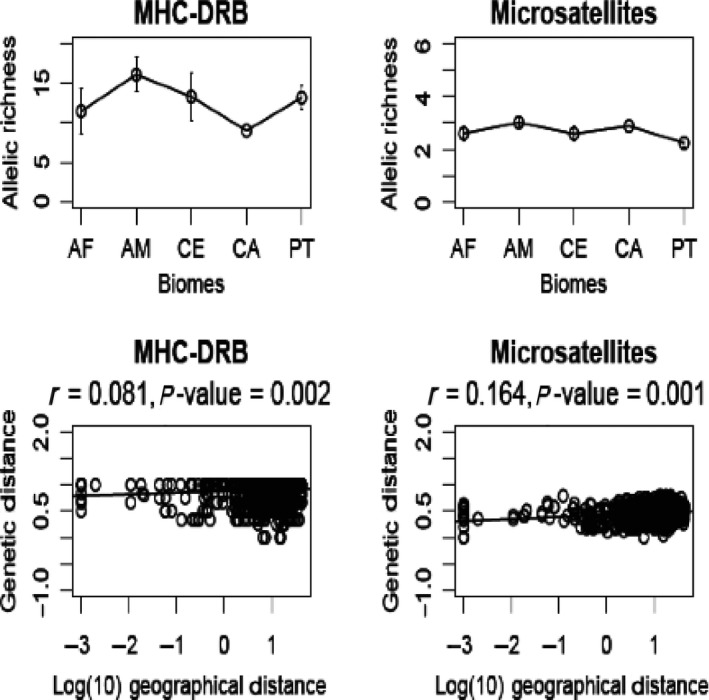
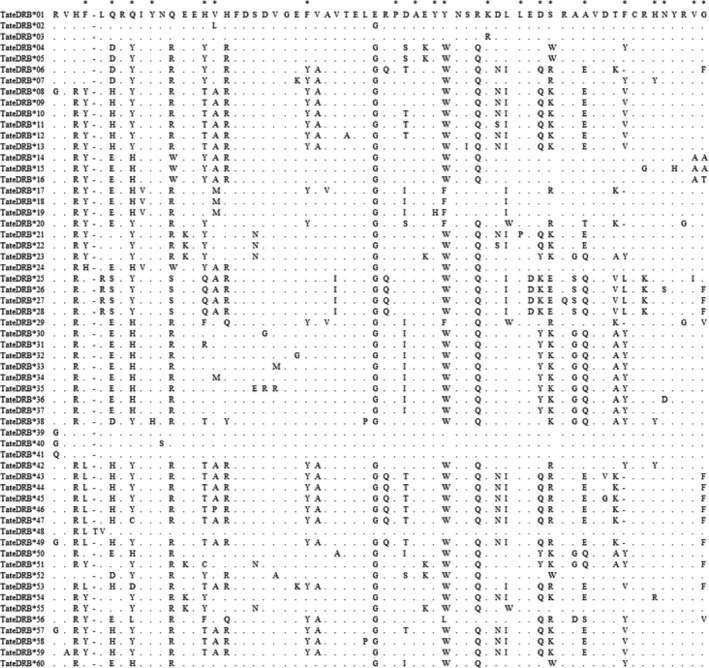
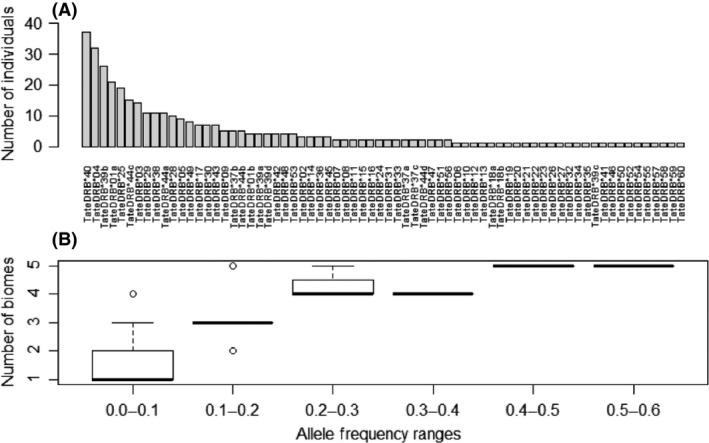
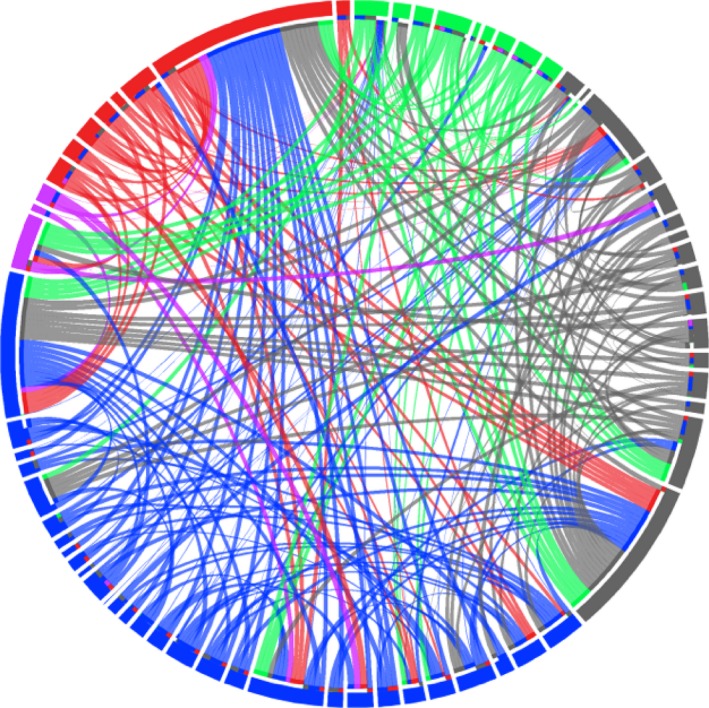
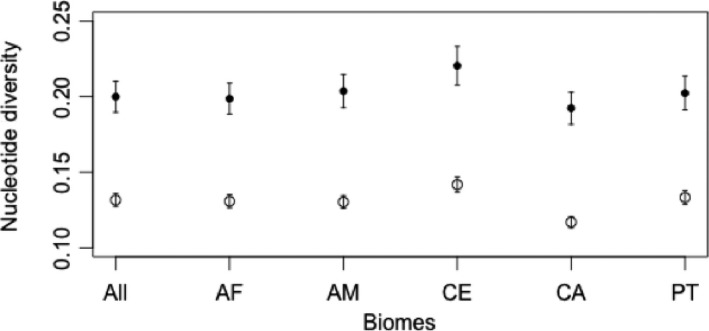
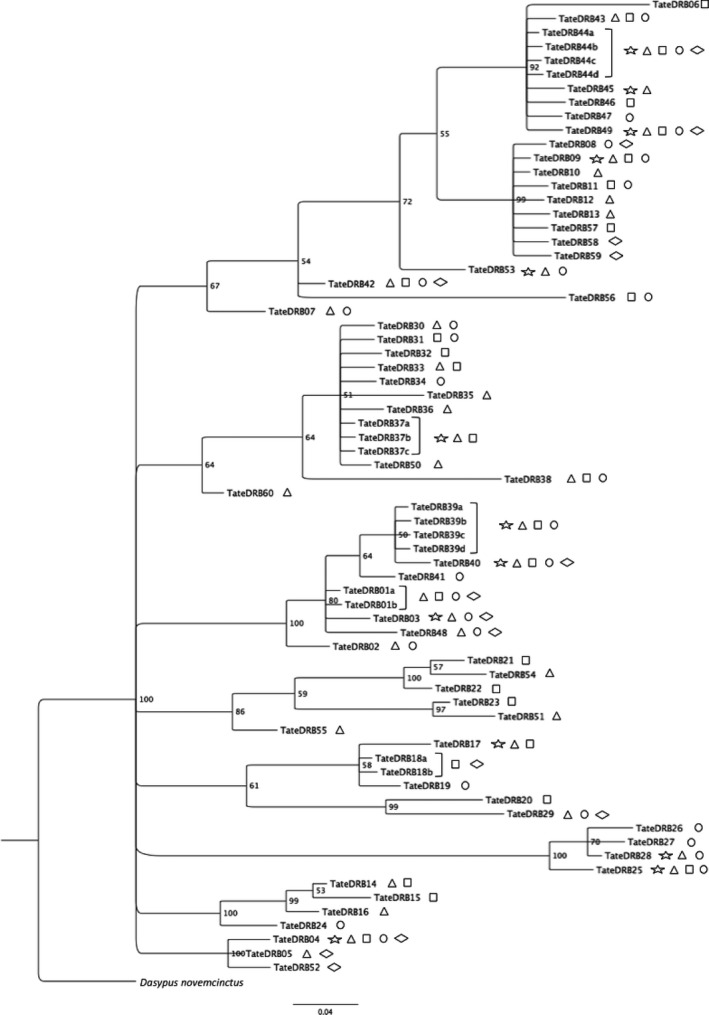
The genes of the major histocompatibility complex (MHC) code for proteins involved in antigen recognition and activation of the adaptive immune response and are thought to be regulated by natural selection, especially due to pathogen-driven selective pressure. In this study, we investigated the spatial distribution of MHC class II DRB exon 2 gene diversity of the lesser anteater (Tamandua tetradactyla) across five Brazilian biomes using next-generation sequencing and compared the MHC pattern with that of neutral markers (microsatellites). We found a noticeable high level of diversity in DRB (60 amino acid alleles in 65 individuals) and clear signatures of historical positive selection acting on this gene. Higher allelic richness and proportion of private alleles were found in rain forest biomes, especially Amazon forest, a megadiverse biome, possibly harboring greater pathogen richness as well. Neutral markers, however, showed a similar pattern to DRB, demonstrating the strength of demography as an additional force to pathogen-driven selection in shaping MHC diversity and structure. This is the first characterization and description of diversity of a MHC gene for any member of the magna-order Xenarthra, one of the basal lineages of placental mammals.
主要组织相容性复合体(MHC)的基因编码参与抗原识别和适应性免疫反应激活的蛋白质,并且被认为受到自然选择的调控,尤其是由于病原体驱动的选择压力。在本研究中,我们使用下一代测序技术调查了小食蚁兽(Tamandua tetradactyla)MHC II类DRB外显子2基因多样性在巴西五个生物群落中的空间分布,并将MHC模式与中性标记(微卫星)的模式进行了比较。我们发现DRB存在显著的高多样性水平(65个个体中有60个氨基酸等位基因),并且有明显的历史正选择作用于该基因的特征。在雨林生物群落中,尤其是亚马逊森林(一个生物多样性极高的生物群落,可能也蕴藏着更丰富的病原体),发现了更高的等位基因丰富度和私有等位基因比例。然而,中性标记显示出与DRB相似的模式,表明人口统计学因素作为塑造MHC多样性和结构的病原体驱动选择之外的另一种力量的强度。这是对贫齿总目(胎盘哺乳动物的基础谱系之一)任何成员的MHC基因多样性的首次表征和描述。