Xu Wence, Zhu Shengli, Liang Yanqin, Li Zhaoyang, Cui Zhenduo, Yang Xianjin, Inoue Akihisa
School of Materials Science and Engineering, Tianjin University, Tianjin, 300072, China.
Tianjin Key Laboratory of Composite and Functional Materials, Tianjin, 300072, China.
Sci Rep. 2015 Dec 9;5:18125. doi: 10.1038/srep18125.
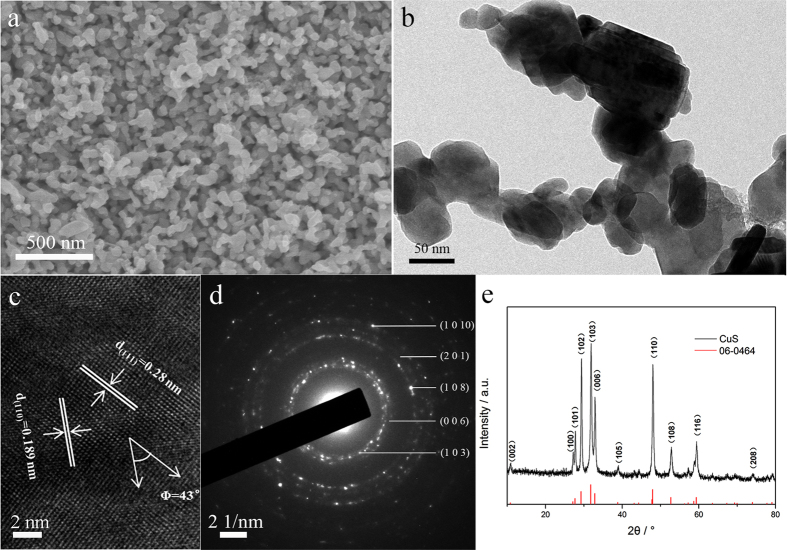
We present the rational synthesis of nanoporous CuS for the first time by chemical dealloying method. The morphologies of the CuS catalysts are controlled by the composition of the original amorphous alloys. Nanoporous Cu2S is firstly formed during the chemical dealloying process, and then the Cu2S transforms into CuS. The nanoporous CuS exhibits excellent photocatalytic activity for the degradation of the methylene blue (MB), methyl orange (MO) and rhodamine B (RhB). The excellent photocatalytic activity of the nanoporous CuS is mainly attributed to the large specific surface area, high adsorbing capacity of dyes and low recombination of the photo generated electrons and holes. In the photo degradation process, both chemical and photo generated hydroxyl radicals are generated. The hydroxyl radicals are favor in the oxidation of the dye molecules. The present modified dealloying method may be extended for the preparation of other porous metal sulfide nanostructures.
我们首次通过化学脱合金方法合理合成了纳米多孔硫化铜。硫化铜催化剂的形态由原始非晶合金的组成控制。在化学脱合金过程中首先形成纳米多孔硫化亚铜,然后硫化亚铜转变为硫化铜。纳米多孔硫化铜对亚甲基蓝(MB)、甲基橙(MO)和罗丹明B(RhB)的降解表现出优异的光催化活性。纳米多孔硫化铜优异的光催化活性主要归因于其大的比表面积、对染料的高吸附能力以及光生电子和空穴的低复合率。在光降解过程中,会产生化学和光生羟基自由基。羟基自由基有利于染料分子的氧化。目前改进的脱合金方法可能会扩展到其他多孔金属硫化物纳米结构的制备。