Stavely Rhian, Robinson Ainsley M, Miller Sarah, Boyd Richard, Sakkal Samy, Nurgali Kulmira
Centre for Chronic Disease, College of Health and Biomedicine, Victoria University, Melbourne, Australia.
Department of Anatomy and Developmental Biology, Monash University, Melbourne, Australia.
Stem Cell Res Ther. 2015 Dec 10;6:244. doi: 10.1186/s13287-015-0231-x.
Mesenchymal stem cells (MSCs) have been identified as a viable treatment for inflammatory bowel disease (IBD). MSCs derived from bone marrow (BM-MSCs) have predominated in experimental models whereas the majority of clinical trials have used MSCs derived from adipose tissue (AT-MSCs), thus there is little consensus on the optimal tissue source. The therapeutic efficacies of these MSCs are yet to be compared in context of the underlying dysfunction of the enteric nervous system innervating the gastrointestinal tract concomitant with IBD. This study aims to characterise the in vitro properties of MSCs and compare their in vivo therapeutic potential for the treatment of enteric neuropathy associated with intestinal inflammation.
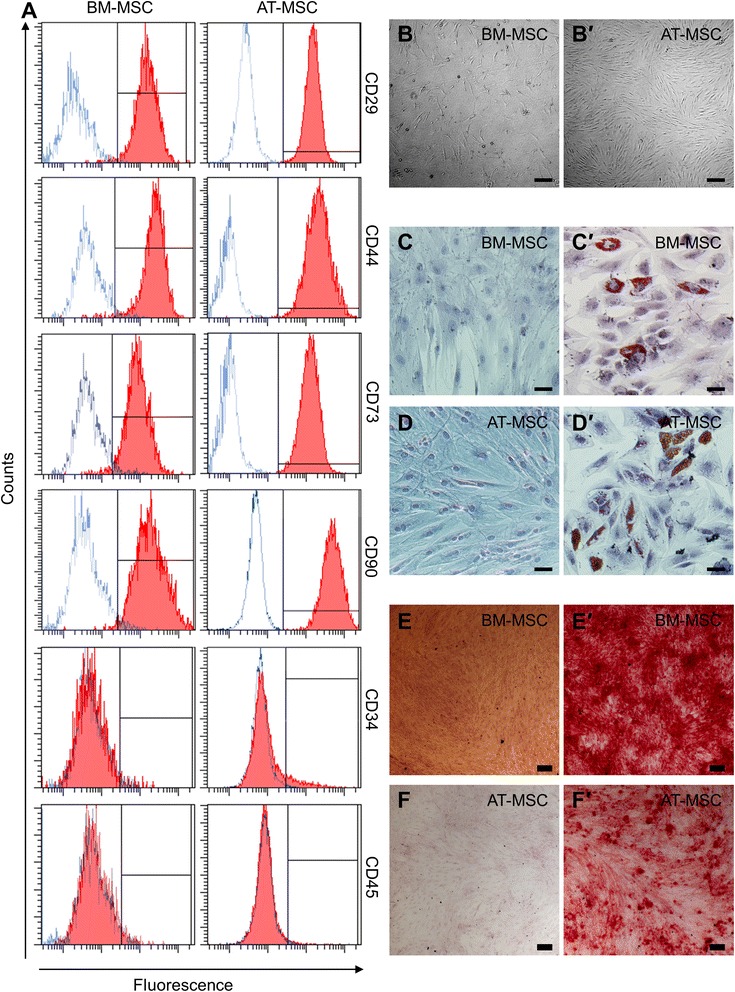
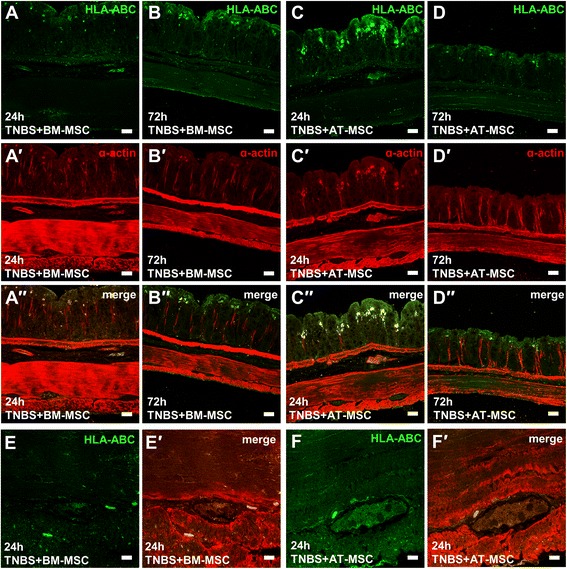
BM-MSCs and AT-MSCs were validated and characterised in vitro. In in vivo experiments, guinea-pigs received either 2,4,6-trinitrobenzene-sulfonate acid (TNBS) for the induction of colitis or sham treatment by enema. MSCs were administered at a dose of 1x10(6) cells via enema 3 hours after the induction of colitis. Colon tissues were collected 24 and 72 hours after TNBS administration to assess the level of inflammation and damage to the ENS. MSC migration to the myenteric plexus in vivo was elucidated by immunohistochemistry and in vitro using a modified Boyden chamber assay.
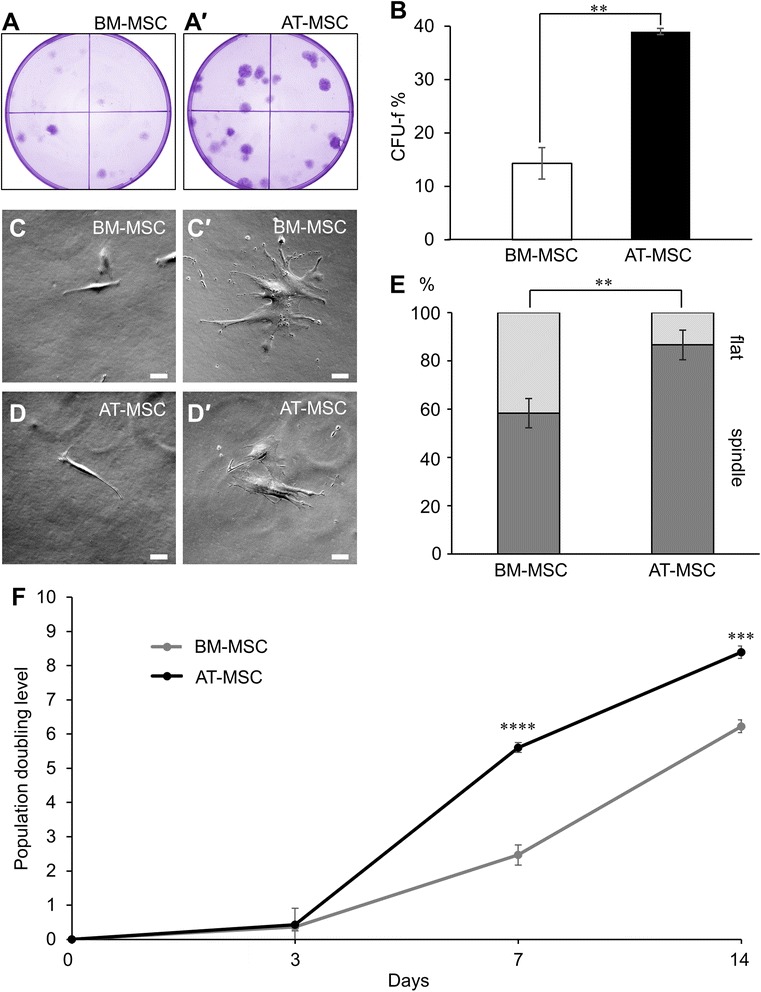
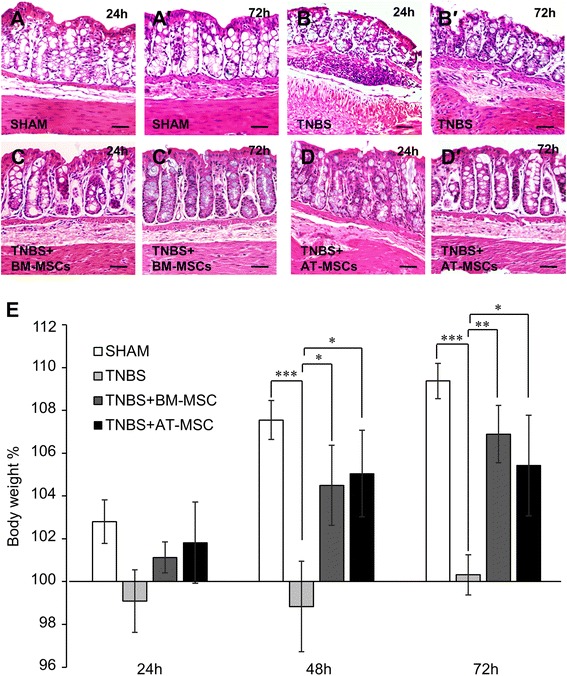
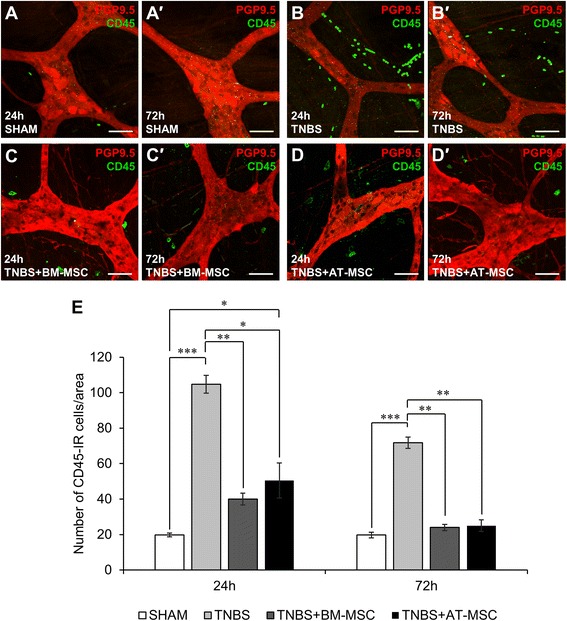
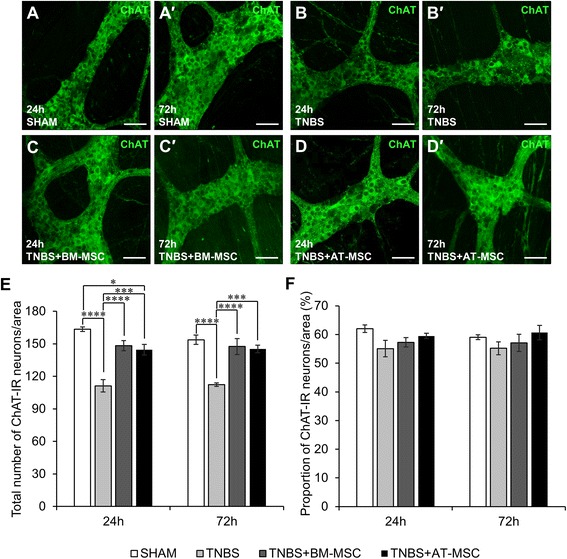
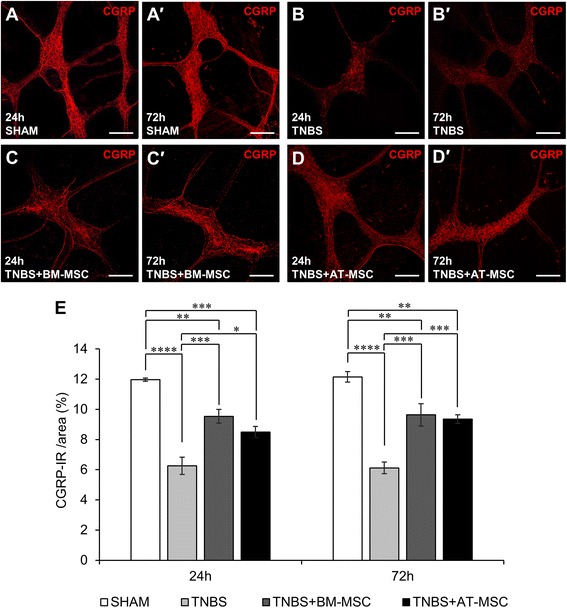
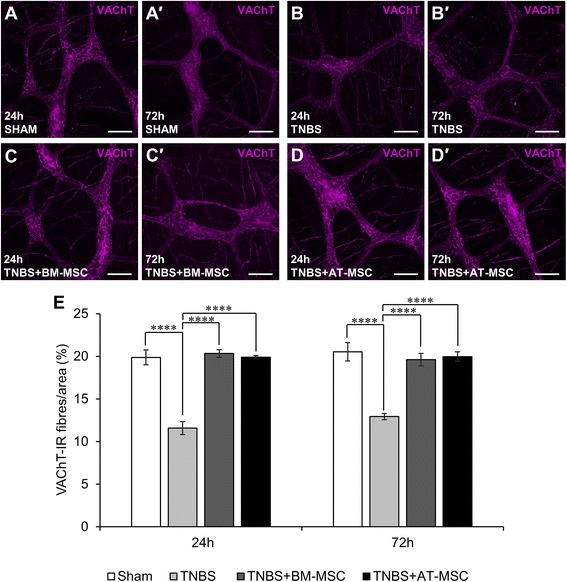
Cells exhibited multipotency and a typical surface immunophenotype for validation as bona fide MSCs. In vitro characterisation revealed distinct differences in growth kinetics, clonogenicity and cell morphology between MSC types. In vivo, BM-MSCs were comparatively more effective than AT-MSCs in attenuating leukocyte infiltration and neuronal loss in the myenteric plexus. MSCs from both sources equally ameliorated body weight loss, gross morphological damage to the colon, changes in the neurochemical coding of neuronal subpopulations and the reduction in density of extrinsic and intrinsic nerve fibres innervating the colon. MSCs from both sources migrated to the myenteric plexus in in vivo colitis and in an in vitro assay.
These data from in vitro experiments suggest that AT-MSCs are ideal for cellular expansion. However, BM-MSCs were more therapeutic in the treatment of enteric neuropathy and plexitis. These characteristics should be considered when deciding on the MSC tissue source.
间充质干细胞(MSCs)已被确定为治疗炎症性肠病(IBD)的一种可行疗法。在实验模型中,源自骨髓的间充质干细胞(BM-MSCs)占主导地位,而大多数临床试验使用的是源自脂肪组织的间充质干细胞(AT-MSCs),因此对于最佳组织来源几乎没有共识。在与IBD相关的支配胃肠道的肠神经系统潜在功能障碍的背景下,这些间充质干细胞的治疗效果尚未得到比较。本研究旨在表征间充质干细胞的体外特性,并比较它们在体内治疗与肠道炎症相关的肠神经病变的潜力。
对BM-MSCs和AT-MSCs进行体外验证和表征。在体内实验中,豚鼠接受2,4,6-三硝基苯磺酸(TNBS)灌肠以诱导结肠炎或进行假处理。在诱导结肠炎3小时后,通过灌肠以1×10⁶个细胞的剂量给予间充质干细胞。在给予TNBS后24小时和72小时收集结肠组织,以评估炎症水平和对肠神经系统的损伤。通过免疫组织化学和体外使用改良的博伊登小室试验阐明间充质干细胞在体内向肌间神经丛的迁移。
细胞表现出多能性和典型的表面免疫表型,以验证为真正的间充质干细胞。体外表征显示不同类型间充质干细胞在生长动力学、克隆形成能力和细胞形态方面存在明显差异。在体内,BM-MSCs在减轻肌间神经丛中的白细胞浸润和神经元损失方面比AT-MSCs更有效。两种来源的间充质干细胞同样改善了体重减轻、结肠的大体形态损伤、神经元亚群神经化学编码的变化以及支配结肠的外在和内在神经纤维密度的降低。两种来源的间充质干细胞在体内结肠炎和体外试验中均迁移至肌间神经丛。
这些体外实验数据表明,AT-MSCs对于细胞扩增是理想的。然而,BM-MSCs在治疗肠神经病变和神经丛炎方面更具治疗效果。在决定间充质干细胞组织来源时应考虑这些特性。