Ramírez-Vélez Robinson, Bagur-Calafat M Caridad, Correa-Bautista Jorge Enrique, Girabent-Farrés Montserrat
Centro de Estudios en Medición de la Actividad Física (CEMA), Escuela de Medicina y Ciencias de la Salud, Universidad del Rosario, Bogotá, D.C, Colombia.
Departamento de Fisioterapia, Universitat Internacional de Catalunya, Barcelona, España.
BMC Med Educ. 2015 Dec 12;15:220. doi: 10.1186/s12909-015-0502-3.
Evidence-based practice (EBP) has been widely implemented in differing areas of physiotherapy. Nevertheless, few studies have investigated EBP-related barriers amongst Latin-American physical therapists working in primary care. The primary objective of this study was to describe the current state concerning perceived barriers engagement in EBP among physical therapy in Colombia. A secondary objective was to identify factors associated with barriers to implementation EBP.
A cross-sectional online survey was conducted. The study involved physical therapists working in public and private hospital who were contacted through professional networks (Email, Facebook®, ResearchGate® and Linked-In®) and invited to participate. Multiple logistic regression (MLR) and multiple correspondence analysis (MCA) were used for examining factors associated with perceived barriers to including EBP in their work.
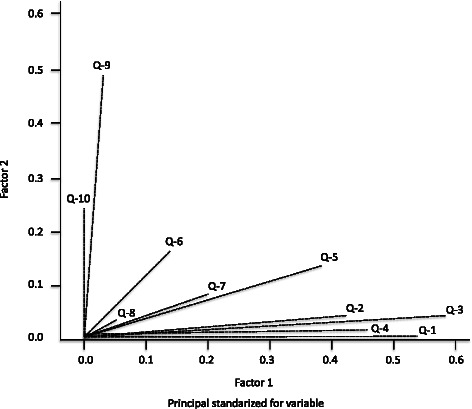
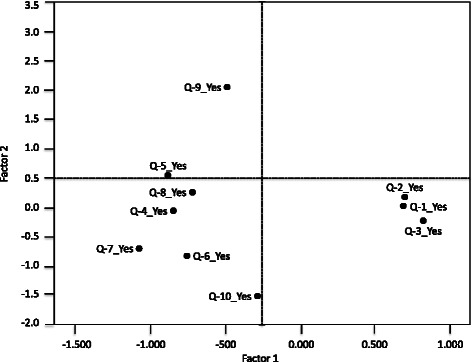
The final sample size was 1064 (77.2 % female). Forty-one percent of the respondents indicated that a "lack of research skills" was the most important barrier to evidence being used in practice. MLR analysis suggested that several variables were associated with perceived barriers to including EBP: i.e. hours of work per week, current main role in therapy center and undergraduate degree. The MCA model established two groups of similarities regarding the different barriers; the "lack of understanding of statistical analysis", "insufficient time" and "understanding of the English in which articles are written" barriers were weighted more heavily regarding in the first group (the second factor on MCA) and the rest barriers on the second group (first factor on the MCA).
Although most physiotherapists had a positive opinion regarding EBP, they considered that they needed to improve their knowledge, skills and attitudes towards EBP. Initiatives to advance EBP in Colombia with no academic or research tradition should primarily target practitioner-level factors.
循证实践(EBP)已在物理治疗的不同领域广泛实施。然而,很少有研究调查在初级保健机构工作的拉丁裔物理治疗师中与循证实践相关的障碍。本研究的主要目的是描述哥伦比亚物理治疗师中关于循证实践中感知障碍参与情况的现状。次要目的是确定与循证实践实施障碍相关的因素。
进行了一项横断面在线调查。该研究涉及在公立和私立医院工作的物理治疗师,通过专业网络(电子邮件、脸书、研究之门和领英)与他们联系并邀请其参与。采用多元逻辑回归(MLR)和多重对应分析(MCA)来检验与在工作中纳入循证实践的感知障碍相关的因素。
最终样本量为1064人(77.2%为女性)。41%的受访者表示“缺乏研究技能”是实践中使用证据的最重要障碍。MLR分析表明,几个变量与纳入循证实践的感知障碍相关,即每周工作时长、在治疗中心目前的主要角色和本科学位。MCA模型就不同障碍建立了两组相似性;“对统计分析缺乏理解”“时间不足”和“对文章所写英语的理解”障碍在第一组(MCA的第二个因素)中权重更大,其余障碍在第二组(MCA的第一个因素)中权重更大。
尽管大多数物理治疗师对循证实践持积极态度,但他们认为需要提高对循证实践的知识、技能和态度。在没有学术或研究传统的哥伦比亚推进循证实践的举措应主要针对从业者层面的因素。