Viyanchi Amir, Rasekh Hamid Reza, Rajabzadeh Ghatari Ali, SafiKhani Hamid Reza
School of Pharmacy, Shahid Beheshti University of Medical Sciences, Tehran, Iran.
Tarbiat Modares University, Tehran, Iran.
Iran J Pharm Res. 2015 Fall;14(4):1305-16.
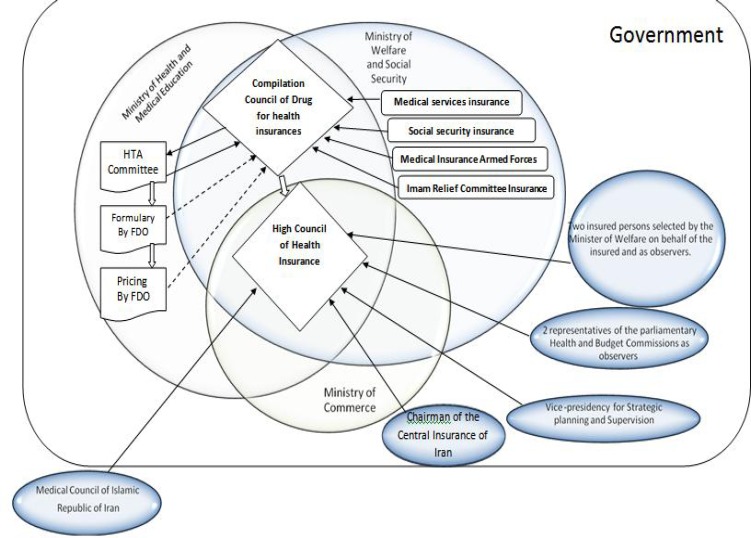
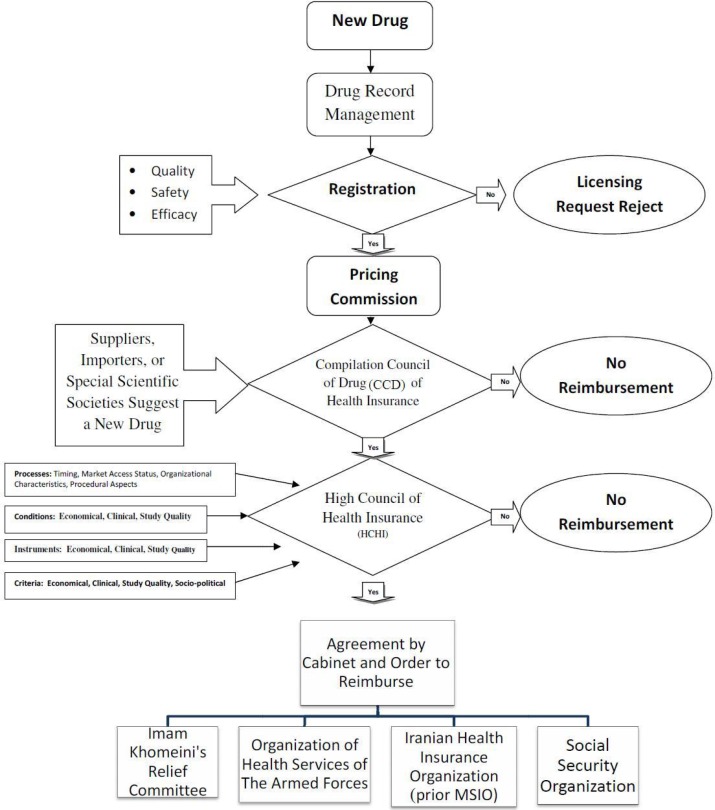
Decision-making for medicines to be accepted in Iran's public health insurance reimbursement list is a complex process and involves factors, which should be considered in applying a coverage for medicine costs. These processes and factors are not wholly assessed, while assessment of these factors is an essential need for getting a transparent and evidence-based approach toward medicine reimbursement in Iran. This paper aims to show an evidence-based approach toward medicine selection criteria to inform the medical reimbursement decision makers in Iranian health insurance organizations. To explore an adaptable decision-making framework while incorporating a method called "Borda" in medicine reimbursement assessment, we used the help of an expert group including decision makers and clinical researchers who are also policy makers to appraise the five chief criteria that have three sub criteria (Precision, Interpretability, and Cost). Also software "Math-lab"7, "SPSS" 17 and Excel 2007 were used in this study. "Borda" estimates the amount of perceived values from different criteria and creates a range from one to five while providing a comprehensive measurement of a large spectrum of criteria. Participants reported that the framework provided an efficient approach to systematic consideration in a pragmatic format consisting of many parts to guide decision-makings, including criteria and value (a model with the core of Borda) and evidences (medicine reimbursement based on criteria). The most important criterion for medicine acceptance in health insurance companies, in Iran, is the "life-threatening" factor and "evidence quality" is accounted as the fifth important factor. This pilot study showed the usefulness of incorporating Borda in medicine reimbursement decisions to support a transparent and systematic appraisal of health insurance companies' deeds. Further research is needed to advance Borda-based approaches that are effective on health insurance decision making.
伊朗公共医疗保险报销清单中药物的决策是一个复杂的过程,涉及多种因素,在申请药物费用报销时应予以考虑。这些过程和因素并未得到全面评估,然而对这些因素进行评估是在伊朗实现药物报销透明化和基于证据的方法的必要需求。本文旨在展示一种基于证据的药物选择标准方法,为伊朗医疗保险组织的医疗报销决策者提供参考。为了探索一个适应性强的决策框架,同时在药物报销评估中纳入一种名为“博尔达法”的方法,我们借助了一个专家小组的帮助,该小组包括决策者和临床研究人员(他们也是政策制定者),以评估五个主要标准,每个标准又有三个子标准(准确性、可解释性和成本)。此外,本研究还使用了软件“Math-lab”7、“SPSS”17和Excel 2007。“博尔达法”从不同标准估计感知价值的量,并创建一个从一到五的范围,同时对大量标准进行全面衡量。参与者报告称,该框架以一种务实的形式提供了一种有效的系统考量方法,该形式由许多部分组成,可指导决策制定,包括标准和价值(以博尔达法为核心的模型)以及证据(基于标准的药物报销)。在伊朗,保险公司接受药物的最重要标准是“危及生命”因素,而“证据质量”被视为第五重要因素。这项试点研究表明,将博尔达法纳入药物报销决策有助于对保险公司的行为进行透明和系统的评估。需要进一步开展研究,以推进基于博尔达法的方法,使其在医疗保险决策中发挥有效作用。