Dahlstrom Kurt M, Giglio Krista M, Collins Alan J, Sondermann Holger, O'Toole George A
Department of Microbiology and Immunology, Geisel School of Medicine at Dartmouth, Hanover, New Hampshire.
Department of Molecular Medicine, College of Veterinary Medicine, Cornell University, Ithaca, New York, USA.
mBio. 2015 Dec 15;6(6):e01978-15. doi: 10.1128/mBio.01978-15.
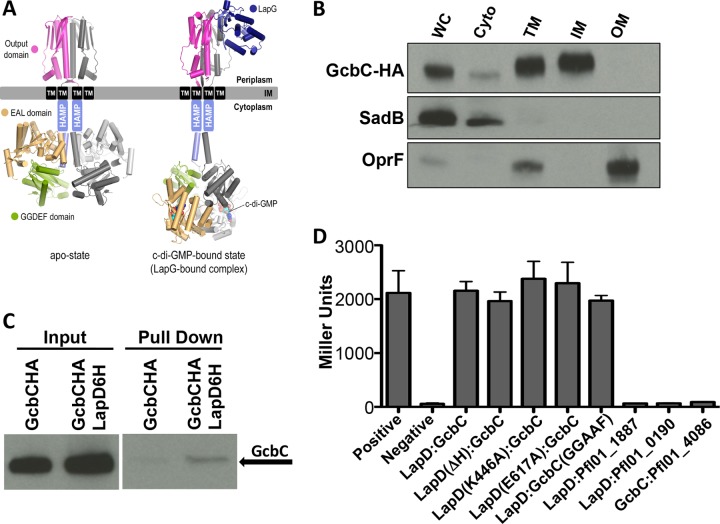
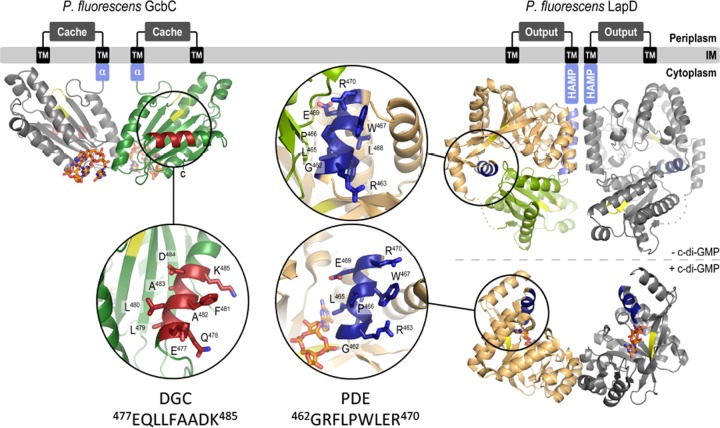
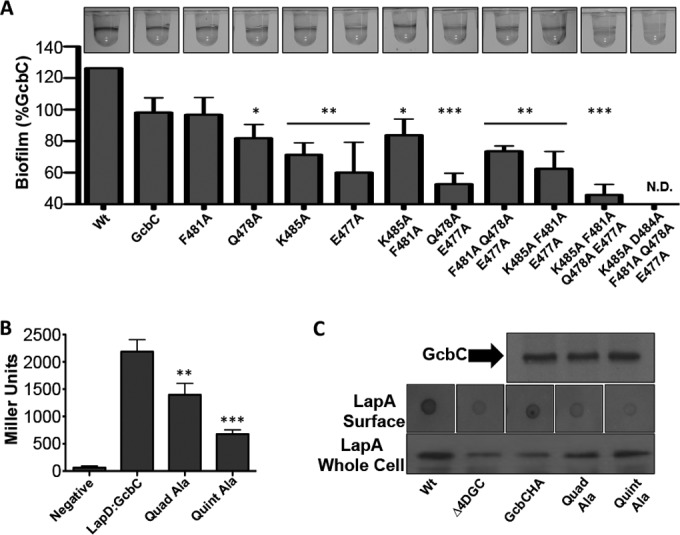
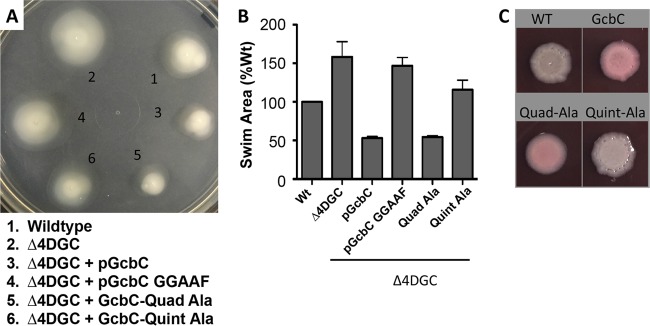
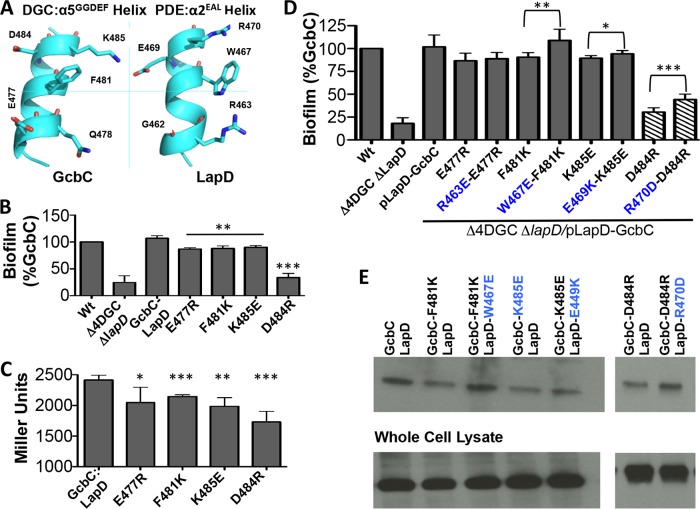
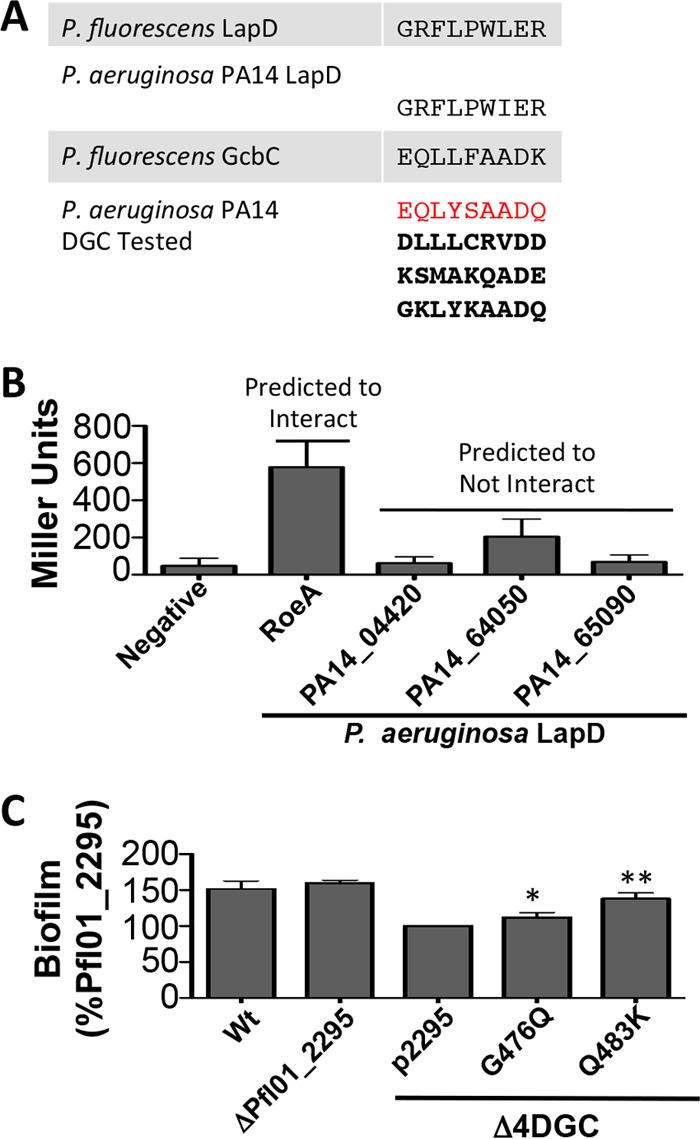
Cyclic diguanylate (c-di-GMP) is a bacterial second messenger that controls multiple cellular processes. c-di-GMP networks have up to dozens of diguanylate cyclases (DGCs) that synthesize c-di-GMP along with many c-di-GMP-responsive target proteins that can bind and respond to this signal. For such networks to have order, a mechanism(s) likely exists that allow DGCs to specifically signal their targets, and it has been suggested that physical interactions might provide such specificity. Our results show a DGC from Pseudomonas fluorescens physically interacting with its target protein at a conserved interface, and this interface can be predictive of DGC-target protein interactions. Furthermore, we demonstrate that physical interaction is necessary for the DGC to maximally signal its target. If such "local signaling" is a theme for even a fraction of the DGCs used by bacteria, it becomes possible to posit a model whereby physical interaction allows a DGC to directly signal its target protein, which in turn may help curtail undesired cross talk with other members of the network.
An important question in microbiology is how bacteria make decisions using a signaling network made up of proteins that make, break, and bind the second messenger c-di-GMP, which is responsible for controlling many cellular behaviors. Previous work has shown that a given DGC enzyme will signal for specific cellular outputs, despite making the same diffusible molecule as its sibling DGCs in the unpartitioned space of the bacterial cell. Understanding how one DGC differentiates its output from the dozens of other such enzymes in the cell is synonymous with understanding a large component of the bacterial decision-making machinery. We present evidence for a helix on a DGC used to physically associate with its target protein, which is necessary to achieve maximal signaling.
环二鸟苷酸(c-di-GMP)是一种细菌第二信使,可控制多种细胞过程。c-di-GMP网络中有多达数十种合成c-di-GMP的二鸟苷酸环化酶(DGC)以及许多可结合并响应该信号的c-di-GMP响应靶蛋白。为使此类网络有序,可能存在一种机制,使DGC能够特异性地向其靶标发出信号,有人提出物理相互作用可能提供这种特异性。我们的结果表明,荧光假单胞菌的一种DGC在一个保守界面与其靶蛋白发生物理相互作用,该界面可预测DGC与靶蛋白的相互作用。此外,我们证明物理相互作用对于DGC向其靶标发出最大信号是必要的。如果这种“局部信号传递”是细菌使用的哪怕一小部分DGC的特征,那么就有可能提出一种模型,即物理相互作用使DGC能够直接向其靶蛋白发出信号,这反过来可能有助于减少与网络其他成员不必要的串扰。
微生物学中的一个重要问题是细菌如何利用由合成、分解和结合第二信使c-di-GMP的蛋白质组成的信号网络做出决策,c-di-GMP负责控制许多细胞行为。先前的研究表明,尽管在细菌细胞的未分隔空间中,给定的DGC酶与其同类DGC合成相同的可扩散分子,但它会为特定的细胞输出发出信号。理解一种DGC如何将其输出与细胞中其他数十种此类酶区分开来,等同于理解细菌决策机制的一大部分。我们提供了证据,证明一种DGC上的一个螺旋用于与其靶蛋白发生物理结合,这是实现最大信号传递所必需的。