Shahidi Réza, Williams Elizabeth A, Conzelmann Markus, Asadulina Albina, Verasztó Csaba, Jasek Sanja, Bezares-Calderón Luis A, Jékely Gáspár
Max-Planck-Institute for Developmental Biology, Tübingen, Germany.
Elife. 2015 Dec 15;4:e11147. doi: 10.7554/eLife.11147.
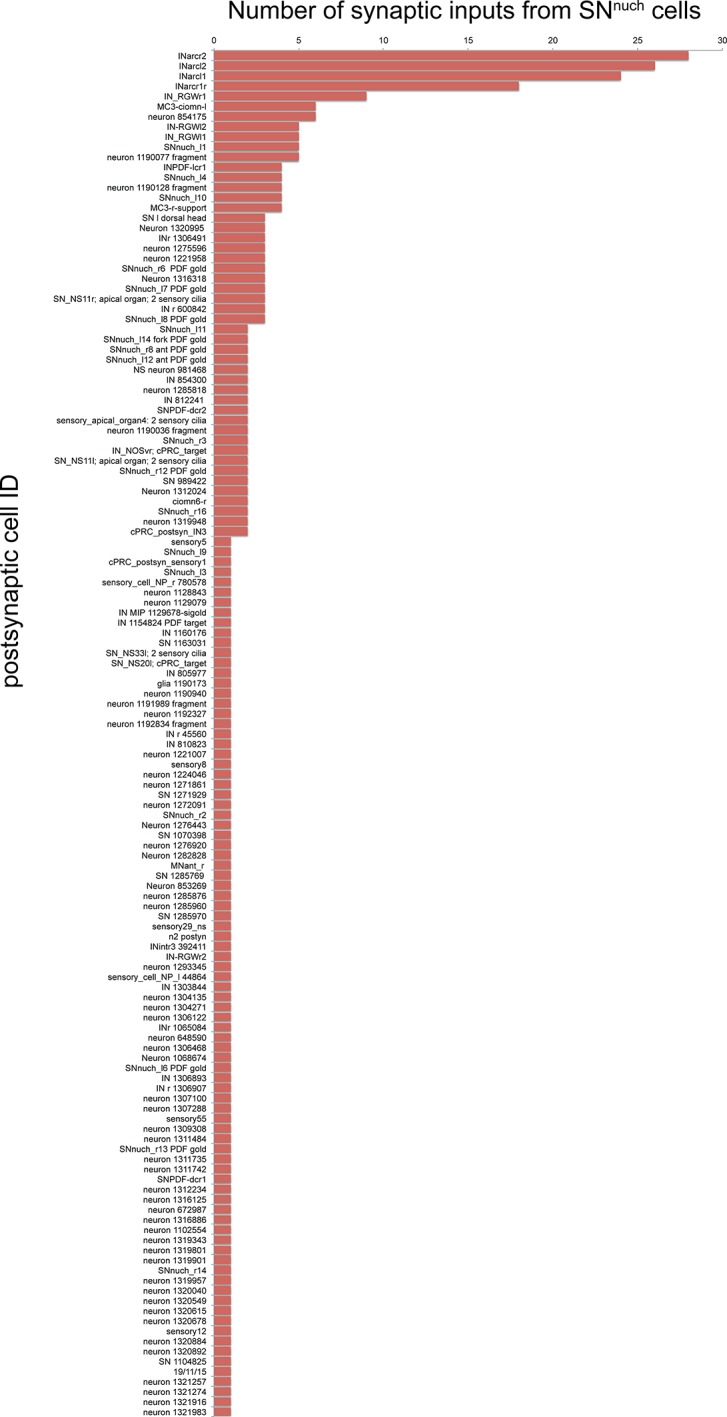
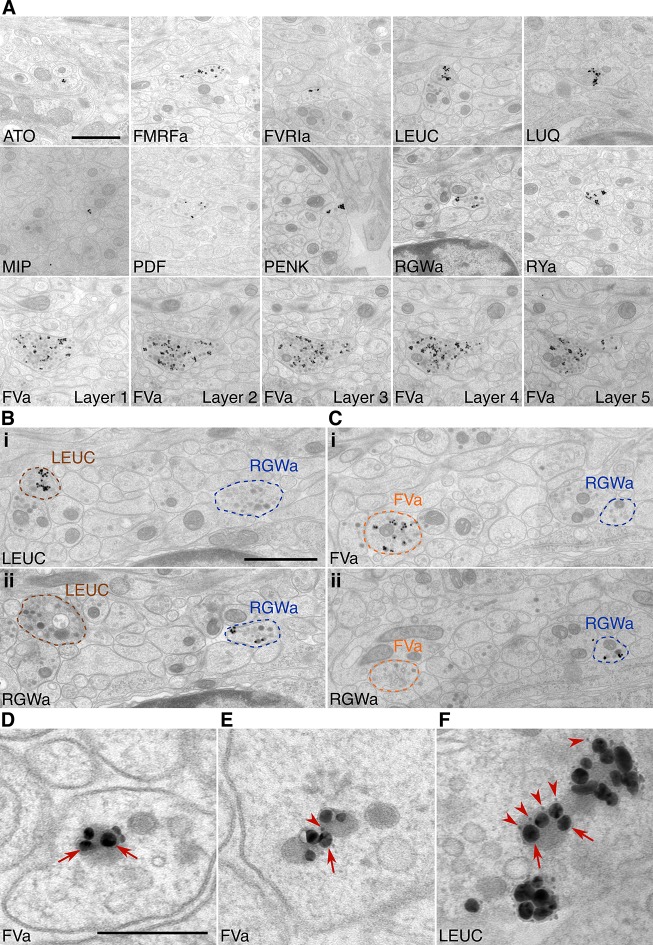
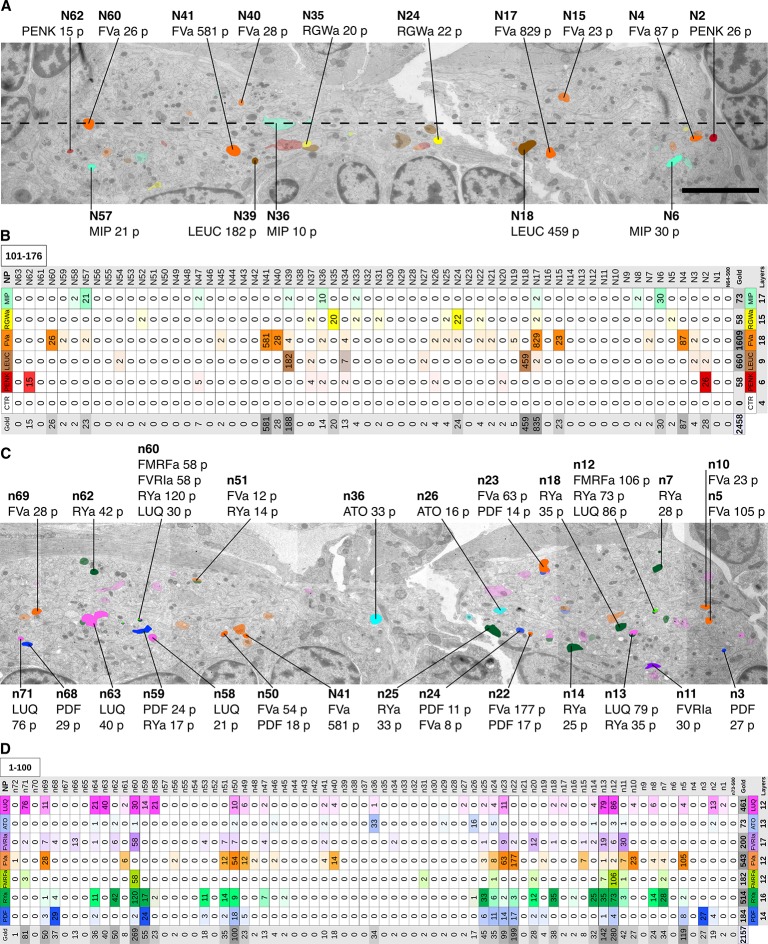
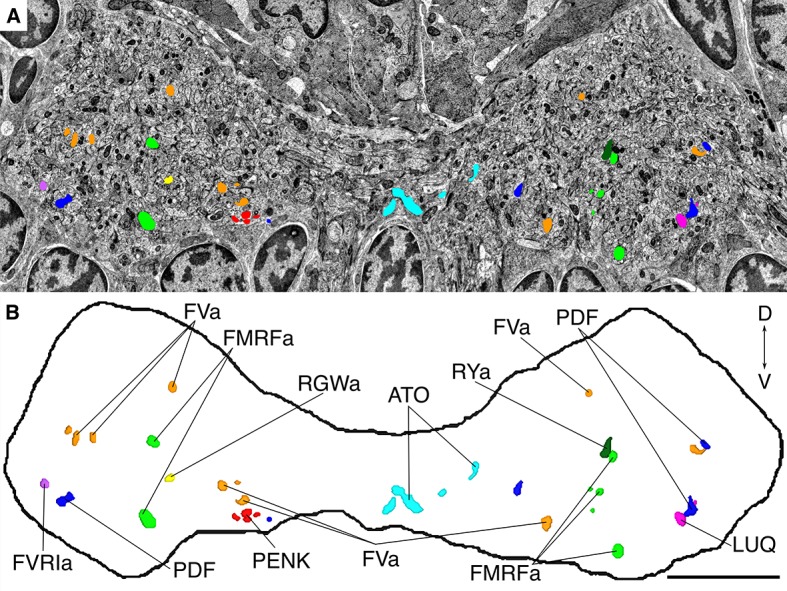
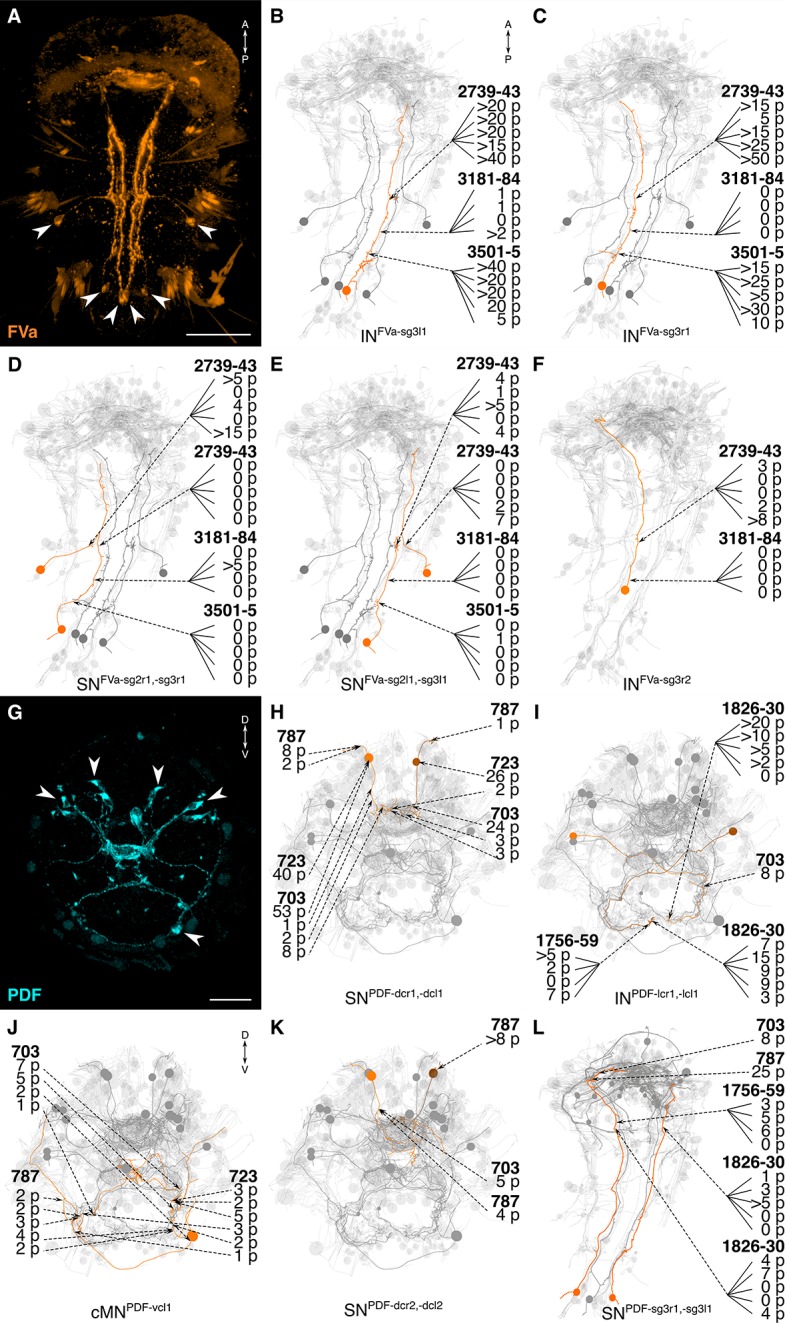
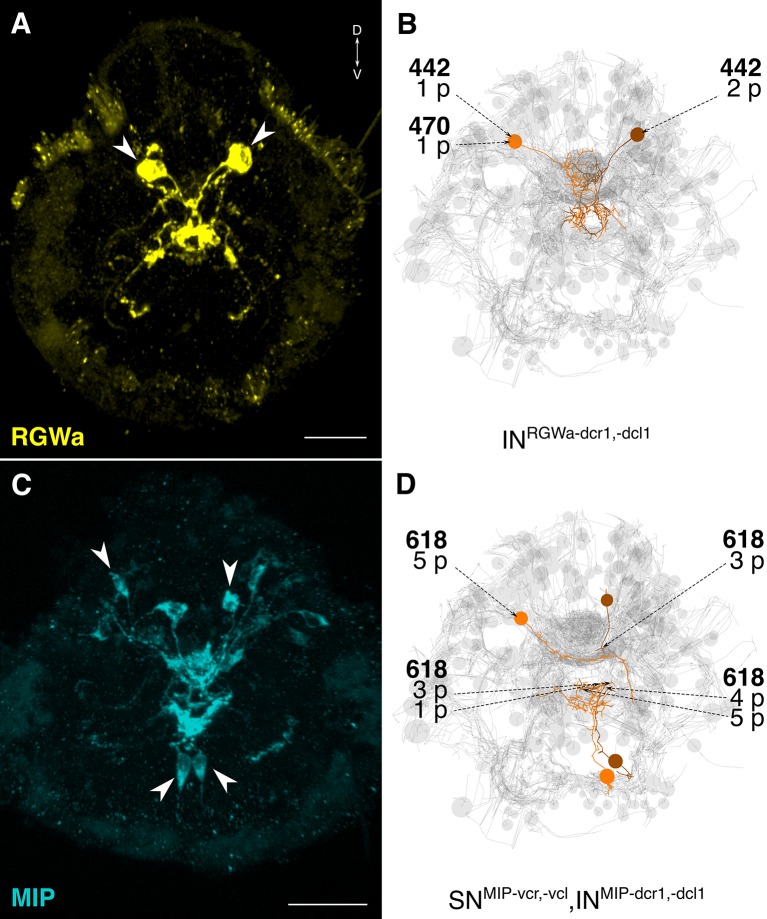
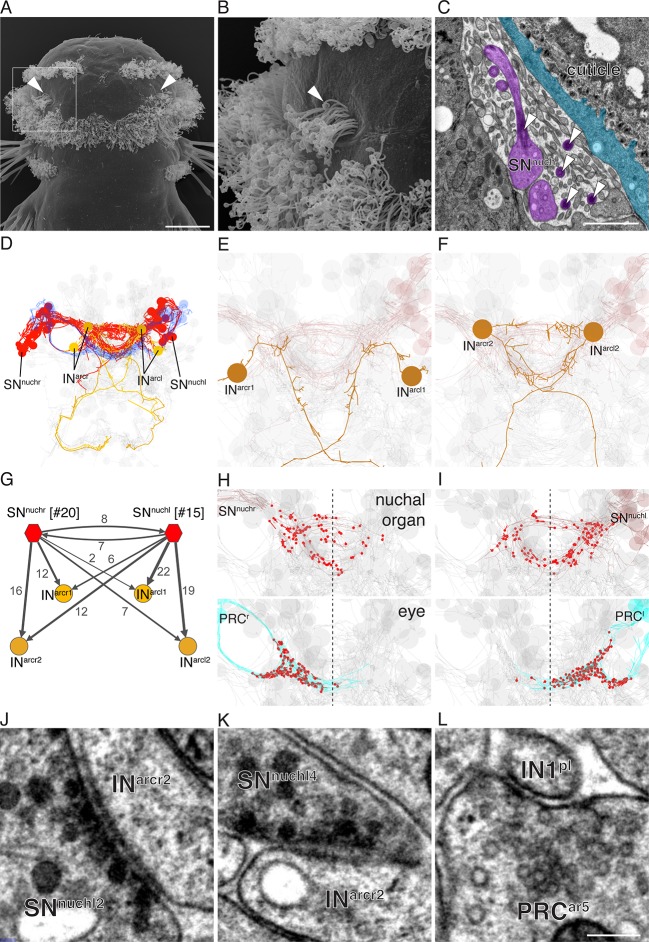
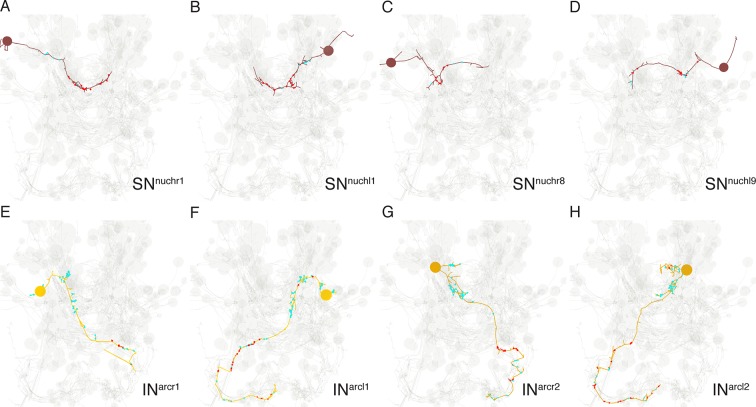
Electron microscopy-based connectomics aims to comprehensively map synaptic connections in neural tissue. However, current approaches are limited in their capacity to directly assign molecular identities to neurons. Here, we use serial multiplex immunogold labeling (siGOLD) and serial-section transmission electron microscopy (ssTEM) to identify multiple peptidergic neurons in a connectome. The high immunogenicity of neuropeptides and their broad distribution along axons, allowed us to identify distinct neurons by immunolabeling small subsets of sections within larger series. We demonstrate the scalability of siGOLD by using 11 neuropeptide antibodies on a full-body larval ssTEM dataset of the annelid Platynereis. We also reconstruct a peptidergic circuitry comprising the sensory nuchal organs, found by siGOLD to express pigment-dispersing factor, a circadian neuropeptide. Our approach enables the direct overlaying of chemical neuromodulatory maps onto synaptic connectomic maps in the study of nervous systems.
基于电子显微镜的连接组学旨在全面绘制神经组织中的突触连接。然而,目前的方法在直接为神经元赋予分子身份的能力方面存在局限性。在这里,我们使用连续多重免疫金标记(siGOLD)和连续切片透射电子显微镜(ssTEM)来识别连接组中的多个肽能神经元。神经肽的高免疫原性及其沿轴突的广泛分布,使我们能够通过对较大系列中一小部分切片进行免疫标记来识别不同的神经元。我们通过在环节动物多毛类动物扁形动物的全身幼虫ssTEM数据集上使用11种神经肽抗体,证明了siGOLD的可扩展性。我们还重建了一个肽能神经回路,该回路由感觉颈部器官组成,通过siGOLD发现其表达色素分散因子,一种昼夜节律神经肽。我们的方法能够在神经系统研究中直接将化学神经调节图谱叠加到突触连接组图谱上。