Wu Song, Powers Scott, Zhu Wei, Hannun Yusuf A
Department of Applied Mathematics and Statistics, Stony Brook University, Stony Brook, New York 11794, USA.
Stony Brook Cancer Center, Stony Brook University, Health Sciences Center, Stony Brook, New York 11794, USA.
Nature. 2016 Jan 7;529(7584):43-7. doi: 10.1038/nature16166. Epub 2015 Dec 16.
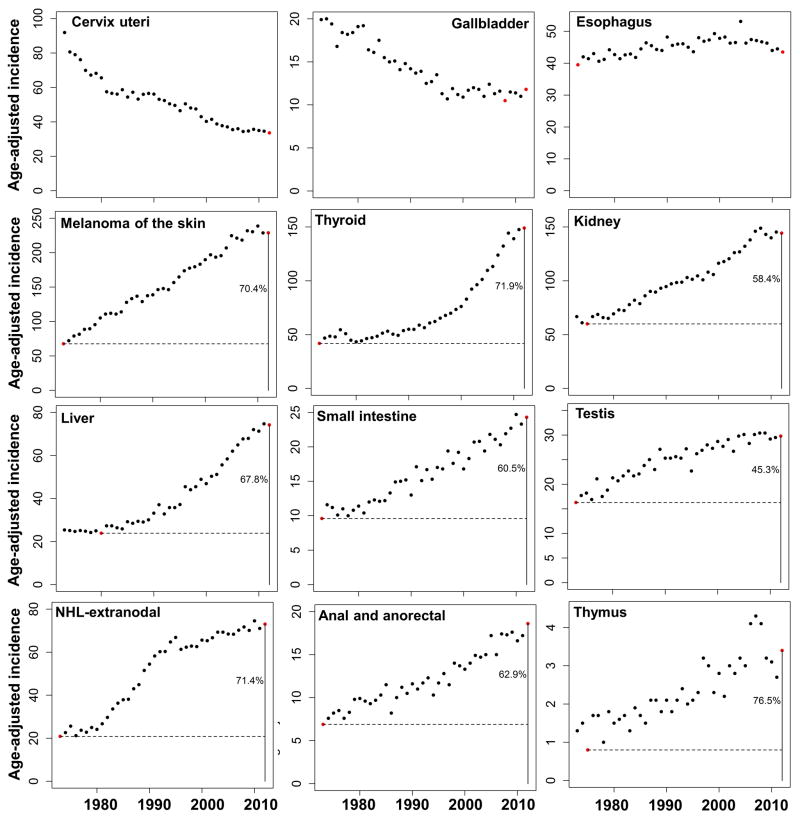
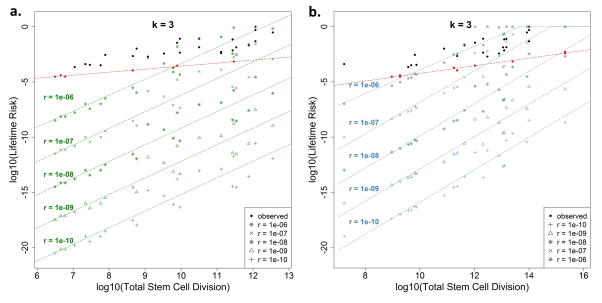
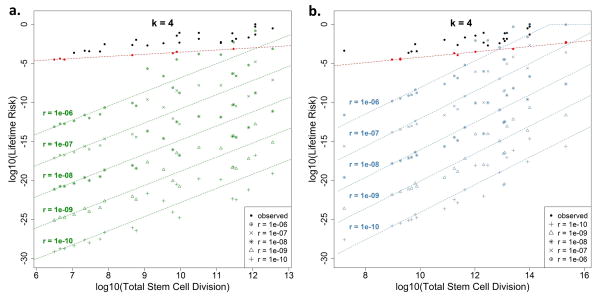
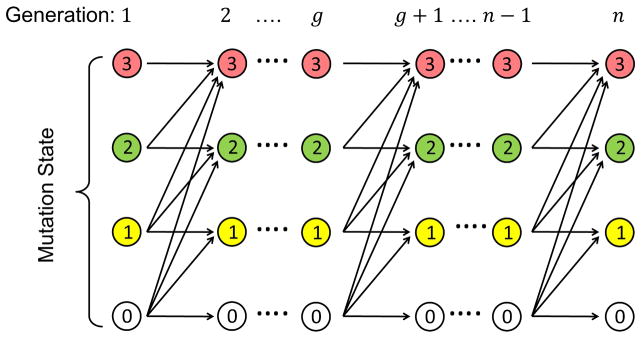
Recent research has highlighted a strong correlation between tissue-specific cancer risk and the lifetime number of tissue-specific stem-cell divisions. Whether such correlation implies a high unavoidable intrinsic cancer risk has become a key public health debate with the dissemination of the 'bad luck' hypothesis. Here we provide evidence that intrinsic risk factors contribute only modestly (less than ~10-30% of lifetime risk) to cancer development. First, we demonstrate that the correlation between stem-cell division and cancer risk does not distinguish between the effects of intrinsic and extrinsic factors. We then show that intrinsic risk is better estimated by the lower bound risk controlling for total stem-cell divisions. Finally, we show that the rates of endogenous mutation accumulation by intrinsic processes are not sufficient to account for the observed cancer risks. Collectively, we conclude that cancer risk is heavily influenced by extrinsic factors. These results are important for strategizing cancer prevention, research and public health.
近期研究突出了组织特异性癌症风险与组织特异性干细胞一生分裂次数之间的强相关性。随着“坏运气”假说的传播,这种相关性是否意味着存在高度不可避免的内在癌症风险已成为一场关键的公共卫生辩论。在此,我们提供证据表明内在风险因素对癌症发生的贡献仅为适度(不到一生风险的约10 - 30%)。首先,我们证明干细胞分裂与癌症风险之间的相关性无法区分内在因素和外在因素的影响。然后我们表明,通过控制总干细胞分裂的下限风险能更好地估计内在风险。最后,我们表明内在过程导致的内源性突变积累速率不足以解释观察到的癌症风险。总体而言,我们得出结论,癌症风险受外在因素的严重影响。这些结果对于制定癌症预防、研究及公共卫生策略具有重要意义。