• 文献检索
  • 文档翻译
  • 深度研究
  • 学术资讯
  • Suppr Zotero 插件Zotero 插件
  • 邀请有礼
  • 套餐&价格
  • 历史记录
应用&插件
Suppr Zotero 插件Zotero 插件浏览器插件Mac 客户端Windows 客户端微信小程序
定价
高级版会员购买积分包购买API积分包
服务
文献检索文档翻译深度研究API 文档MCP 服务
关于我们
关于 Suppr公司介绍联系我们用户协议隐私条款
关注我们

Suppr 超能文献

核心技术专利:CN118964589B侵权必究
粤ICP备2023148730 号-1Suppr @ 2026

文献检索

告别复杂PubMed语法,用中文像聊天一样搜索,搜遍4000万医学文献。AI智能推荐,让科研检索更轻松。

立即免费搜索

文件翻译

保留排版,准确专业,支持PDF/Word/PPT等文件格式,支持 12+语言互译。

免费翻译文档

深度研究

AI帮你快速写综述,25分钟生成高质量综述,智能提取关键信息,辅助科研写作。

立即免费体验

使用CSNAT探索脑癌患者家庭照顾者的支持需求:与其他癌症群体的比较研究

Exploring the Support Needs of Family Caregivers of Patients with Brain Cancer Using the CSNAT: A Comparative Study with Other Cancer Groups.

作者信息

Aoun Samar M, Deas Kathleen, Howting Denise, Lee Gabriel

机构信息

School of Nursing, Midwifery & Paramedicine, Curtin University, Western Australia, Australia.

St John of God Hospital, Subiaco, Western Australia, Australia.

出版信息

PLoS One. 2015 Dec 17;10(12):e0145106. doi: 10.1371/journal.pone.0145106. eCollection 2015.

DOI:10.1371/journal.pone.0145106
PMID:26679505
原文链接:https://pmc.ncbi.nlm.nih.gov/articles/PMC4682982/
Abstract

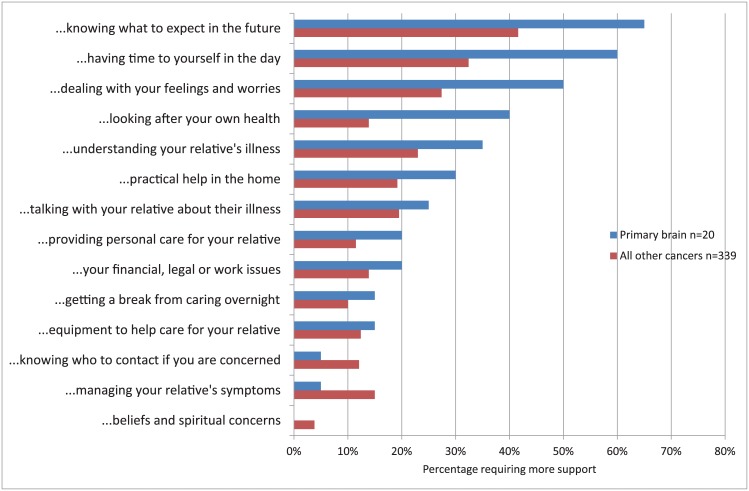
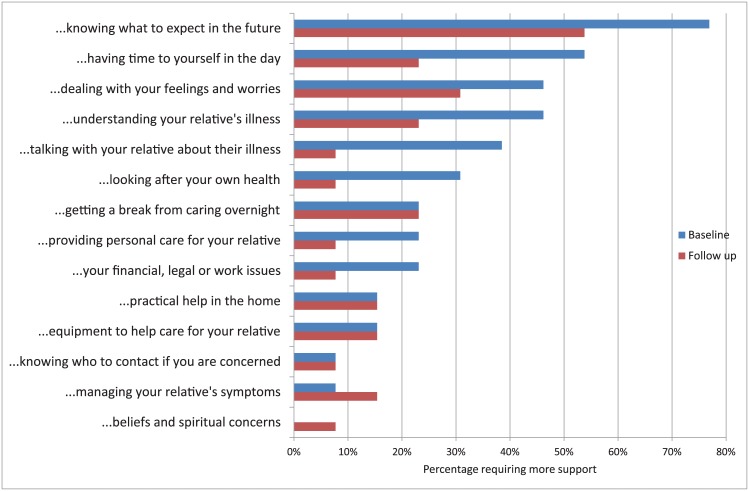
A substantial burden is placed on family caregivers of patients diagnosed with brain cancers. Despite this, the support needs of the caregivers are often under-recognised and not addressed adequately in current routine and patient centred clinical care. The Carer Support Needs Assessment Tool (CSNAT) is a validated instrument designed to systematically identify and address caregiver needs [corrected]. It has been trialled in an Australian palliative care community setting using a stepped wedge cluster design involving 322 family carers of terminally ill patients. The current article reports on a subset from this trial, 29 caregivers of patients with primary brain cancer, and compares their profile and outcomes to those of other cancer groups. Caregiver strain was assessed using the Family Appraisal of Caregiving Questionnaire, caregiver physical and mental wellbeing using SF12 and caregiver workload using a questionnaire on support with activities of daily living (ADL). In comparison to caregivers of patients with all other cancers, the primary brain cancer group had significantly higher levels of caregiver strain, lower levels of mental wellbeing and a higher level of ADL workload. Their physical wellness also deteriorated significantly over time. An action plan approach led to practical solutions for addressing highlighted concerns. Four themes evolved from the family caregivers' feedback interviews: The extremely challenging caregiver experience with brain cancer; the systematic and practical approach of the CSNAT during rapid changes; connection with health professionals, feeling acknowledged and empowered; and timely advice and assurance of support during the caregiving journey. This preliminary study has demonstrated that the CSNAT provides a practical and useful tool for assessing the support needs of family caregivers of patients with brain cancer and has provided the basis for a larger scale, longitudinal study that allows a more detailed characterisation of the evolving caregiver needs at different stages of the disease.

摘要

被诊断患有脑癌患者的家庭护理人员承受着巨大的负担。尽管如此,护理人员的支持需求在当前常规和以患者为中心的临床护理中往往未得到充分认识和妥善解决。护理人员支持需求评估工具(CSNAT)是一种经过验证的工具,旨在系统地识别和满足护理人员的需求[已修正]。它已在澳大利亚姑息治疗社区环境中进行试验,采用阶梯式楔形整群设计,涉及322名绝症患者的家庭护理人员。本文报道了该试验的一个子集,即29名原发性脑癌患者的护理人员,并将他们的概况和结果与其他癌症组进行比较。使用家庭护理评估问卷评估护理人员的压力,使用SF12评估护理人员的身心健康,使用关于日常生活活动支持的问卷评估护理人员的工作量。与所有其他癌症患者的护理人员相比,原发性脑癌组的护理人员压力水平显著更高,心理健康水平更低,日常生活活动工作量更高。随着时间的推移,他们的身体健康也显著恶化。行动计划方法为解决突出问题带来了切实可行的解决方案。家庭护理人员的反馈访谈产生了四个主题:脑癌护理人员极其具有挑战性的经历;CSNAT在快速变化期间的系统和实用方法;与医疗专业人员的联系,感到被认可和有力量;以及在护理过程中及时获得建议和支持保证。这项初步研究表明,CSNAT为评估脑癌患者家庭护理人员的支持需求提供了一个实用且有用的工具,并为一项更大规模的纵向研究奠定了基础,该研究能够更详细地描述疾病不同阶段护理人员不断变化的需求。
https://cdn.ncbi.nlm.nih.gov/pmc/blobs/f5f0/4682982/7a91b32a9ef6/pone.0145106.g002.jpg
https://cdn.ncbi.nlm.nih.gov/pmc/blobs/f5f0/4682982/6a6dc9841b1d/pone.0145106.g001.jpg
https://cdn.ncbi.nlm.nih.gov/pmc/blobs/f5f0/4682982/7a91b32a9ef6/pone.0145106.g002.jpg
https://cdn.ncbi.nlm.nih.gov/pmc/blobs/f5f0/4682982/6a6dc9841b1d/pone.0145106.g001.jpg
https://cdn.ncbi.nlm.nih.gov/pmc/blobs/f5f0/4682982/7a91b32a9ef6/pone.0145106.g002.jpg

相似文献

1
Exploring the Support Needs of Family Caregivers of Patients with Brain Cancer Using the CSNAT: A Comparative Study with Other Cancer Groups.使用CSNAT探索脑癌患者家庭照顾者的支持需求:与其他癌症群体的比较研究
PLoS One. 2015 Dec 17;10(12):e0145106. doi: 10.1371/journal.pone.0145106. eCollection 2015.
2
Supporting family caregivers to identify their own needs in end-of-life care: Qualitative findings from a stepped wedge cluster trial.支持家庭护理人员确定其在临终关怀中的自身需求:一项阶梯式楔形整群试验的定性研究结果
Palliat Med. 2015 Jun;29(6):508-17. doi: 10.1177/0269216314566061. Epub 2015 Feb 2.
3
The impact of the carer support needs assessment tool (CSNAT) in community palliative care using a stepped wedge cluster trial.使用阶梯式楔形整群试验评估护理者支持需求评估工具(CSNAT)在社区姑息治疗中的影响。
PLoS One. 2015 Apr 7;10(4):e0123012. doi: 10.1371/journal.pone.0123012. eCollection 2015.
4
Enabling a family caregiver-led assessment of support needs in home-based palliative care: Potential translation into practice.在居家姑息治疗中实现由家庭照顾者主导的支持需求评估:向实践转化的潜力。
Palliat Med. 2015 Dec;29(10):929-38. doi: 10.1177/0269216315583436. Epub 2015 Apr 20.
5
The Carer Support Needs Assessment Tool (CSNAT) for use in palliative and end-of-life care at home: a validation study.用于居家姑息治疗和临终关怀的照顾者支持需求评估工具(CSNAT):一项验证研究。
J Pain Symptom Manage. 2013 Sep;46(3):395-405. doi: 10.1016/j.jpainsymman.2012.09.008. Epub 2012 Dec 12.
6
Identifying and addressing the support needs of family caregivers of people with motor neurone disease using the Carer Support Needs Assessment Tool.使用护理者支持需求评估工具识别并满足运动神经元病患者家庭护理者的支持需求。
Palliat Support Care. 2017 Feb;15(1):32-43. doi: 10.1017/S1478951516000341. Epub 2016 May 13.
7
A person-centred approach in nursing: Validity and reliability of the Carer Support Needs Assessment Tool.护理中的以人为本方法:照顾者支持需求评估工具的效度与信度
Eur J Oncol Nurs. 2018 Aug;35:1-8. doi: 10.1016/j.ejon.2018.04.005. Epub 2018 May 7.
8
Organising Support for Carers of Stroke Survivors (OSCARSS): study protocol for a cluster randomised controlled trial, including health economic analysis.为中风幸存者照料者提供组织支持(OSCARSS):一项整群随机对照试验的研究方案,包括卫生经济学分析。
Trials. 2019 Jan 7;20(1):19. doi: 10.1186/s13063-018-3104-7.
9
The Impact of Supporting Family Caregivers Before Bereavement on Outcomes After Bereavement: Adequacy of End-of-Life Support and Achievement of Preferred Place of Death.在丧亲前支持家庭照顾者对丧亲后结局的影响:临终支持的充分性和实现期望的死亡地点。
J Pain Symptom Manage. 2018 Feb;55(2):368-378. doi: 10.1016/j.jpainsymman.2017.09.023. Epub 2017 Oct 10.
10
Support needs of patients with oral cancer and burden to their family caregivers.口腔癌患者及其家庭照顾者的支持需求。
Cancer Nurs. 2009 Nov-Dec;32(6):473-81. doi: 10.1097/NCC.0b013e3181b14e94.

引用本文的文献

1
"What is this brain's story?" Healthcare professionals' perspectives on managing brain tumor-related personality and behavior changes.“这个大脑的故事是怎样的?”医疗保健专业人员对管理脑肿瘤相关人格和行为变化的看法。
Neurooncol Pract. 2025 Jan 17;12(3):437-447. doi: 10.1093/nop/npaf007. eCollection 2025 Jun.
2
Well-being and coping: Key aspects of unmet need of people living with glioma.幸福感与应对方式:胶质瘤患者未满足需求的关键方面。
Neurooncol Pract. 2025 Jan 9;12(3):413-425. doi: 10.1093/nop/npae127. eCollection 2025 Jun.
3
Person-centred care in oncological home services: a scoping review of patients' and caregivers' experience and needs.

本文引用的文献

1
Enabling a family caregiver-led assessment of support needs in home-based palliative care: Potential translation into practice.在居家姑息治疗中实现由家庭照顾者主导的支持需求评估:向实践转化的潜力。
Palliat Med. 2015 Dec;29(10):929-38. doi: 10.1177/0269216315583436. Epub 2015 Apr 20.
2
The impact of the carer support needs assessment tool (CSNAT) in community palliative care using a stepped wedge cluster trial.使用阶梯式楔形整群试验评估护理者支持需求评估工具(CSNAT)在社区姑息治疗中的影响。
PLoS One. 2015 Apr 7;10(4):e0123012. doi: 10.1371/journal.pone.0123012. eCollection 2015.
3
Supporting family caregivers to identify their own needs in end-of-life care: Qualitative findings from a stepped wedge cluster trial.
肿瘤居家服务中的以人为本护理:患者及照护者体验与需求的范围综述
BMC Health Serv Res. 2025 Feb 11;25(1):232. doi: 10.1186/s12913-024-12058-w.
4
A nurse-led intervention for carers of people with high-grade glioma: A case series of carers reporting high distress.一项由护士主导的针对高级别胶质瘤患者照料者的干预措施:一系列照料者报告高度痛苦的病例
Neurooncol Pract. 2024 Apr 17;11(5):604-616. doi: 10.1093/nop/npae033. eCollection 2024 Oct.
5
'I think both of us drew strength from it': qualitative reflections from next of kin following the death and post-mortem brain donation of a loved one with brain cancer.“我认为我们两人都从中汲取了力量”:脑癌患者去世并进行死后脑捐赠后,其近亲的定性反思
Palliat Care Soc Pract. 2024 Aug 19;18:26323524241272106. doi: 10.1177/26323524241272106. eCollection 2024.
6
Rehabilitation needs of people with brain tumours in Ireland: Protocol for a prospective, mixed methods action research study ("Brain-RESTORE").爱尔兰脑肿瘤患者的康复需求:一项前瞻性混合方法行动研究(“Brain-RESTORE”)的方案
HRB Open Res. 2023 Sep 25;6:58. doi: 10.12688/hrbopenres.13786.1. eCollection 2023.
7
What do carers of people with high-grade glioma perceive could improve their preparedness to care, and what additional support do they require?高级别胶质瘤患者的护理人员认为哪些方面可以提高他们的护理准备程度,他们还需要哪些额外的支持?
Neurooncol Pract. 2024 Feb 16;11(3):296-306. doi: 10.1093/nop/npae015. eCollection 2024 Jun.
8
Exploring the clinical utility of a brief screening measure of unmet supportive care needs in people with high-grade glioma.探索一种简短筛查措施在高级别胶质瘤患者未满足的支持性护理需求方面的临床效用。
Neurooncol Pract. 2023 Jun 24;10(5):454-461. doi: 10.1093/nop/npad035. eCollection 2023 Oct.
9
Study protocol for NeuroCARE: a randomised controlled trial of a psychological intervention for caregivers of patients with primary malignant brain tumours.NeuroCARE 研究方案:一项针对原发性脑恶性肿瘤患者照顾者的心理干预的随机对照试验。
BMJ Open. 2023 Sep 7;13(9):e069410. doi: 10.1136/bmjopen-2022-069410.
10
Unmet needs and wish for support of family caregivers of primary brain tumor patients.原发性脑肿瘤患者家庭照顾者未满足的需求及对支持的渴望。
Neurooncol Pract. 2023 Jan 4;10(3):271-280. doi: 10.1093/nop/npac099. eCollection 2023 Jun.
支持家庭护理人员确定其在临终关怀中的自身需求:一项阶梯式楔形整群试验的定性研究结果
Palliat Med. 2015 Jun;29(6):508-17. doi: 10.1177/0269216314566061. Epub 2015 Feb 2.
4
Dignity therapy for people with motor neuron disease and their family caregivers: a feasibility study.运动神经元病患者及其家庭照顾者的尊严疗法:一项可行性研究。
J Palliat Med. 2015 Jan;18(1):31-7. doi: 10.1089/jpm.2014.0213.
5
The challenges and suffering of caring for people with primary malignant glioma: qualitative perspectives on improving current supportive and palliative care practices.照顾原发性恶性胶质瘤患者的挑战与痛苦:关于改进当前支持性和姑息性护理实践的质性观点
BMJ Support Palliat Care. 2014 Mar;4(1):68-76. doi: 10.1136/bmjspcare-2012-000419. Epub 2013 Jun 1.
6
Clinical management and survival outcomes of gliosarcomas in the era of multimodality therapy.多模态治疗时代胶质肉瘤的临床管理和生存结果。
J Clin Neurosci. 2014 Mar;21(3):478-81. doi: 10.1016/j.jocn.2013.07.042. Epub 2013 Oct 30.
7
The Carer Support Needs Assessment Tool (CSNAT) for use in palliative and end-of-life care at home: a validation study.用于居家姑息治疗和临终关怀的照顾者支持需求评估工具(CSNAT):一项验证研究。
J Pain Symptom Manage. 2013 Sep;46(3):395-405. doi: 10.1016/j.jpainsymman.2012.09.008. Epub 2012 Dec 12.
8
Palliative and supportive care needs of patients with high-grade glioma and their carers: a systematic review of qualitative literature.高级别胶质瘤患者及其照护者的姑息治疗和支持性护理需求:定性文献的系统评价。
Patient Educ Couns. 2013 May;91(2):141-53. doi: 10.1016/j.pec.2012.11.002. Epub 2012 Dec 5.
9
The impact of a high-grade glioma on everyday life: a systematic review from the patient's and caregiver's perspective.高级别胶质瘤对日常生活的影响:从患者和照护者角度的系统评价。
Eur J Oncol Nurs. 2013 Feb;17(1):107-17. doi: 10.1016/j.ejon.2012.04.006. Epub 2012 May 31.
10
Development of a Carer Support Needs Assessment Tool (CSNAT) for end-of-life care practice at home: a qualitative study.开发一种用于家庭临终关怀实践的照顾者支持需求评估工具(CSNAT):一项定性研究。
Palliat Med. 2013 Mar;27(3):244-56. doi: 10.1177/0269216312440607. Epub 2012 Mar 26.