Li Ming, Gu Yuan, Ma Yan-Chao, Shang Zeng-Fu, Wang Chang, Liu Fen-Ju, Cao Jian-Ping, Wan Hua-Jing, Zhang Xue-Guang
1. School of Radiation Medicine and Protection, Medical College of Soochow University, Suzhou, Jiangsu 215123, China ; 2. Collaborative Innovation Center of Radiation Medicine of Jiangsu Higher Education Institutions, Suzhou, Jiangsu 215123, China.
3. Institute of Medical Biotechnology, Medical College of Soochow University, Suzhou, Jiangsu 215007, China ; 4. Jiangsu Stem Cell Key Laboratory, Medical College of Soochow University, Suzhou, Jiangsu 215007, China.
Int J Biol Sci. 2015 Dec 2;11(12):1458-68. doi: 10.7150/ijbs.13444. eCollection 2015.
BACKGROUND & AIMS: High doses of radiation induce severe DNA damage in intestinal epithelial cells, especially crypt cells, and cause intestinal injury, but the underlying molecular mechanisms remain unclear. Krüppel-like factor 5 (KLF5), a zinc finger-containing transcription factor, is induced by various stress stimuli and is involved in cell proliferation and survival. The role of KLF5 in radiation-induced intestinal injury was investigated here.
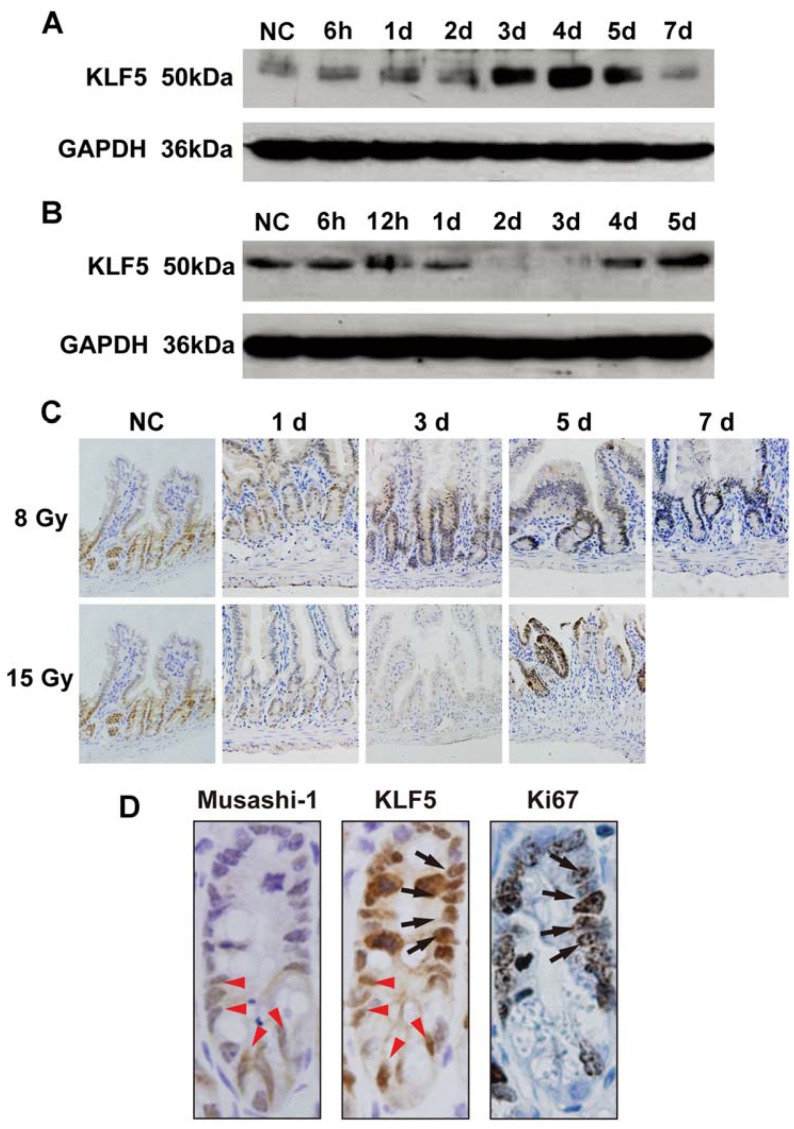
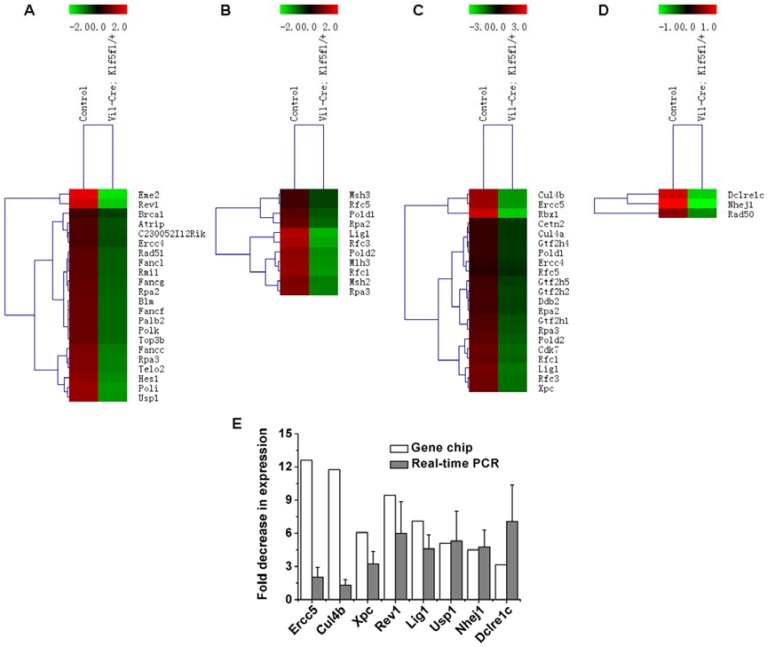
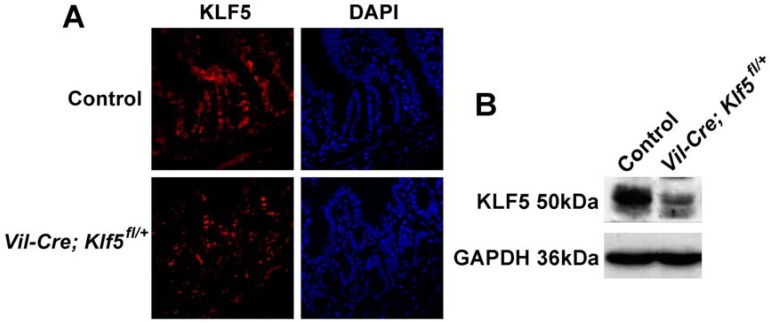
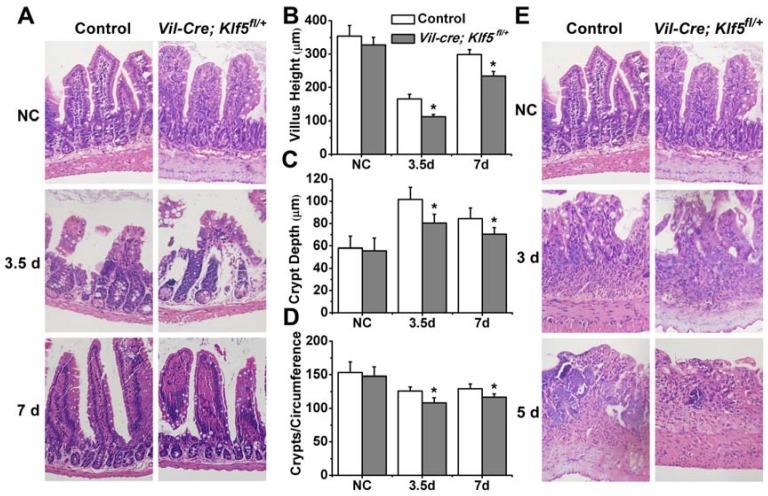
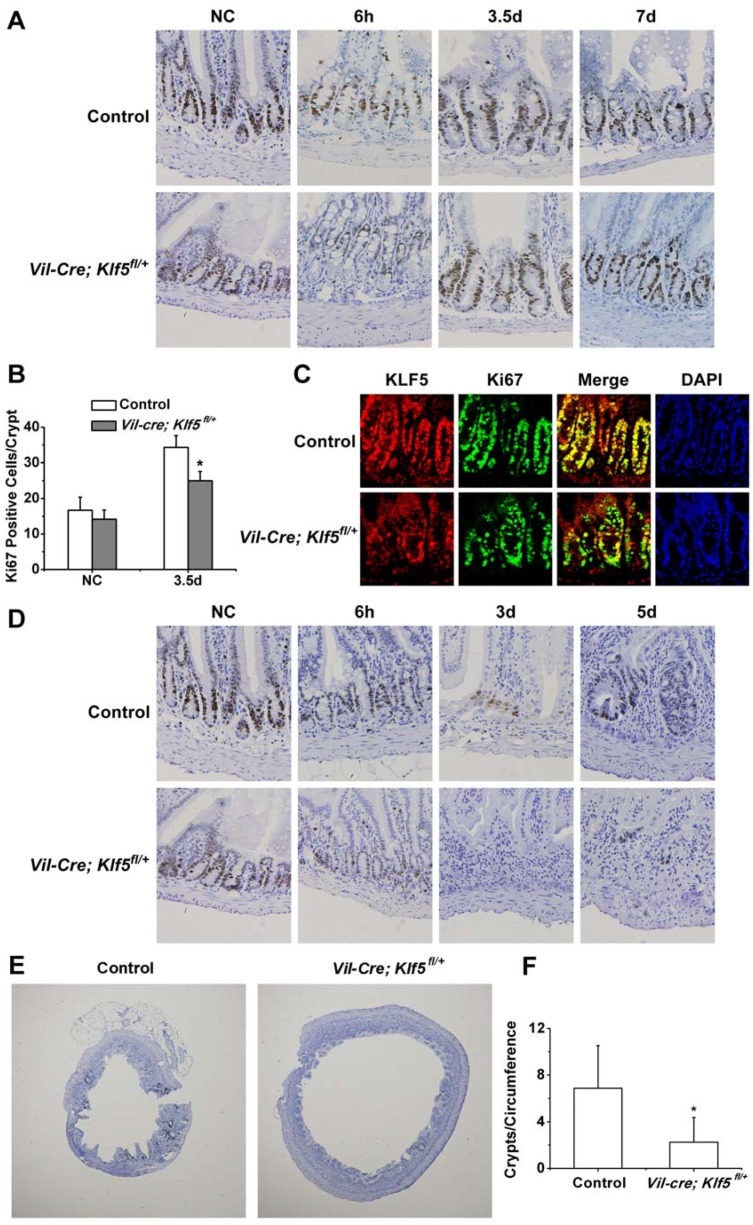
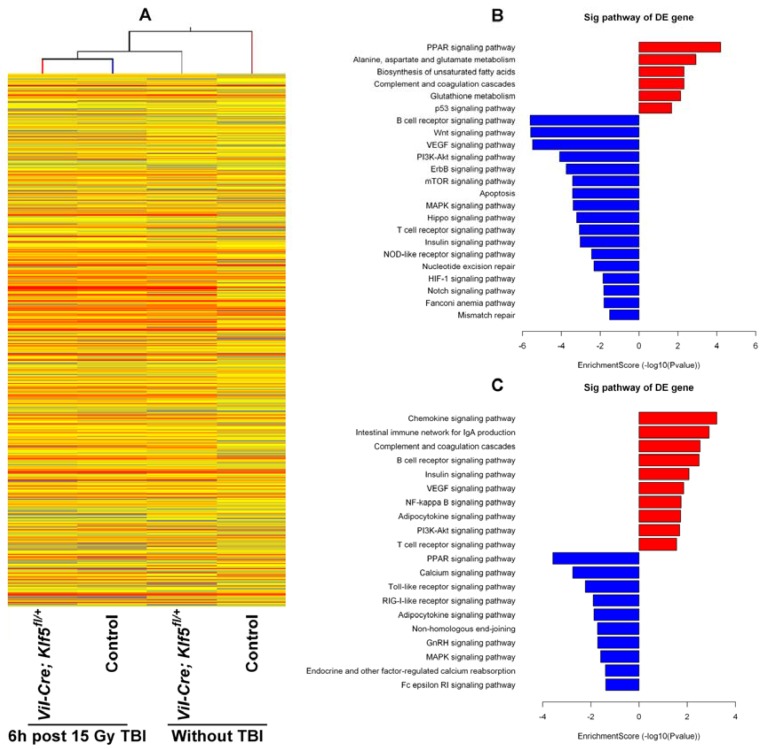
Wild type mice were treated with 8 or 15 Gy total body irradiation (TBI). KLF5 content and cellular localization in the small intestines of irradiated mice were detected by Western blot and immunohistochemical analysis. Mice with intestinal-specific knockdown of KLF5 (Vil-Cre; Klf5(fl/+) mice) were generated and their response to radiation was compared with controls. Morphological changes were determined by hematoxylin and eosin staining. Proliferation was examined by Ki67 immunostaining. The molecular response of the small intestine after KLF5 knockdown was investigated using microarrays.
KLF5 expression correlated with the progression of intestinal damage. Decreased levels of KLF5 in the gut were associated with increased damage to the intestinal mucosa and reduced epithelial proliferation after TBI. Our microarray data disclosed that KLF5 knockdown down-regulated genes related to DNA damage repair pathways such as nucleotide excision repair, mismatch repair, non-homologous end joining and the Fanconi anemia pathway, which may suggest a novel function of KLF5.
Our study illustrates that KLF5 may modulate DNA repair pathways to prevent intestinal injury induced by TBI. KLF5 signaling provides a novel field for identification of potential therapeutic targets for the treatment of radiation-induced intestinal damage.
高剂量辐射会在肠道上皮细胞尤其是隐窝细胞中诱导严重的DNA损伤,并导致肠道损伤,但其潜在分子机制仍不清楚。Krüppel样因子5(KLF5)是一种含锌指的转录因子,可被多种应激刺激诱导,并参与细胞增殖和存活。本研究旨在探讨KLF5在辐射诱导的肠道损伤中的作用。
对野生型小鼠进行8或15 Gy全身照射(TBI)。通过蛋白质免疫印迹法和免疫组织化学分析检测照射小鼠小肠中KLF5的含量和细胞定位。构建肠道特异性敲低KLF5的小鼠(Vil-Cre;Klf5(fl/+)小鼠),并将其对辐射的反应与对照组进行比较。通过苏木精-伊红染色确定形态学变化。通过Ki67免疫染色检测增殖情况。使用微阵列研究KLF5敲低后小肠的分子反应。
KLF5表达与肠道损伤的进展相关。肠道中KLF5水平降低与TBI后肠黏膜损伤增加和上皮增殖减少有关。我们的微阵列数据显示,KLF5敲低下调了与DNA损伤修复途径相关的基因,如核苷酸切除修复、错配修复、非同源末端连接和范可尼贫血途径,这可能提示KLF5具有新功能。
我们的研究表明,KLF5可能调节DNA修复途径以预防TBI诱导的肠道损伤。KLF5信号通路为鉴定辐射诱导的肠道损伤治疗的潜在治疗靶点提供了一个新领域。