Alexandre Yannick O, Ghilas Sonia, Sanchez Cindy, Le Bon Agnès, Crozat Karine, Dalod Marc
Centre d'Immunologie de Marseille-Luminy, Aix Marseille Université UM2, Institut National de la Santé et de la Recherche Médicale, U1104, Centre National de la Recherche Scientifique UMR7280, 13288 Marseille, France.
Institut Cochin, Institut National de la Santé et de la Recherche Médicale, U1016, Centre National de la Recherche Scientifique UMR8104, Université Paris Descartes, Sorbonne Paris Cité, 75014 Paris, France.
J Exp Med. 2016 Jan 11;213(1):75-92. doi: 10.1084/jem.20142350. Epub 2015 Dec 22.
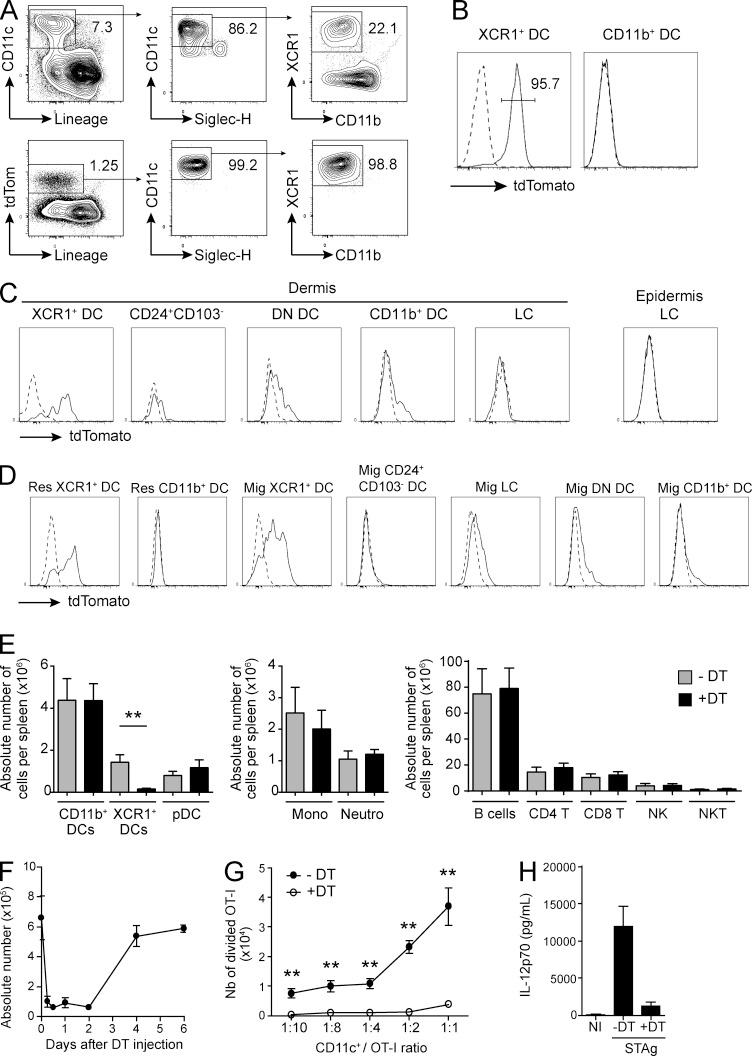
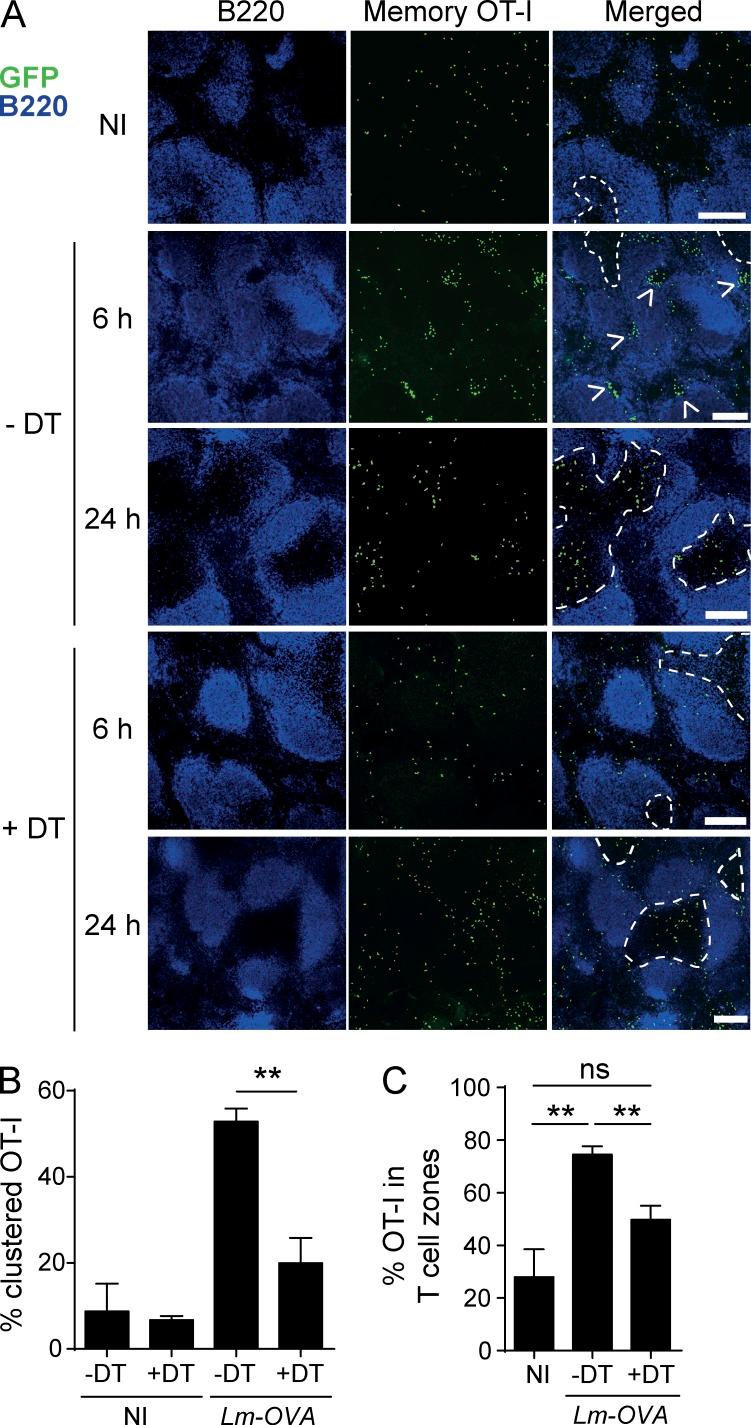
Naive CD8(+) T cell priming during tumor development or many primary infections requires cross-presentation by XCR1(+) dendritic cells (DCs). Memory CD8(+) T lymphocytes (mCTLs) harbor a lower activation threshold as compared with naive cells. However, whether their recall responses depend on XCR1(+) DCs is unknown. By using a new mouse model allowing fluorescent tracking and conditional depletion of XCR1(+) DCs, we demonstrate a differential requirement of these cells for mCTL recall during secondary infections by different pathogens. XCR1(+) DCs were instrumental to promote this function upon secondary challenges with Listeria monocytogenes, vesicular stomatitis virus, or Vaccinia virus, but dispensable in the case of mouse cytomegalovirus. We deciphered how XCR1(+) DCs promote mCTL recall upon secondary infections with Listeria. By visualizing for the first time the in vivo choreography of XCR1(+) DCs, NK cells and mCTLs during secondary immune responses, and by neutralizing in vivo candidate molecules, we demonstrate that, very early after infection, mCTLs are activated, and attracted in a CXCR3-dependent manner, by NK cell-boosted, IL-12-, and CXCL9-producing XCR1(+) DCs. Hence, depending on the infectious agent, strong recall of mCTLs during secondary challenges can require cytokine- and chemokine-dependent cross-talk with XCR1(+) DCs and NK cells.
在肿瘤发展过程中或许多原发性感染期间,初始CD8(+) T细胞的致敏需要XCR1(+)树突状细胞(DC)进行交叉呈递。与初始细胞相比,记忆性CD8(+) T淋巴细胞(mCTL)具有较低的激活阈值。然而,它们的回忆反应是否依赖于XCR1(+) DC尚不清楚。通过使用一种新的小鼠模型,该模型允许对XCR1(+) DC进行荧光追踪和条件性清除,我们证明了在不同病原体引起的二次感染期间,这些细胞对mCTL回忆的需求存在差异。在用单核细胞增生李斯特菌、水疱性口炎病毒或痘苗病毒进行二次攻击时,XCR1(+) DC有助于促进这一功能,但在小鼠巨细胞病毒感染的情况下则是可有可无的。我们破解了XCR1(+) DC在单核细胞增生李斯特菌二次感染时如何促进mCTL回忆。通过首次可视化二次免疫反应期间XCR1(+) DC、NK细胞和mCTL在体内的动态变化,并通过在体内中和候选分子,我们证明,在感染后很早的时候,mCTL就被NK细胞增强的、产生IL-12和CXCL9的XCR1(+) DC激活,并以CXCR3依赖的方式被吸引。因此,根据感染因子的不同,二次攻击期间mCTL的强烈回忆可能需要与XCR1(+) DC和NK细胞进行细胞因子和趋化因子依赖性的相互作用。


 Zotero 插件