Coelho Paula A, Bury Leah, Shahbazi Marta N, Liakath-Ali Kifayathullah, Tate Peri H, Wormald Sam, Hindley Christopher J, Huch Meritxell, Archer Joy, Skarnes William C, Zernicka-Goetz Magdalena, Glover David M
Department of Genetics, University of Cambridge, Downing Street, Cambridge CB2 3EH, UK.
Department of Physiology, Development and Neuroscience, Physiological Laboratory, University of Cambridge, Downing Street, Cambridge CB2 3EG, UK.
Open Biol. 2015 Dec;5(12):150209. doi: 10.1098/rsob.150209.
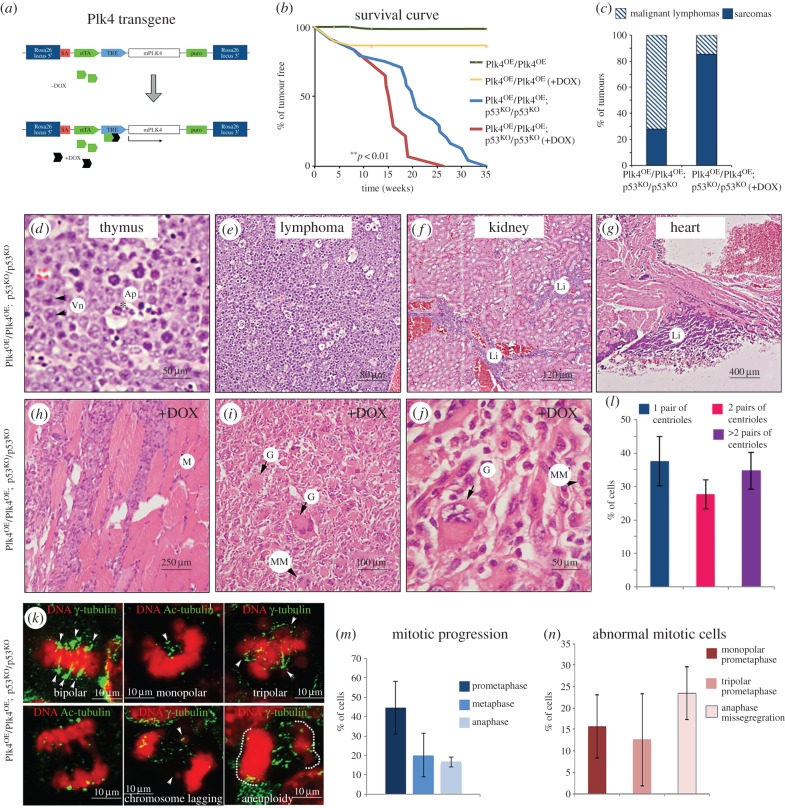
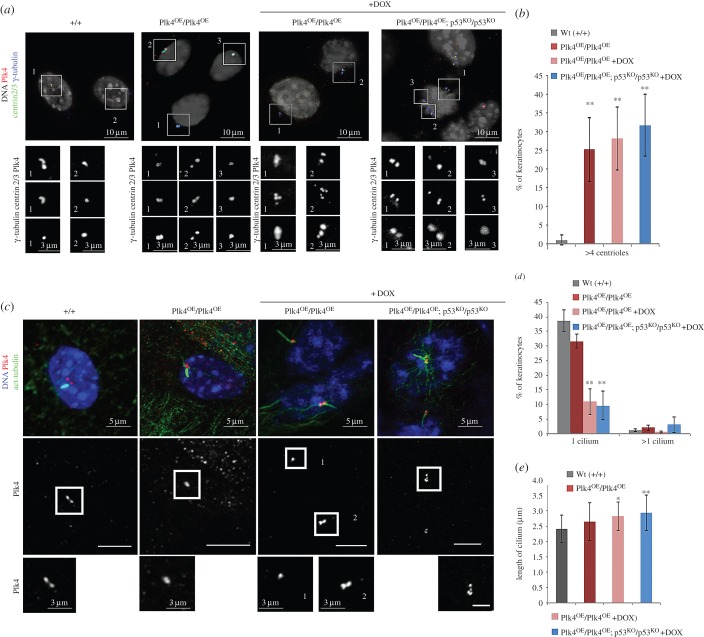
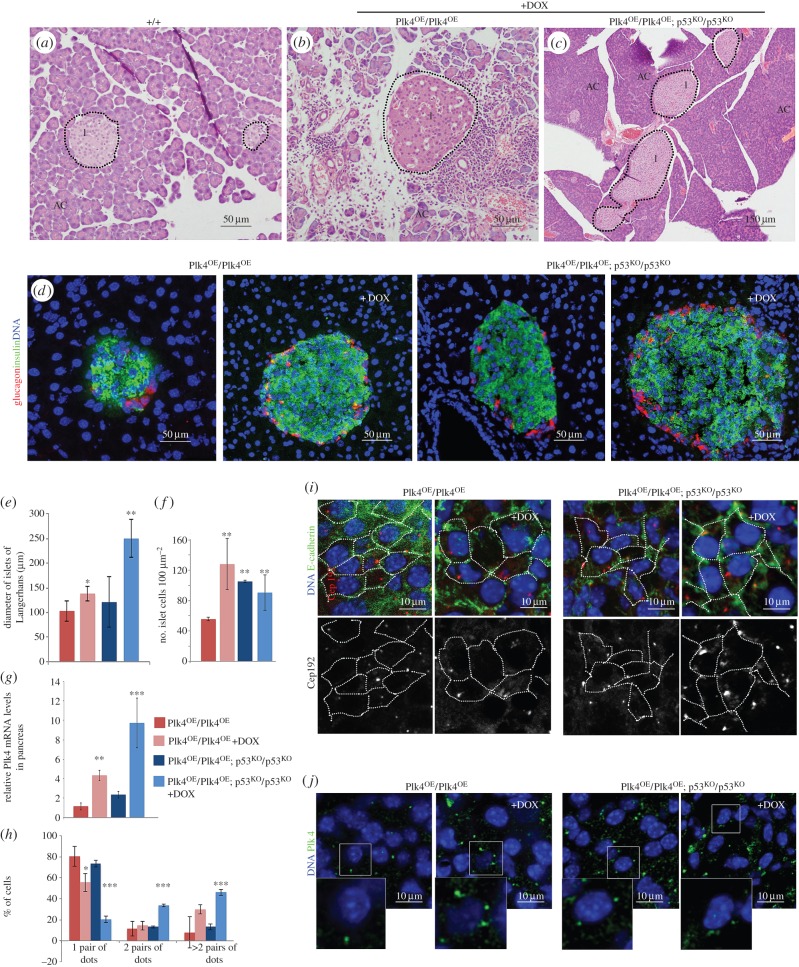
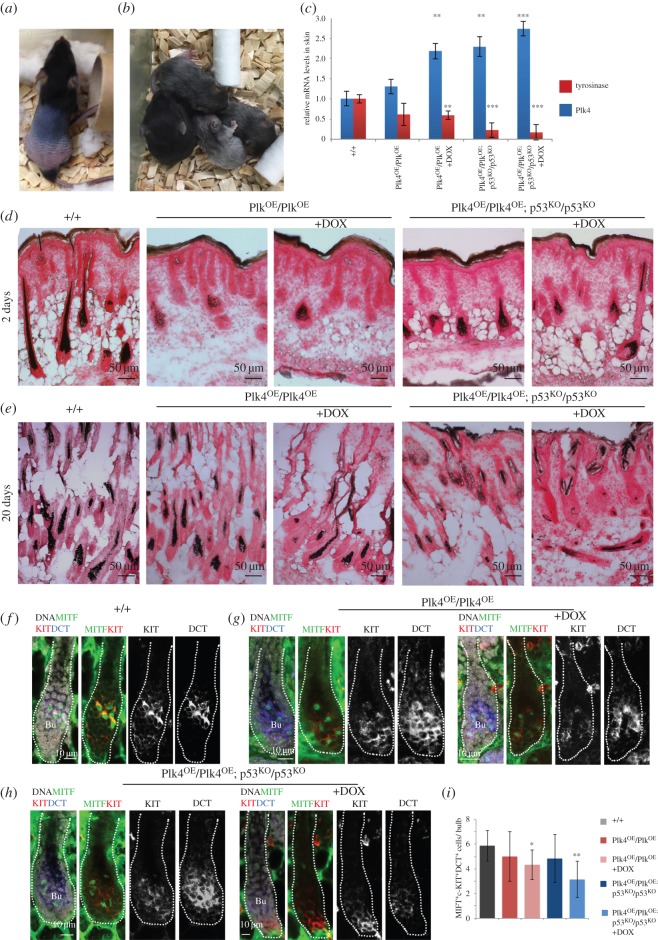
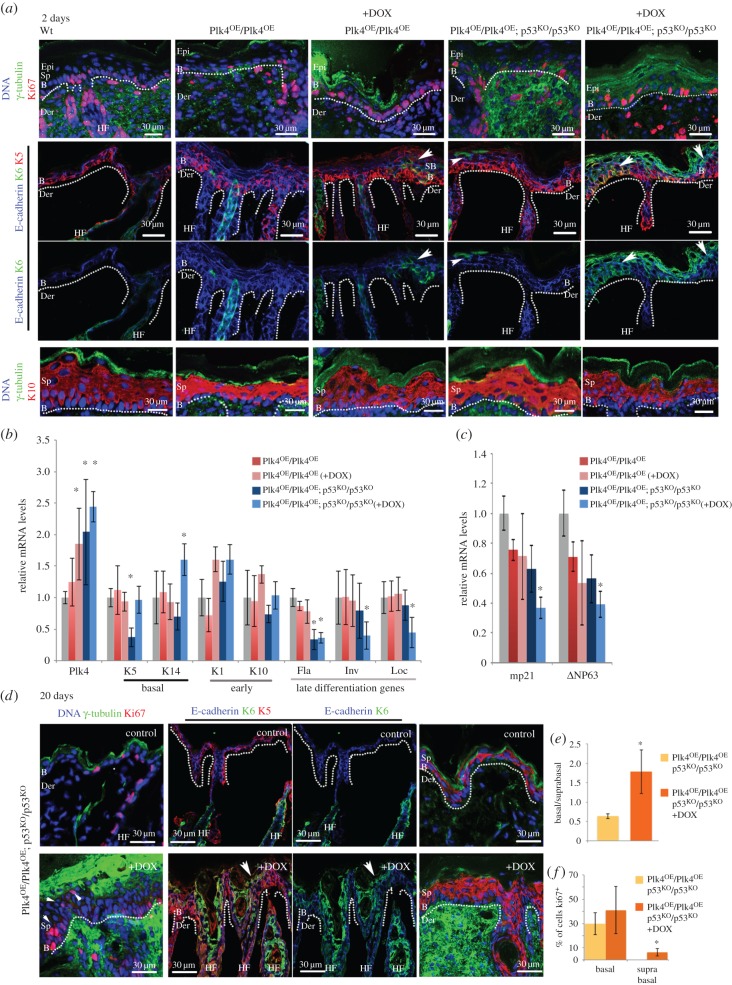
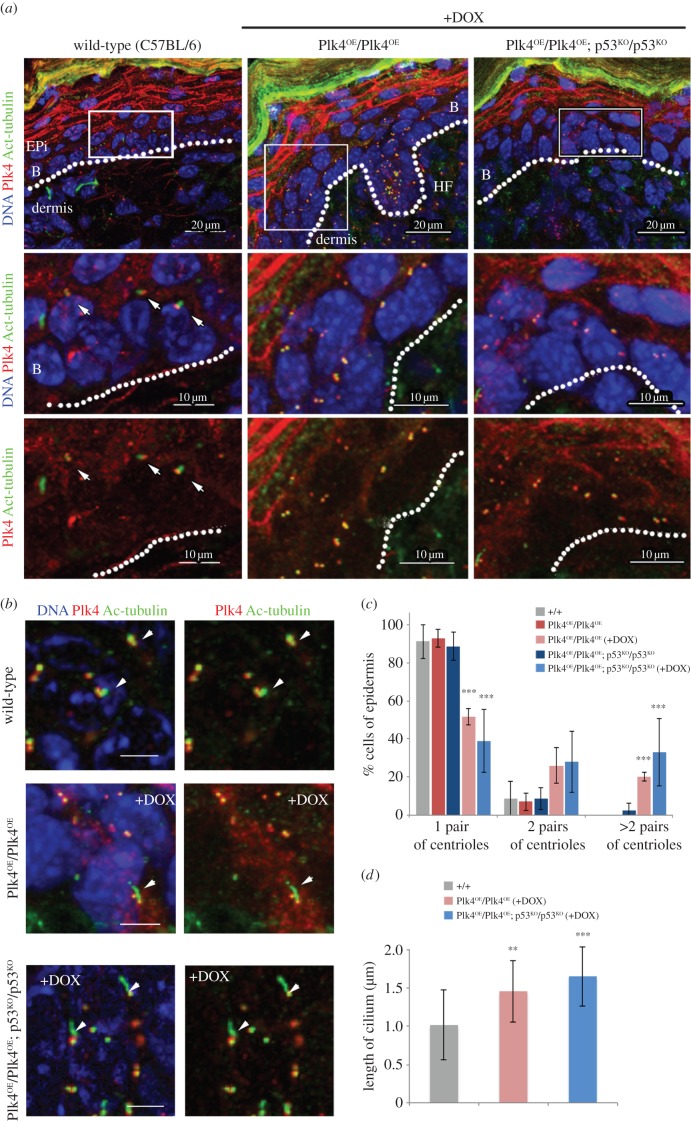
To address the long-known relationship between supernumerary centrosomes and cancer, we have generated a transgenic mouse that permits inducible expression of the master regulator of centriole duplication, Polo-like-kinase-4 (Plk4). Over-expression of Plk4 from this transgene advances the onset of tumour formation that occurs in the absence of the tumour suppressor p53. Plk4 over-expression also leads to hyperproliferation of cells in the pancreas and skin that is enhanced in a p53 null background. Pancreatic islets become enlarged following Plk4 over-expression as a result of equal expansion of α- and β-cells, which exhibit centrosome amplification. Mice overexpressing Plk4 develop grey hair due to a loss of differentiated melanocytes and bald patches of skin associated with a thickening of the epidermis. This reflects an increase in proliferating cells expressing keratin 5 in the basal epidermal layer and the expansion of these cells into suprabasal layers. Such cells also express keratin 6, a marker for hyperplasia. This is paralleled by a decreased expression of later differentiation markers, involucrin, filaggrin and loricrin. Proliferating cells showed an increase in centrosome number and a loss of primary cilia, events that were mirrored in primary cultures of keratinocytes established from these animals. We discuss how repeated duplication of centrioles appears to prevent the formation of basal bodies leading to loss of primary cilia, disruption of signalling and thereby aberrant differentiation of cells within the epidermis. The absence of p53 permits cells with increased centrosomes to continue dividing, thus setting up a neoplastic state of error prone mitoses, a prerequisite for cancer development.
为了研究早已为人所知的多余中心体与癌症之间的关系,我们构建了一种转基因小鼠,它能够诱导表达中心粒复制的主要调节因子——Polo样激酶4(Plk4)。来自该转基因的Plk4过表达加速了在肿瘤抑制因子p53缺失情况下肿瘤形成的起始。Plk4过表达还导致胰腺和皮肤中的细胞过度增殖,在p53基因缺失的背景下这种增殖会增强。由于α细胞和β细胞的等量扩增,胰岛在Plk4过表达后会增大,而这些细胞表现出中心体扩增。过表达Plk4的小鼠会出现白发,这是由于分化的黑素细胞缺失所致,同时还会出现皮肤秃斑,伴有表皮增厚。这反映了在基底表皮层中表达角蛋白5的增殖细胞增多,并且这些细胞扩展到了基底上层。这类细胞还表达角蛋白6,这是增生的一个标志物。与此同时,后期分化标志物内披蛋白、丝聚蛋白和兜甲蛋白的表达减少。增殖细胞的中心体数量增加,初级纤毛缺失,这些现象在从这些动物分离建立的角质形成细胞原代培养物中也有体现。我们讨论了中心粒的反复复制似乎如何阻止基体的形成,导致初级纤毛缺失、信号传导中断,从而引起表皮内细胞的异常分化。p53的缺失使中心体增多的细胞能够继续分裂,从而建立起一种易于出错的有丝分裂的肿瘤状态,这是癌症发展的一个先决条件。