Department of Molecular Biology and Genetics, Johns Hopkins University School of Medicine, Baltimore, United States.
Elife. 2022 Aug 15;11:e80643. doi: 10.7554/eLife.80643.
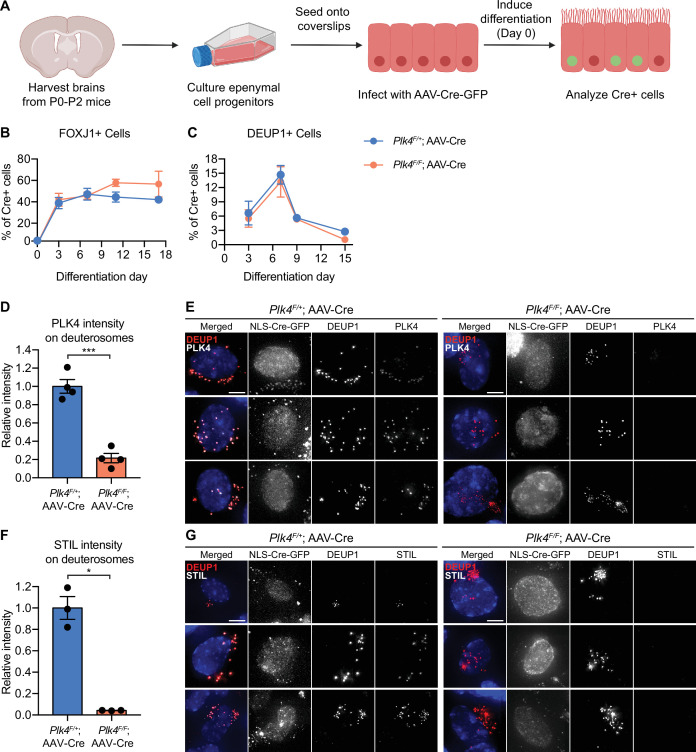
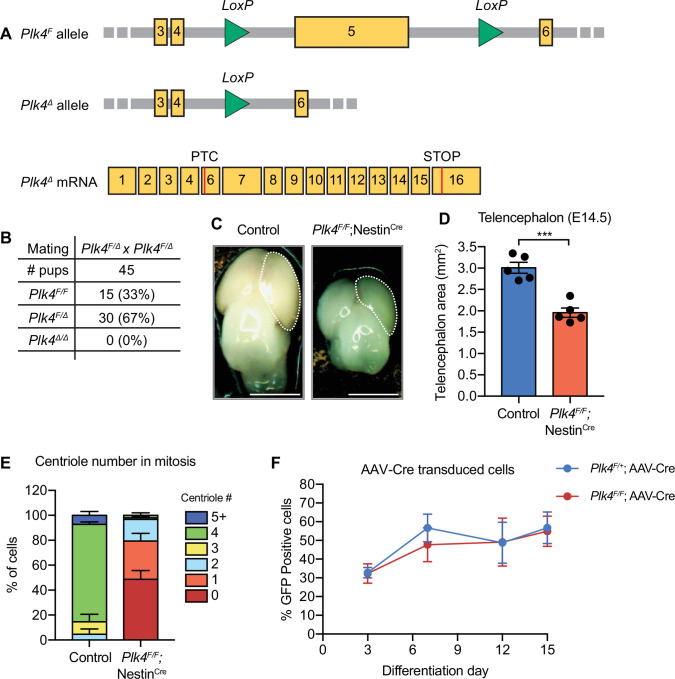
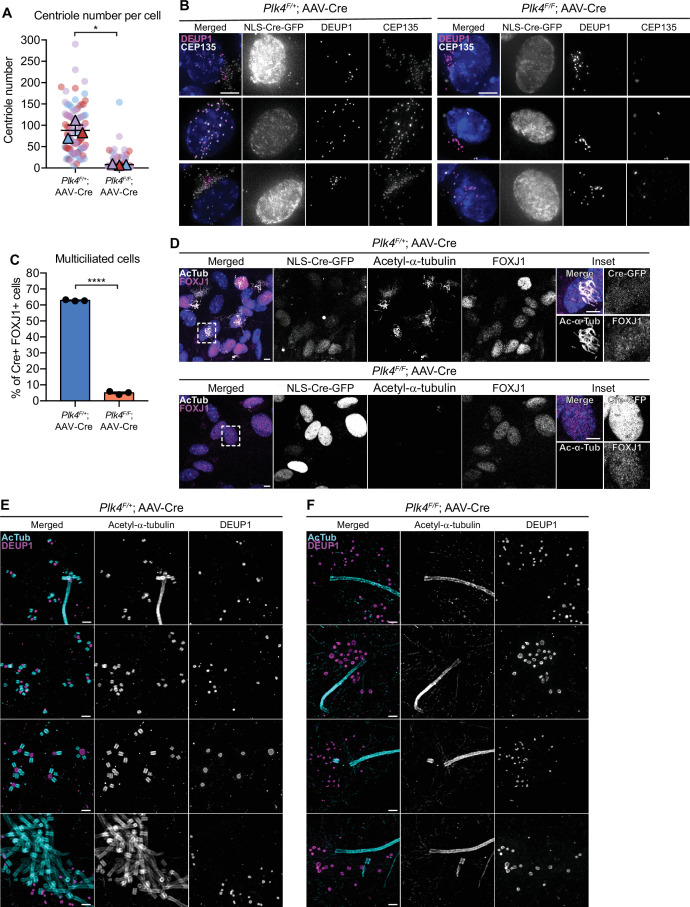
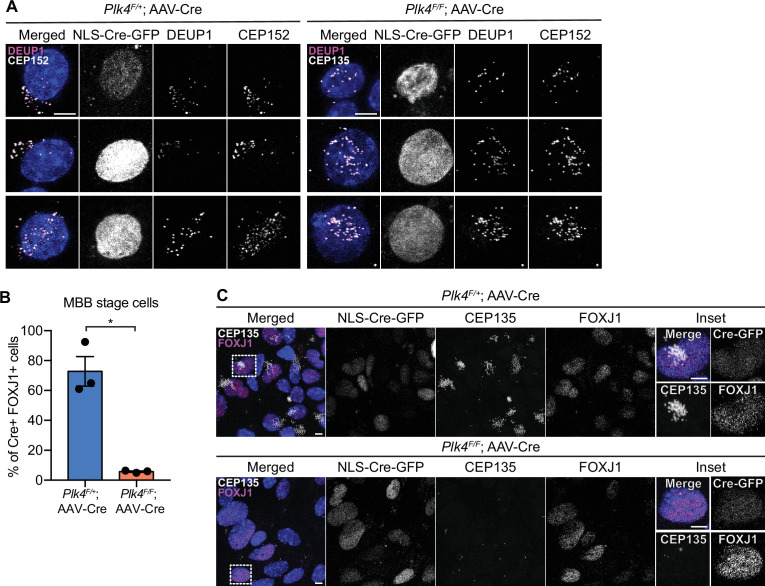
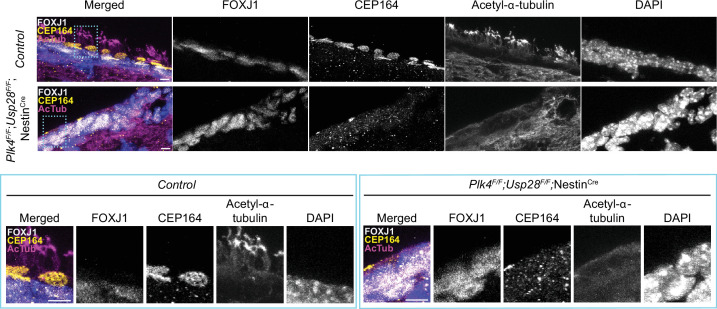
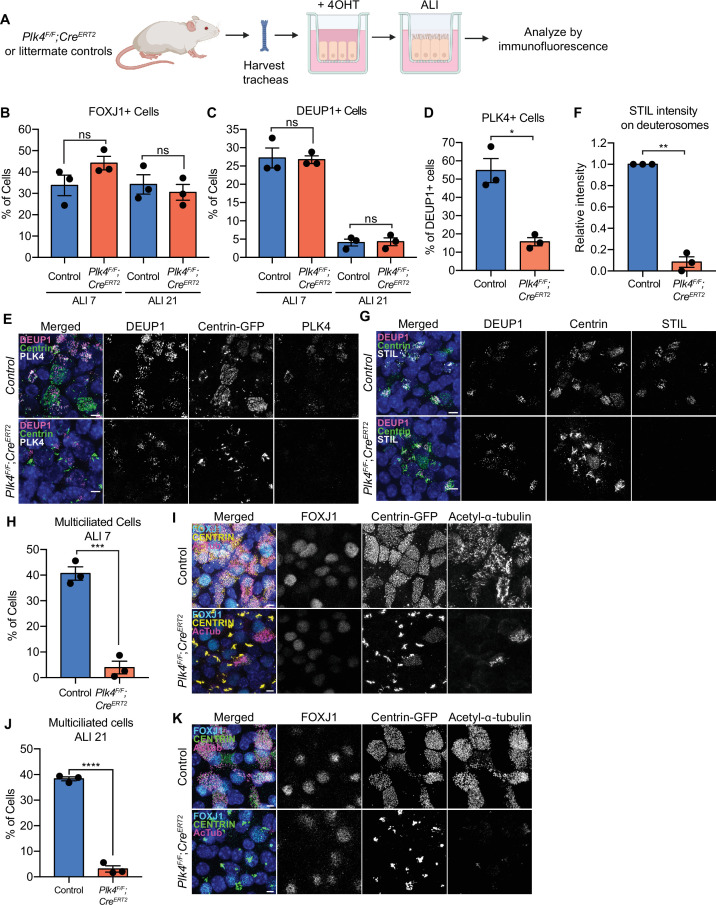
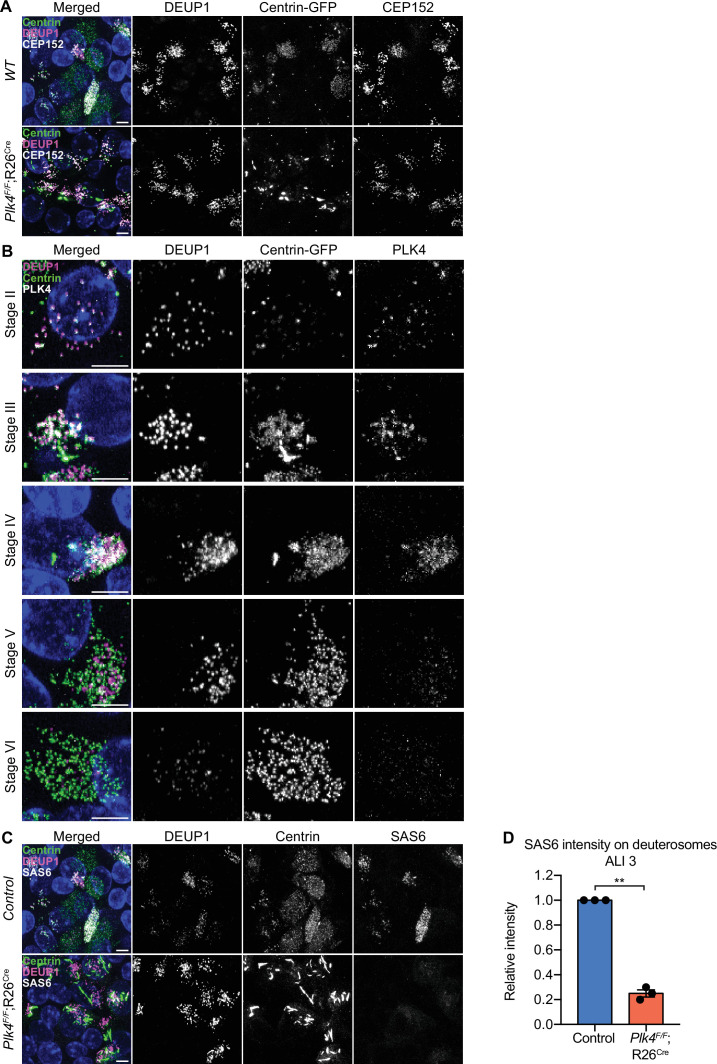
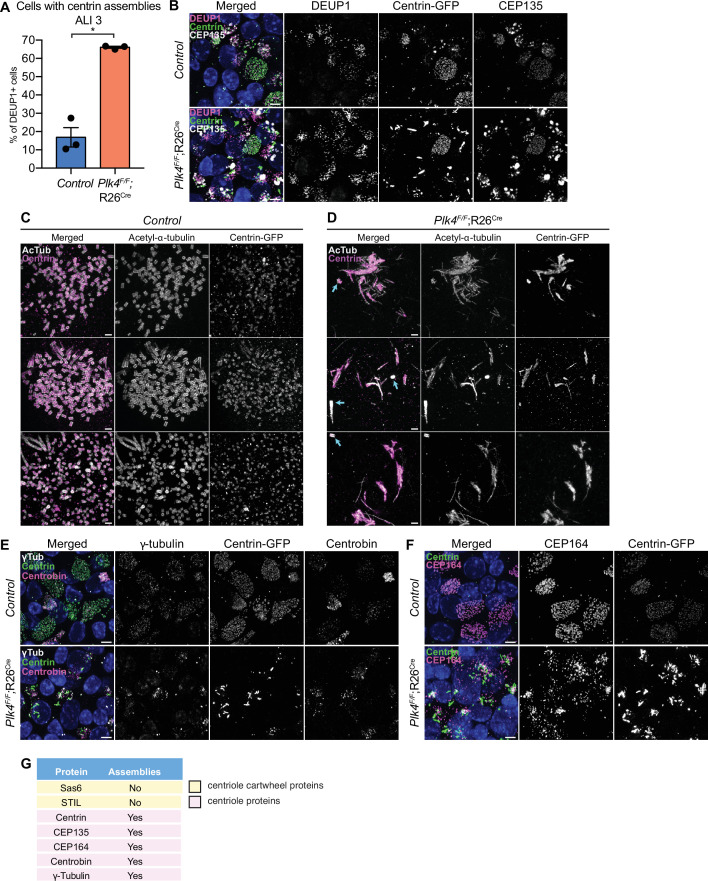
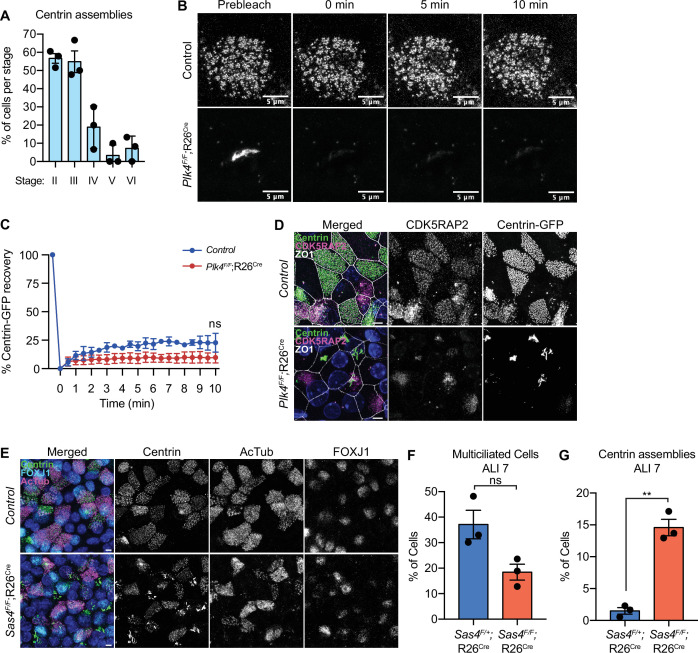
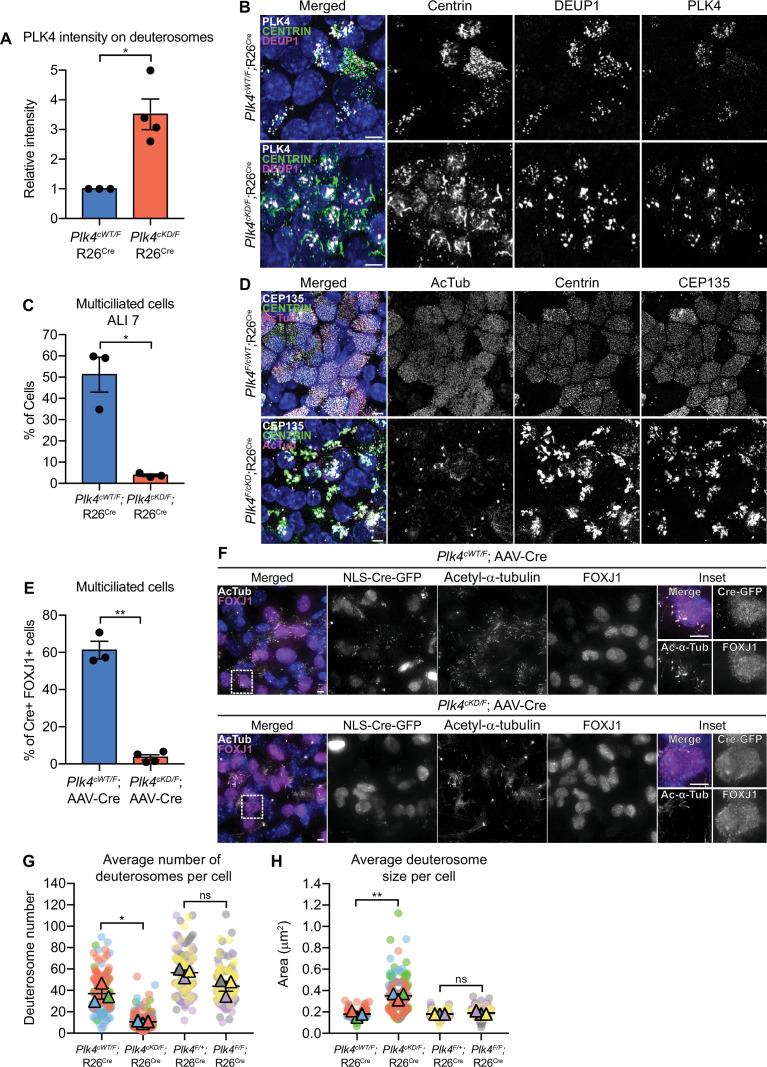
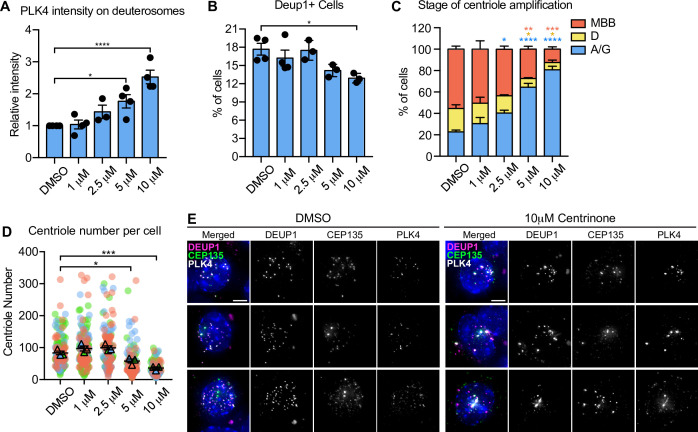
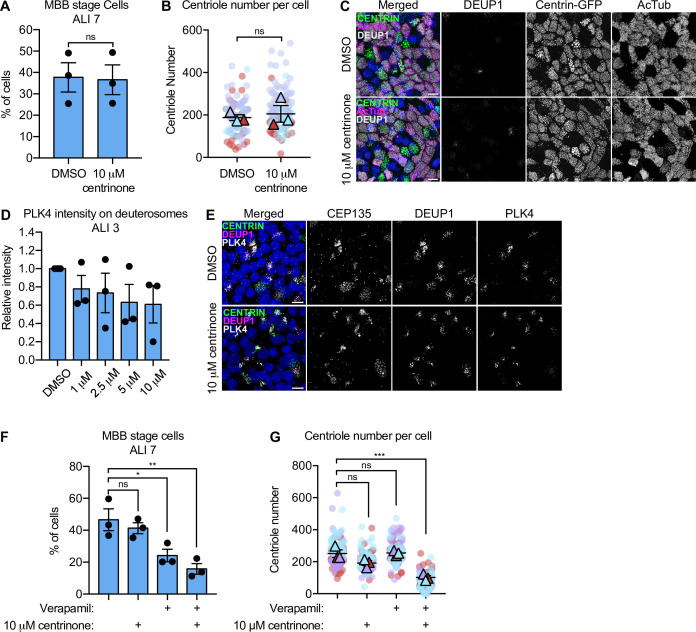
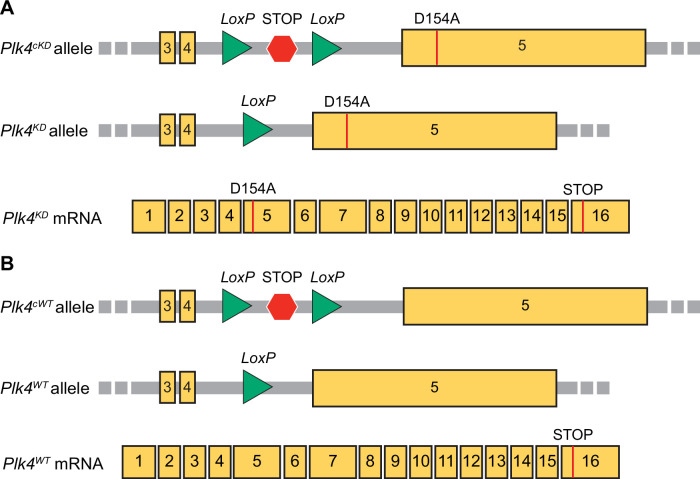
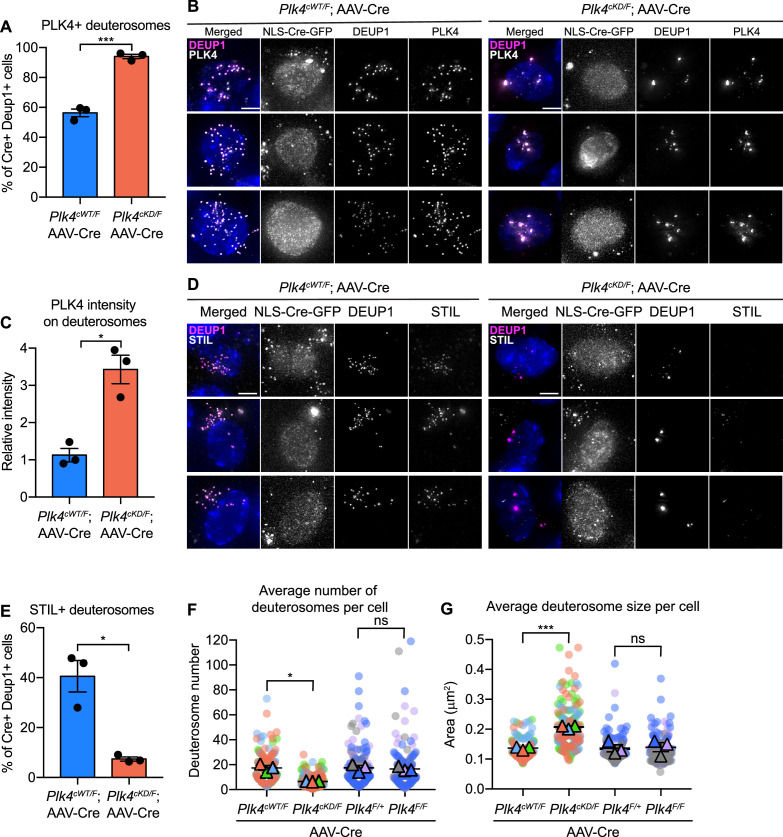
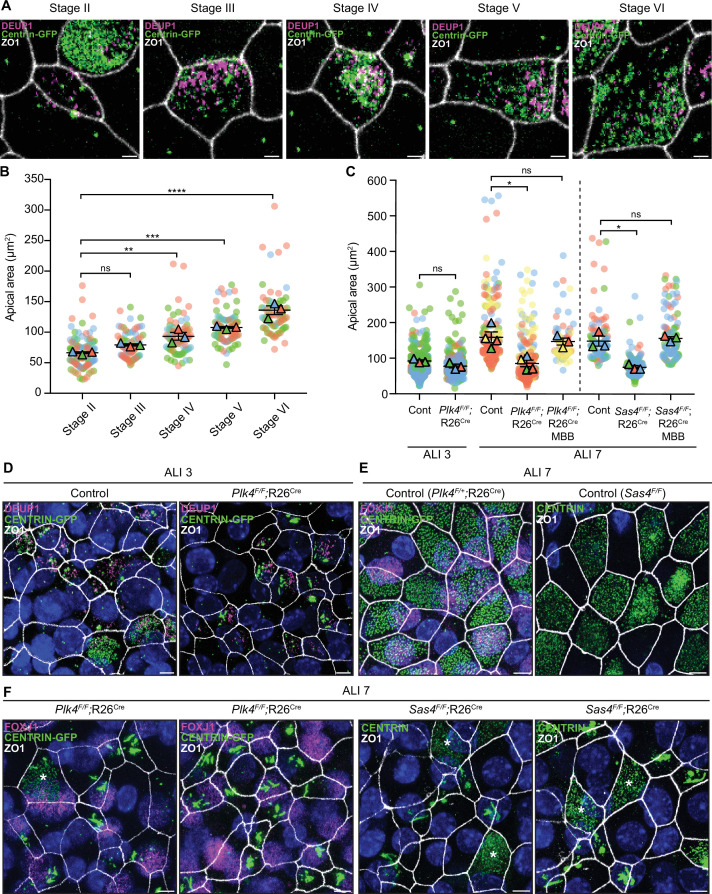
Multiciliated cells (MCCs) are terminally differentiated epithelia that assemble multiple motile cilia used to promote fluid flow. To template these cilia, MCCs dramatically expand their centriole content during a process known as centriole amplification. In cycling cells, the master regulator of centriole assembly Polo-like kinase 4 (PLK4) is essential for centriole duplication; however recent work has questioned the role of PLK4 in centriole assembly in MCCs. To address this discrepancy, we created genetically engineered mouse models and demonstrated that both PLK4 protein and kinase activity are critical for centriole amplification in MCCs. Tracheal epithelial cells that fail centriole amplification accumulate large assemblies of centriole proteins and do not undergo apical surface area expansion. These results show that the initial stages of centriole assembly are conserved between cycling cells and MCCs and suggest that centriole amplification and surface area expansion are coordinated events.
纤毛细胞(MCCs)是终末分化的上皮细胞,它们组装多个运动纤毛,用于促进流体流动。为了给这些纤毛提供模板,MCC 在一个被称为中心体扩增的过程中显著增加它们的中心体含量。在细胞周期中,中心体组装的主要调节因子 Polo 样激酶 4(PLK4)对于中心体复制是必不可少的;然而,最近的工作质疑了 PLK4 在 MCC 中中心体组装的作用。为了解决这一分歧,我们创建了基因工程小鼠模型,并证明 PLK4 蛋白和激酶活性对于 MCC 中的中心体扩增都是至关重要的。未能进行中心体扩增的气管上皮细胞会积累大量的中心体蛋白,并且不会进行顶端表面积的扩张。这些结果表明,在细胞周期和 MCC 之间,中心体组装的初始阶段是保守的,并表明中心体扩增和表面积扩张是协调事件。