Duncan Robert N, Panahi Samin, Piotrowski Tatjana, Dorsky Richard I
Department of Neurobiology and Anatomy, University of Utah, Salt Lake City, Utah, United States of America.
Stowers Institute for Medical Research, Kansas City, Missouri, United States of America.
PLoS One. 2015 Dec 29;10(12):e0145810. doi: 10.1371/journal.pone.0145810. eCollection 2015.
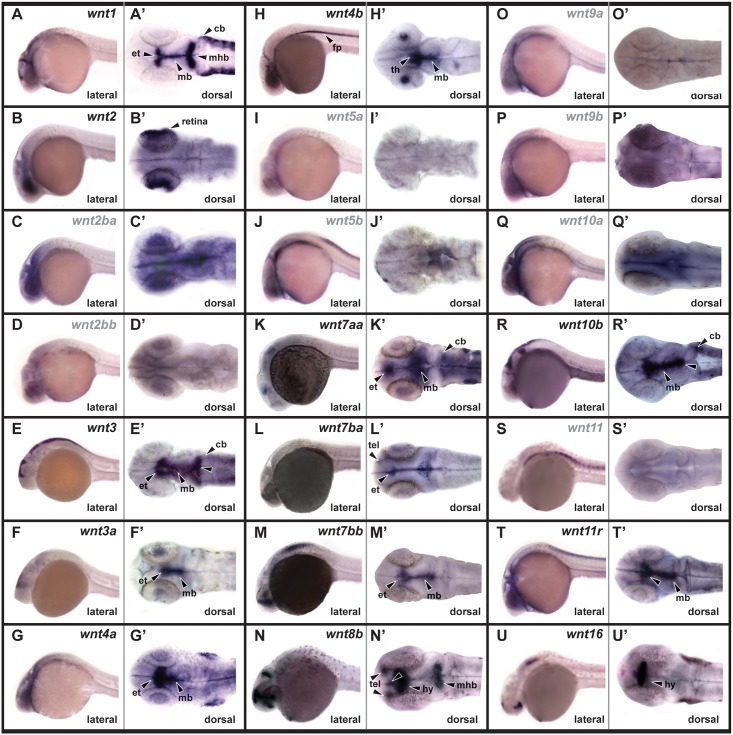
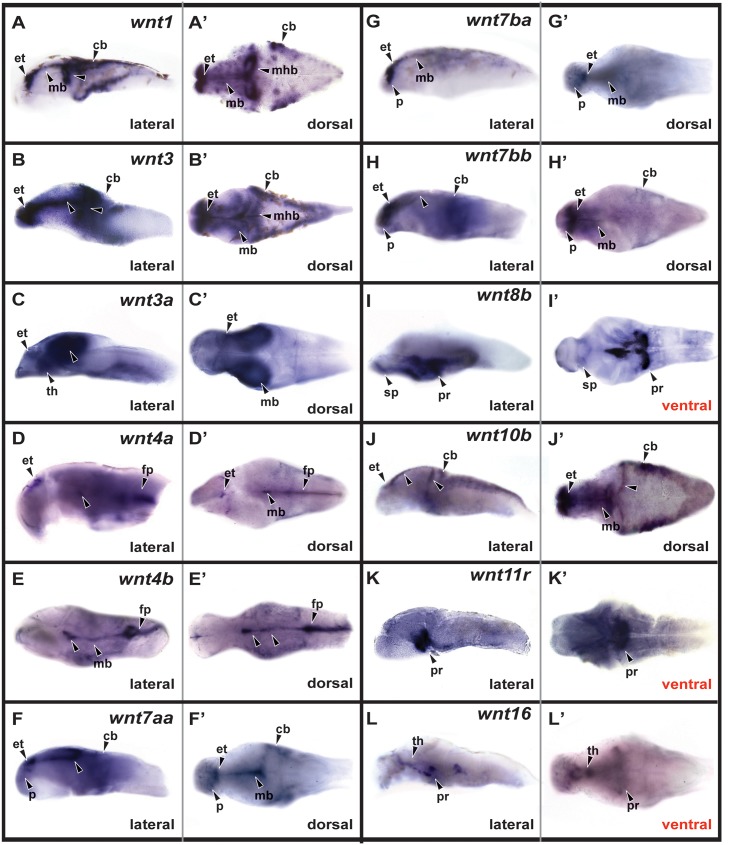
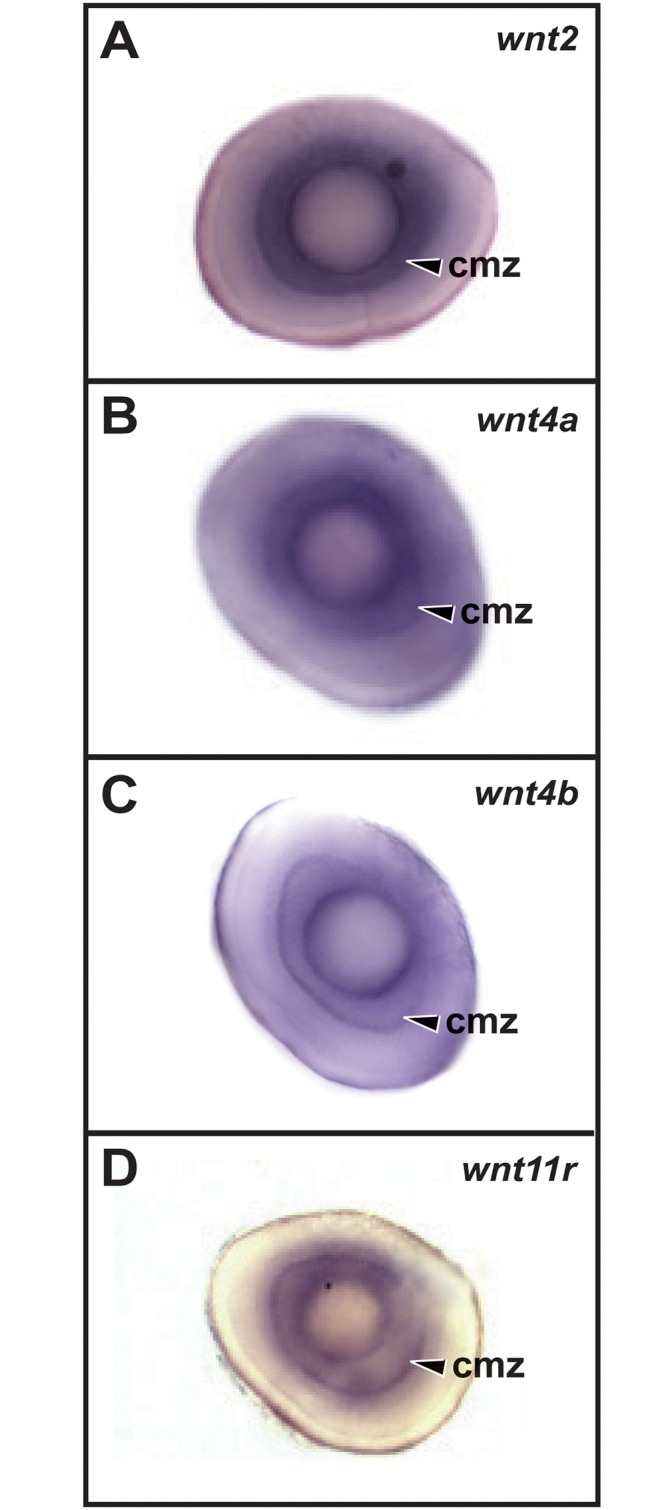
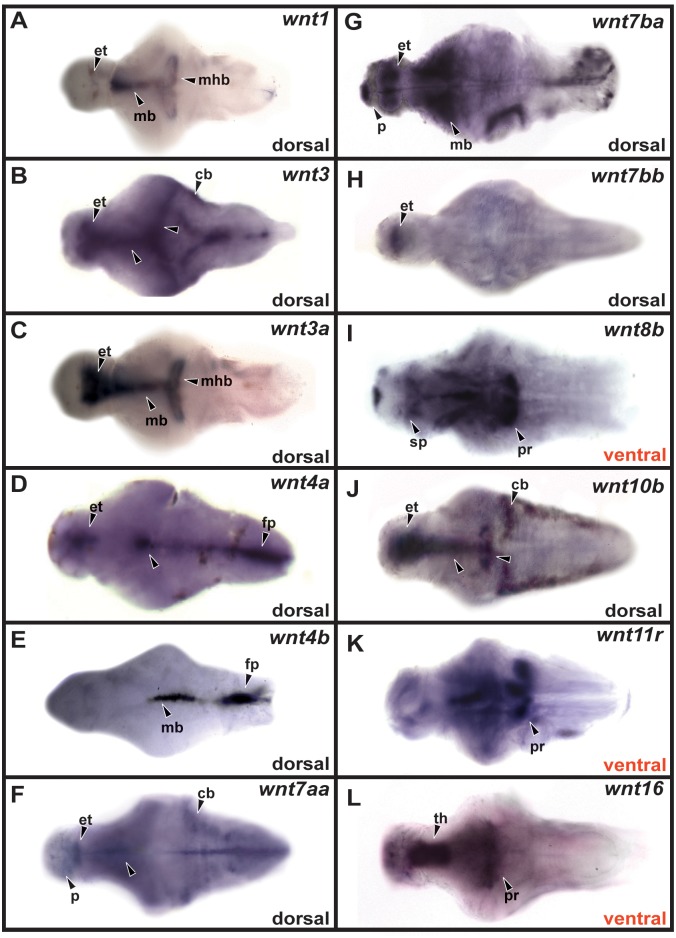
Wnt signaling regulates multiple aspects of vertebrate central nervous system (CNS) development, including neurogenesis. However, vertebrate genomes can contain up to 25 Wnt genes, the functions of which are poorly characterized partly due to redundancy in their expression. To identify candidate Wnt genes as candidate mediators of pathway activity in specific brain progenitor zones, we have performed a comprehensive expression analysis at three different stages during zebrafish development. Antisense RNA probes for 21 Wnt genes were generated from existing and newly synthesized cDNA clones and used for in situ hybridization on whole embryos and dissected brains. As in other species, we found that Wnt expression patterns in the embryonic zebrafish CNS are complex and often redundant. We observed that progenitor zones in the telencephalon, dorsal diencephalon, hypothalamus, midbrain, midbrain-hindbrain boundary, cerebellum and retina all express multiple Wnt genes. Our data identify 12 specific ligands that can now be tested using loss-of-function approaches.
Wnt信号通路调控脊椎动物中枢神经系统(CNS)发育的多个方面,包括神经发生。然而,脊椎动物基因组中可包含多达25个Wnt基因,部分由于其表达冗余,这些基因的功能鲜为人知。为了鉴定作为特定脑祖细胞区通路活性候选介质的Wnt候选基因,我们在斑马鱼发育的三个不同阶段进行了全面的表达分析。针对21个Wnt基因的反义RNA探针由现有的和新合成的cDNA克隆产生,并用于对整个胚胎和解剖后的大脑进行原位杂交。与其他物种一样,我们发现胚胎斑马鱼中枢神经系统中的Wnt表达模式复杂且通常冗余。我们观察到端脑、背侧间脑、下丘脑、中脑、中脑-后脑边界、小脑和视网膜中的祖细胞区均表达多个Wnt基因。我们的数据鉴定出了12种特定配体,现在可以使用功能丧失方法对其进行测试。