Department of Human Genetics, KU Leuven, Leuven, Belgium.
Medical Imaging Research Center, University Hospitals Leuven, Leuven, Belgium.
Nat Commun. 2023 Nov 16;14(1):7436. doi: 10.1038/s41467-023-43237-8.
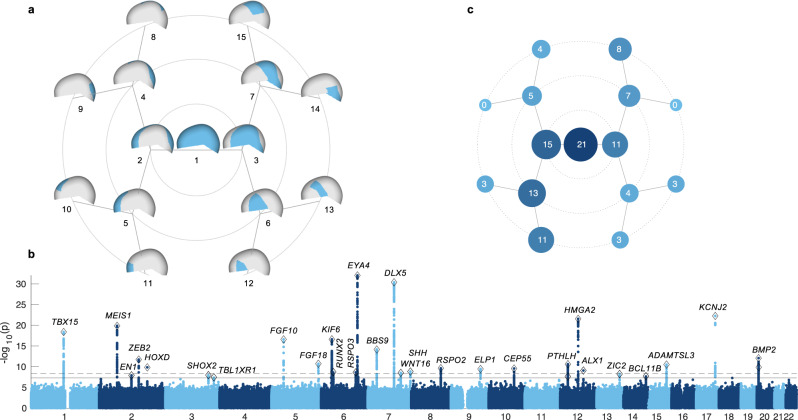
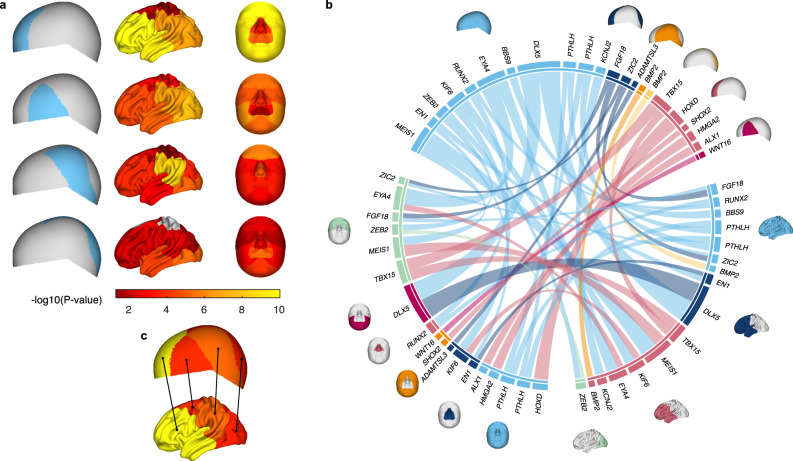
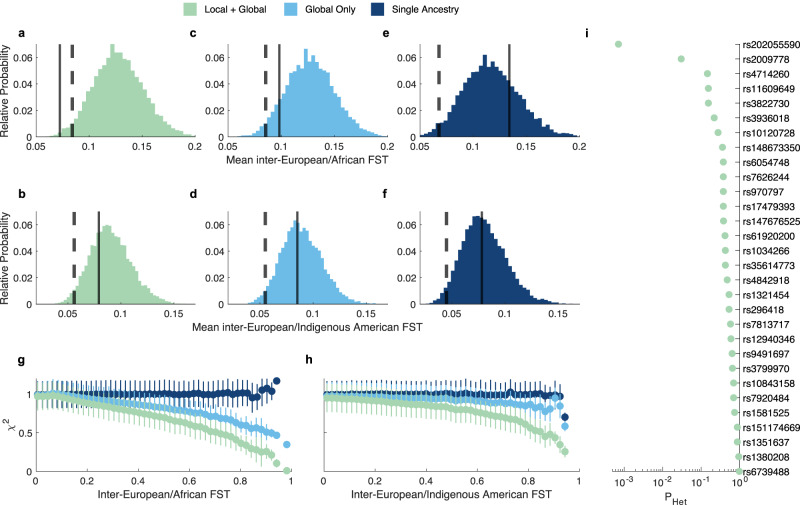
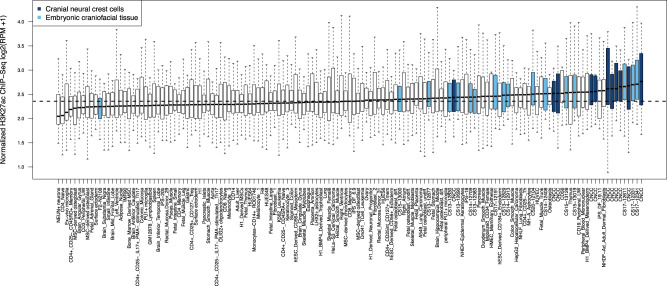
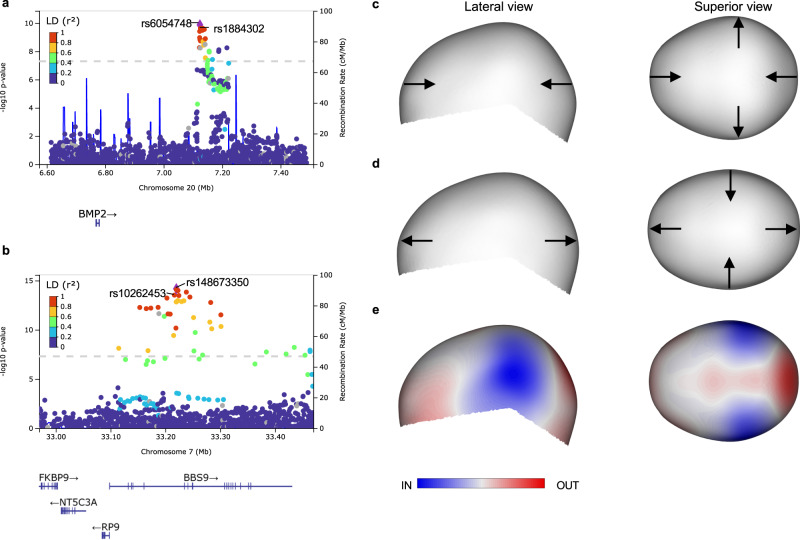
The cranial vault in humans is highly variable, clinically relevant, and heritable, yet its genetic architecture remains poorly understood. Here, we conduct a joint multi-ancestry and admixed multivariate genome-wide association study on 3D cranial vault shape extracted from magnetic resonance images of 6772 children from the ABCD study cohort yielding 30 genome-wide significant loci. Follow-up analyses indicate that these loci overlap with genomic risk loci for sagittal craniosynostosis, show elevated activity cranial neural crest cells, are enriched for processes related to skeletal development, and are shared with the face and brain. We present supporting evidence of regional localization for several of the identified genes based on expression patterns in the cranial vault bones of E15.5 mice. Overall, our study provides a comprehensive overview of the genetics underlying normal-range cranial vault shape and its relevance for understanding modern human craniofacial diversity and the etiology of congenital malformations.
人类颅顶高度可变,具有临床意义且可遗传,但遗传结构仍知之甚少。在这里,我们对来自 ABCD 研究队列的 6772 名儿童的磁共振图像中提取的 3D 颅顶形状进行了联合多血统和混合多元全基因组关联研究,产生了 30 个全基因组显着位点。后续分析表明,这些位点与矢状颅缝早闭的基因组风险位点重叠,表现出颅神经嵴细胞活性升高,与骨骼发育相关的过程富集,并与面部和大脑共享。我们根据 E15.5 小鼠颅顶骨中的表达模式,为几个已识别基因的区域定位提供了支持性证据。总的来说,我们的研究提供了正常颅顶形状及其对理解现代人类颅面多样性和先天性畸形病因学的遗传基础的全面概述。