Gupta Neha, Benjamin Mercilena, Kar Anjana, Munjal Sachin Dev, Sarangi Aditya N, Dalal Ashwin, Aggarwal Rakesh
Department of Gastroenterology, Sanjay Gandhi Postgraduate Institute of Medical Sciences, Lucknow, 226014, India.
Diagnostics Division, Centre for DNA Fingerprinting and Diagnostics, Hyderabad, 500001, India.
PLoS One. 2015 Dec 30;10(12):e0145967. doi: 10.1371/journal.pone.0145967. eCollection 2015.
Mild unconjugated hyperbilirubinemia (UH), due to reduced activity of the enzyme uridine diphosphoglucuronate-glucuronosyltransferase family, polypeptide 1 (UGT1A1), is a common clinical condition. Most cases are caused by presence in homozygous form of an A(TA)7TAA nucleotide sequence instead of the usual A(TA)6TAA sequence in promoter region of the UGT1A1 gene. In some cases, other genetic variations have been identified which differ between populations. There is need for more data on such genetic variations from India.
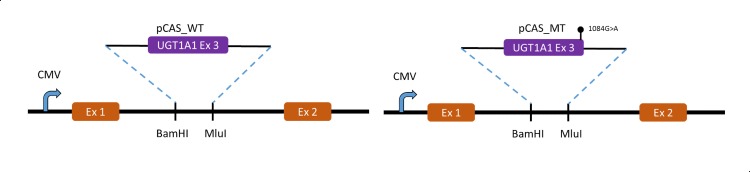
DNA from subjects with unexplained persistent or recurrent UH was tested for the presence of TA promoter insertions. In addition, all five exons and splicing site regions of UGT1A1 gene were sequenced. Several bioinformatics tools were used to determine the biological significance of the observed genetic changes. Functional analysis was done to look for effect of a splice site mutation in UGT1A1.
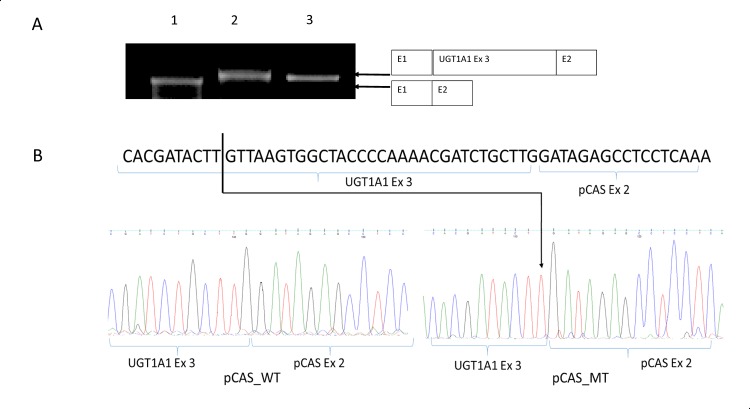
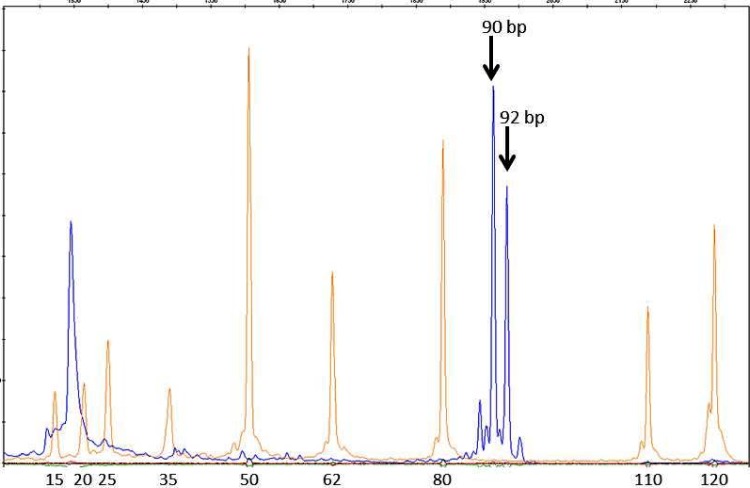
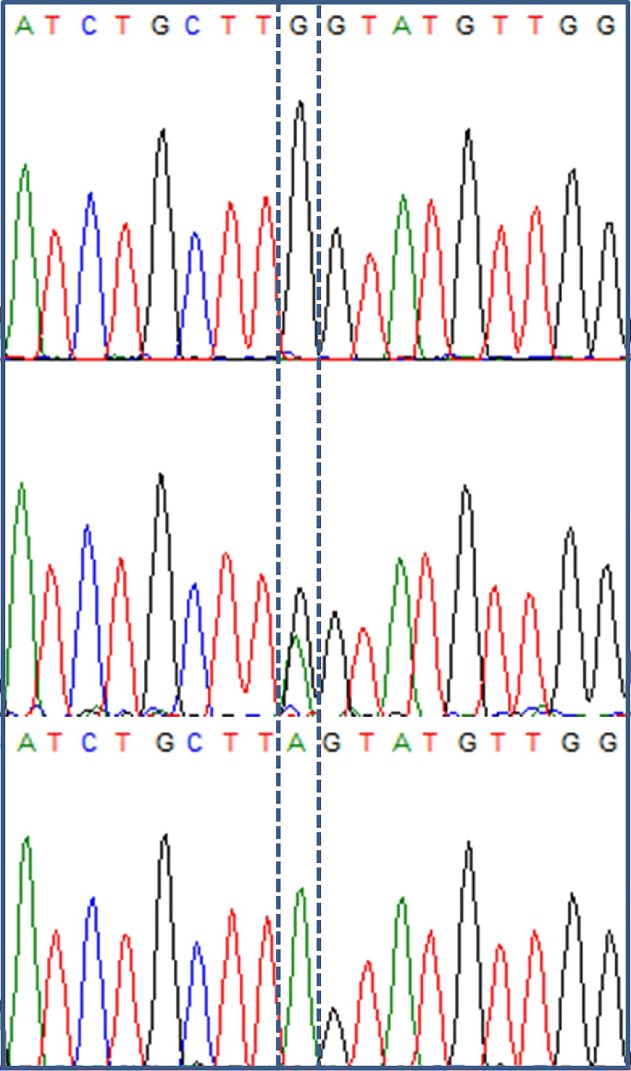
Of 71 subjects with UH (68 male; median age [range], 26 [16-63] years; serum bilirubin 56 [26-219] μM/L, predominantly unconjugated) studied, 65 (91.5%) subjects were homozygous for A(TA)7TAA allele, five (7.0%) were heterozygous, and one (1.4%) lacked this change. Fifteen subjects with UH had missense exonic single nucleotide changes (14 heterozygous, 1 homozygous), including one subject with a novel nucleotide change (p.Thr205Asn). Bioinformatics tools predicted some of these variations (p.Arg108Cys, p.Ile159Thr and p.Glu463Val) to be deleterious. Functional characterization of an exonic variation (c.1084G>A) located at a splice site revealed that it results in frameshift deletion of 31 nucleotides and premature truncation of the protein.
Our study revealed several single nucleotide variations in UGT1A1 gene in Indian subjects with UH. Functional characterization of a splice site variation indicated that it leads to disordered splicing. These variations may explain UH in subjects who lacked homozygous A(TA)7TAA promoter alleles.
由于尿苷二磷酸葡萄糖醛酸 - 葡萄糖醛酸基转移酶家族多肽1(UGT1A1)的活性降低导致的轻度非结合性高胆红素血症(UH)是一种常见的临床病症。大多数病例是由UGT1A1基因启动子区域中纯合形式的A(TA)7TAA核苷酸序列而非通常的A(TA)6TAA序列引起的。在某些情况下,已鉴定出其他基因变异,这些变异在不同人群中有所不同。需要来自印度的更多关于此类基因变异的数据。
对原因不明的持续性或复发性UH患者的DNA进行TA启动子插入检测。此外,对UGT1A1基因的所有五个外显子和剪接位点区域进行测序。使用了几种生物信息学工具来确定观察到的基因变化的生物学意义。进行功能分析以寻找UGT1A1中剪接位点突变的影响。
在研究的71例UH患者中(68例男性;中位年龄[范围],26[16 - 63]岁;血清胆红素56[26 - 219]μM/L,主要为非结合性),65例(91.5%)患者为A(TA)7TAA等位基因纯合子,5例(7.0%)为杂合子,1例(1.4%)无此变化。15例UH患者有外显子错义单核苷酸变化(14例杂合子,1例纯合子),包括1例有新的核苷酸变化(p.Thr205Asn)的患者。生物信息学工具预测其中一些变异(p.Arg108Cys、p.Ile159Thr和p.Glu463Val)是有害的。对位于剪接位点的外显子变异(c.1084G>A)的功能表征表明,它导致31个核苷酸的移码缺失和蛋白质的过早截断。
我们的研究揭示了印度UH患者UGT1A1基因中的几种单核苷酸变异。剪接位点变异的功能表征表明它导致剪接紊乱。这些变异可能解释了缺乏A(TA)7TAA启动子等位基因纯合子的患者中的UH。