Hu Chen, Zeng Linlin, Li Ting, Meyer Michael A, Cui Mei-Zhen, Xu Xuemin
Department of Biomedical and Diagnostic Sciences, College of Veterinary Medicine, University of Tennessee, Knoxville, Tennessee, USA.
School of Life Sciences, Jilin University, Changchun, China.
J Neurochem. 2016 Mar;136(6):1246-1258. doi: 10.1111/jnc.13518. Epub 2016 Jan 17.
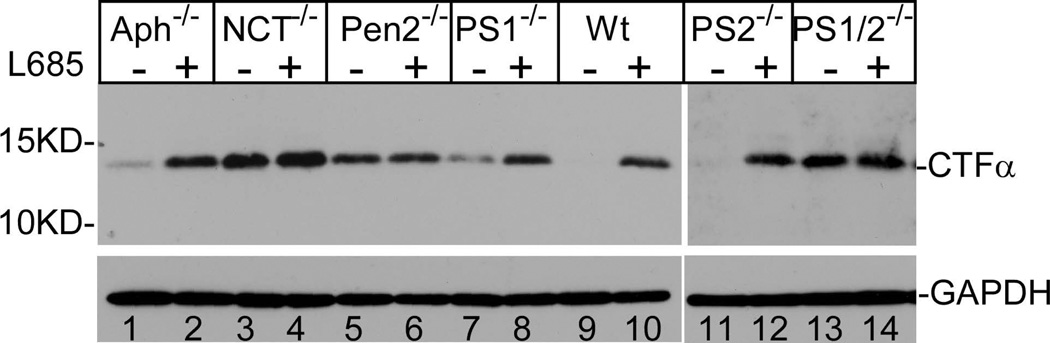
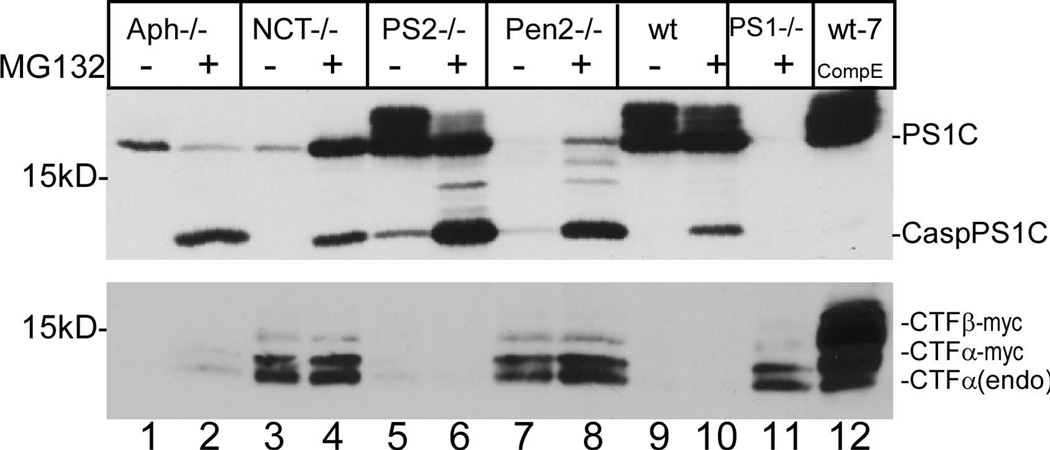
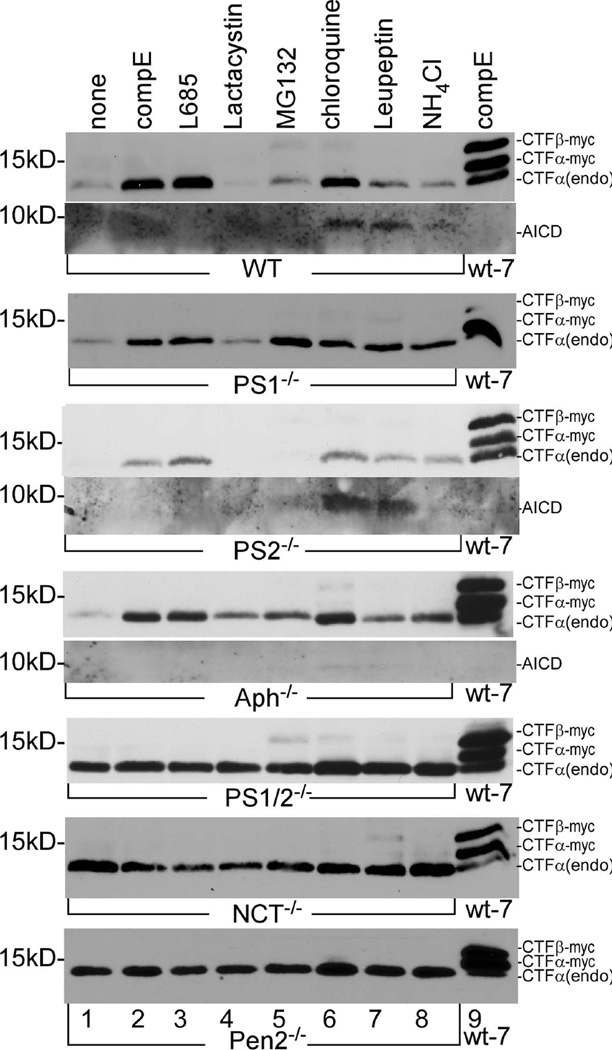
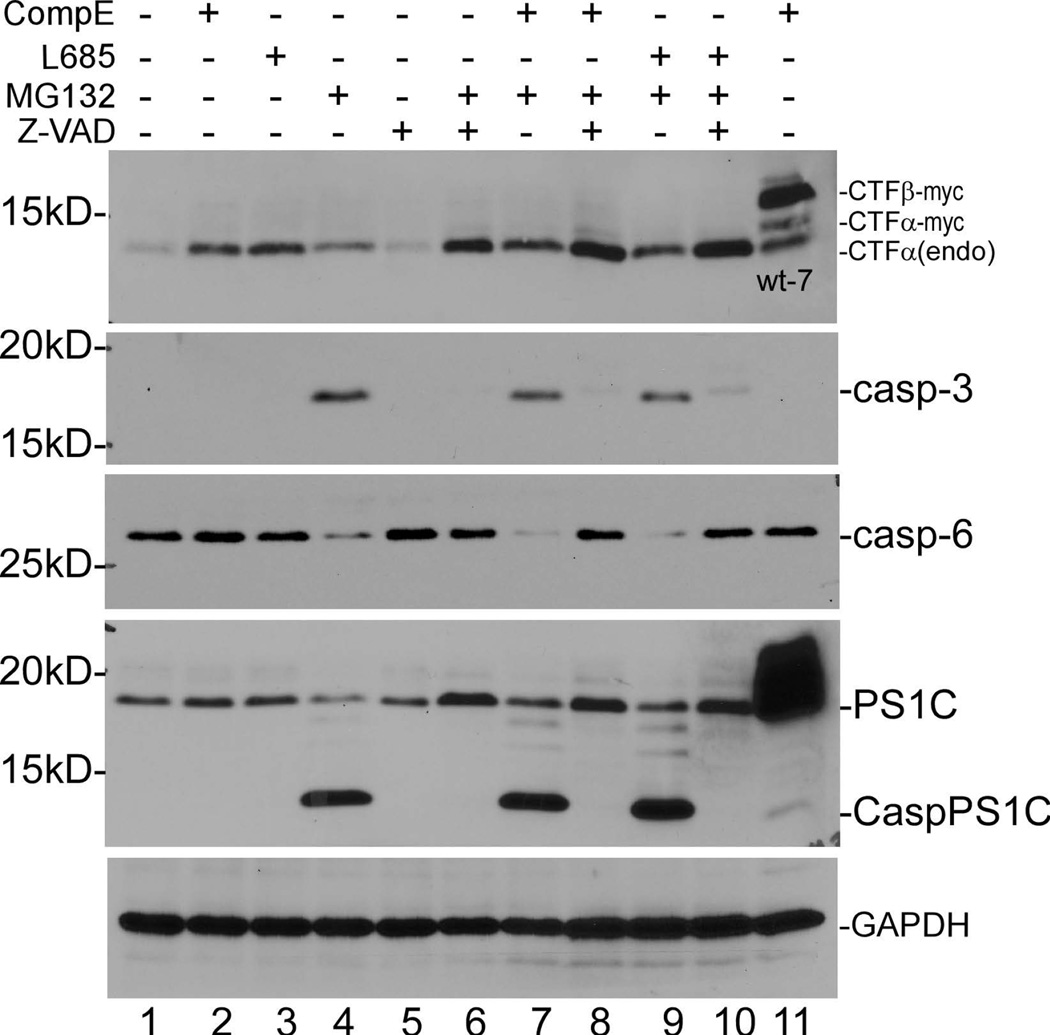
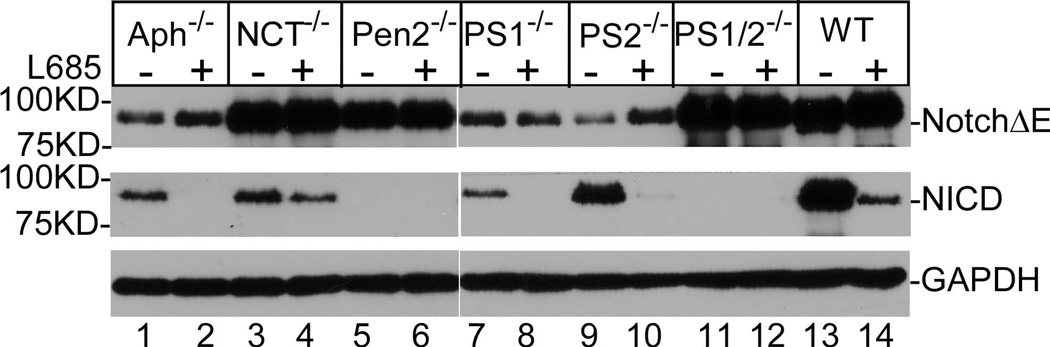
The γ-secretase complex is composed of at least four components: presenilin 1 or presenilin-2, nicastrin (NCT), anterior pharynx-defective 1 (Aph-1), and presenilin enhancer 2. In this study, using knockout cell lines, our data demonstrated that knockout of NCT, as well as knockout of presenilin enhancer 2, completely blocked γ-secretase-catalyzed processing of C-terminal fragment (CTF)α and CTFβ, the C-terminal fragments of β-amyloid precursor protein (APP) produced by α-secretase and β-secretase cleavages, respectively. Interestingly, in Aph-1-knockout cells, CTFα and CTFβ were still processed by γ-secretase, indicating Aph-1 is dispensable for APP processing. Furthermore, our results indicate that Aph-1 as well as NCT is not absolutely required for Notch processing, suggesting that NCT is differentially required for APP and Notch processing. In addition, our data revealed that components of the γ-secretase complex are also important for proteasome- and lysosome-dependent degradation of APP and that endogenous APP is mostly degraded by lysosome while exogenous APP is mainly degraded by proteasome. There are unanswered questions regarding the roles of each component of the γ-secretase complex in amyloid precursor protein (APP) and Notch processing. The most relevant, novel finding of this study is that nicastrin (NCT) is required for APP but not Notch processing, while Aph-1 is not essential for processing of both APP and Notch, suggesting NCT as a therapeutic target to restrict Aβ formation without impairing Notch signaling.
γ-分泌酶复合物至少由四个组分组成:早老素1或早老素2、尼卡斯特林(NCT)、咽前缺陷蛋白1(Aph-1)和早老素增强子2。在本研究中,我们利用基因敲除细胞系的数据表明,敲除NCT以及敲除早老素增强子2,完全阻断了γ-分泌酶催化的C末端片段(CTF)α和CTFβ的加工,CTFα和CTFβ分别是由α-分泌酶和β-分泌酶切割产生的β-淀粉样前体蛋白(APP)的C末端片段。有趣的是,在Aph-1基因敲除细胞中,CTFα和CTFβ仍可被γ-分泌酶加工,这表明Aph-1对于APP加工并非必需。此外,我们的结果表明,Aph-1以及NCT对于Notch加工并非绝对必需,这表明APP和Notch加工对NCT的需求存在差异。此外,我们的数据显示,γ-分泌酶复合物的组分对于APP的蛋白酶体和溶酶体依赖性降解也很重要,内源性APP主要通过溶酶体降解,而外源性APP主要通过蛋白酶体降解。关于γ-分泌酶复合物各组分在淀粉样前体蛋白(APP)和Notch加工中的作用仍有未解决的问题。本研究最相关的新发现是,尼卡斯特林(NCT)是APP加工所必需的,但不是Notch加工所必需的,而Aph-1对于APP和Notch加工都不是必需的,这表明NCT作为一个治疗靶点,在不损害Notch信号传导的情况下限制Aβ的形成。