An Wenlin, Jackson Rachel E, Hunter Paul, Gögel Stefanie, van Diepen Michiel, Liu Karen, Meyer Martin P, Eickholt Britta J
MRC Centre for Developmental Neurobiology, King's College London, London, SE1 1UL, United Kingdom.
Charité - Universitätsmedizin Berlin, Cluster of Excellence NeuroCure and Institute of Biochemistry, Berlin, 10117, Germany.
PLoS One. 2015 Dec 30;10(12):e0145783. doi: 10.1371/journal.pone.0145783. eCollection 2015.
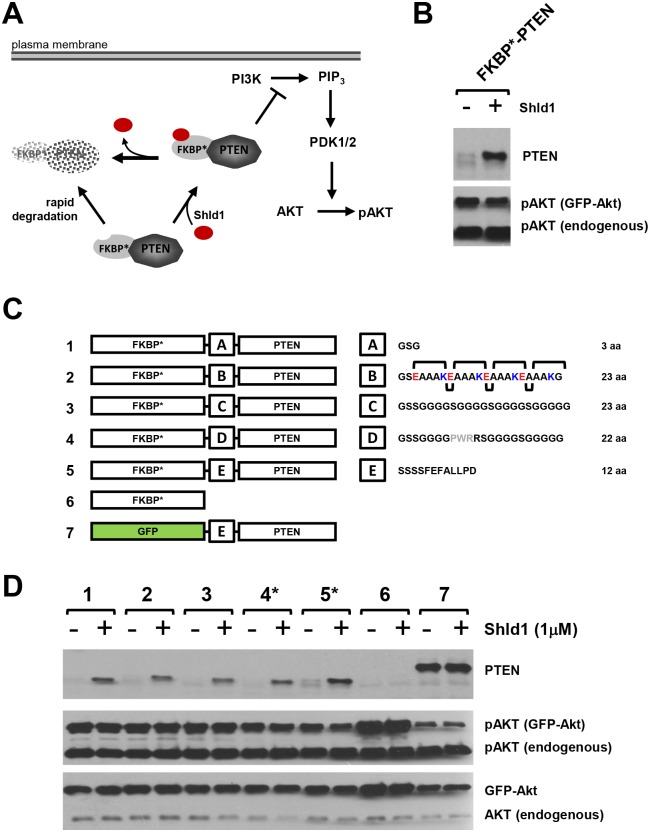
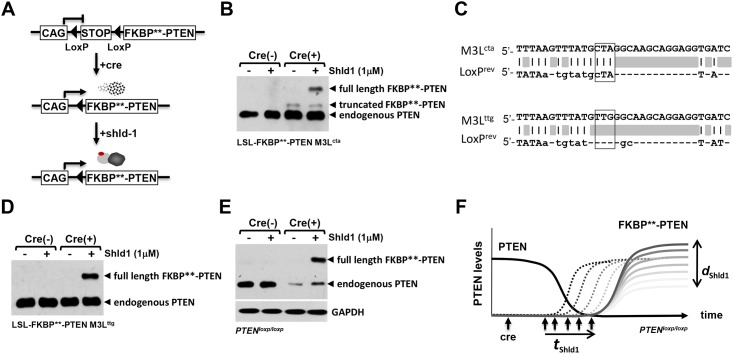
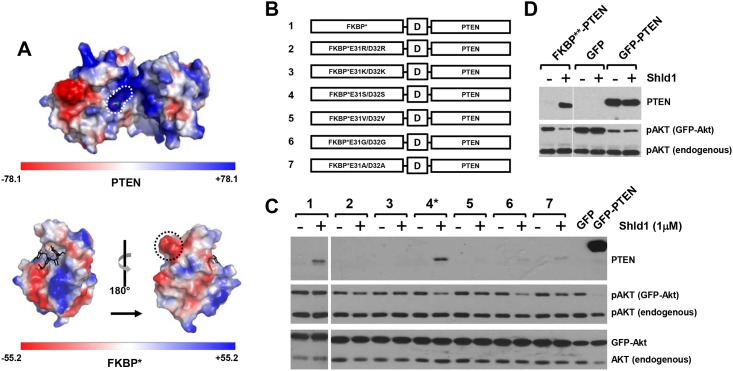
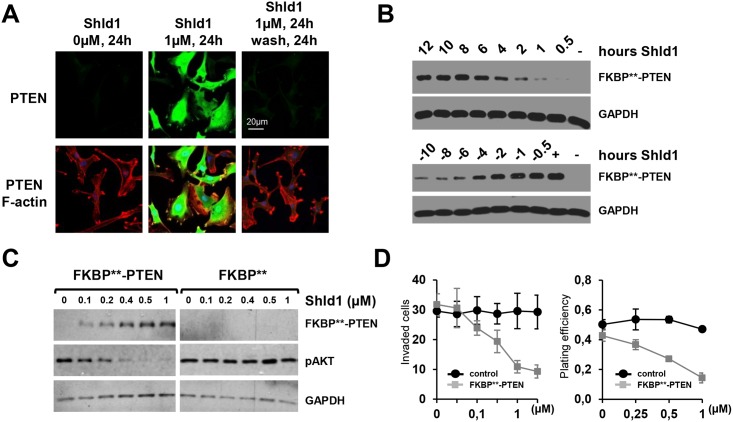
Targeting protein stability with small molecules has emerged as an effective tool to control protein abundance in a fast, scalable and reversible manner. The technique involves tagging a protein of interest (POI) with a destabilizing domain (DD) specifically controlled by a small molecule. The successful construction of such fusion proteins may, however, be limited by functional interference of the DD epitope with electrostatic interactions required for full biological function of proteins. Another drawback of this approach is the remaining endogenous protein. Here, we combined the Cre-LoxP system with an advanced DD and generated a protein regulation system in which the loss of an endogenous protein, in our case the tumor suppressor PTEN, can be coupled directly with a conditionally fine-tunable DD-PTEN. This new system will consolidate and extend the use of DD-technology to control protein function precisely in living cells and animal models.