Banaszynski Laura A, Chen Ling-Chun, Maynard-Smith Lystranne A, Ooi A G Lisa, Wandless Thomas J
Department of Chemistry, Stanford University, Stanford, California 94305, USA.
Cell. 2006 Sep 8;126(5):995-1004. doi: 10.1016/j.cell.2006.07.025.
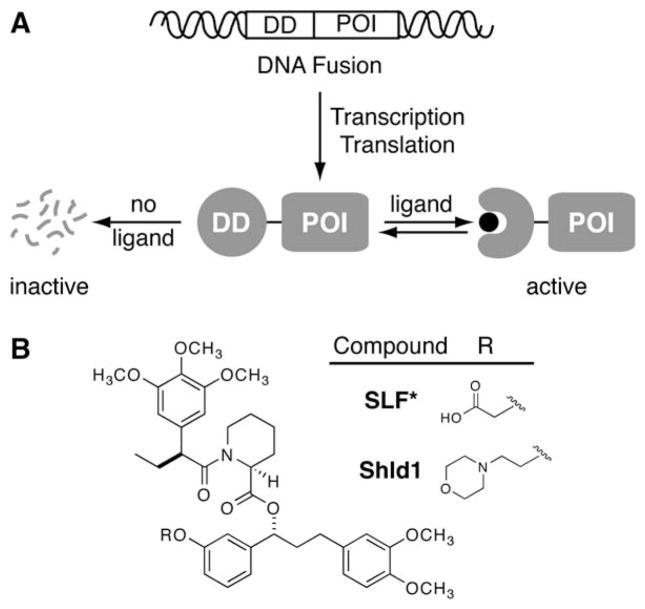
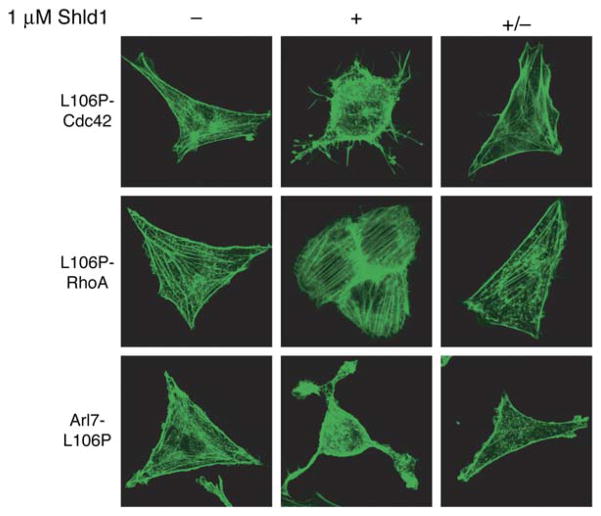
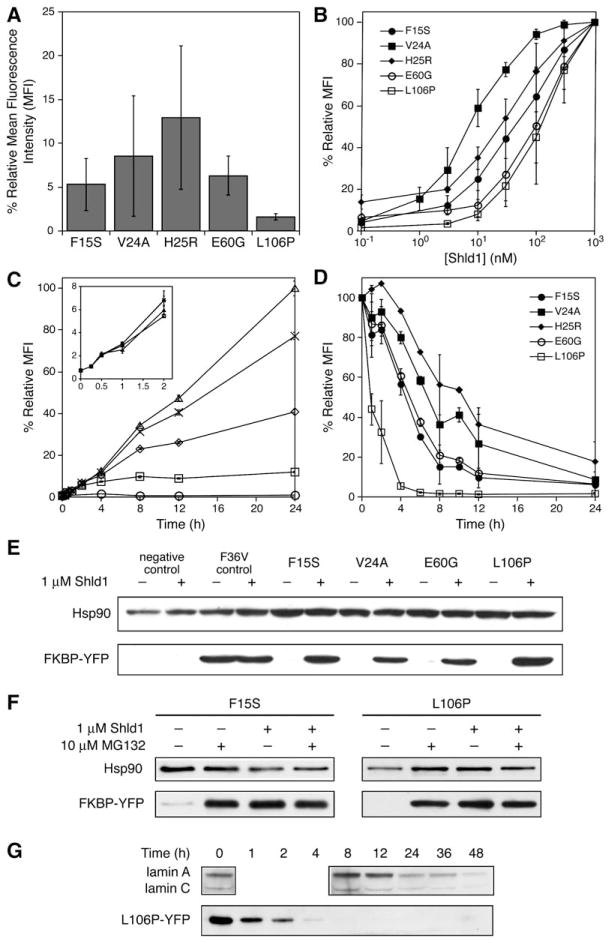
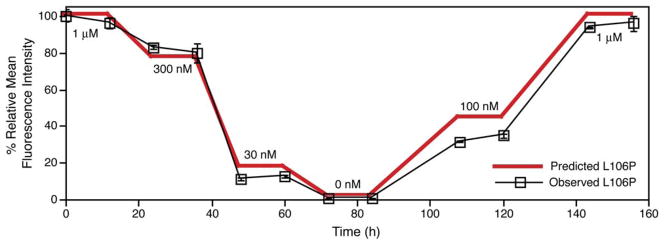
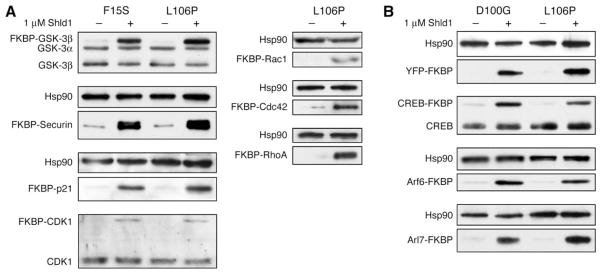
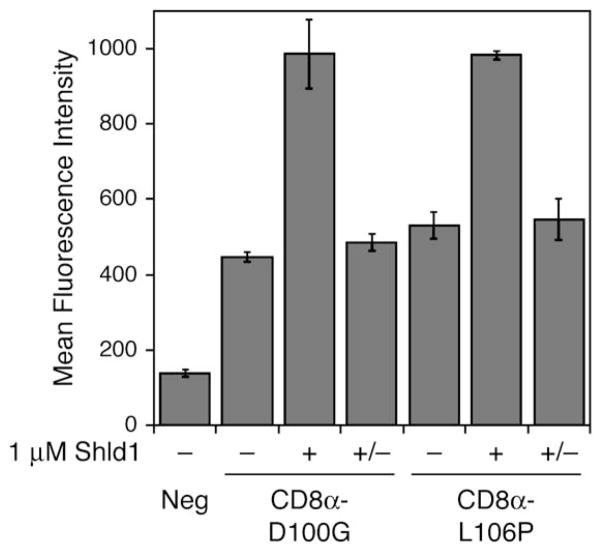
Rapid and reversible methods for perturbing the function of specific proteins are desirable tools for probing complex biological systems. We have developed a general technique to regulate the stability of specific proteins in mammalian cells using cell-permeable, synthetic molecules. We engineered mutants of the human FKBP12 protein that are rapidly and constitutively degraded when expressed in mammalian cells, and this instability is conferred to other proteins fused to these destabilizing domains. Addition of a synthetic ligand that binds to the destabilizing domains shields them from degradation, allowing fused proteins to perform their cellular functions. Genetic fusion of the destabilizing domain to a gene of interest ensures specificity, and the attendant small-molecule control confers speed, reversibility, and dose-dependence to this method. This general strategy for regulating protein stability should enable conditional perturbation of specific proteins with unprecedented control in a variety of experimental settings.
用于干扰特定蛋白质功能的快速且可逆的方法是探究复杂生物系统的理想工具。我们开发了一种通用技术,利用可穿透细胞的合成分子来调节哺乳动物细胞中特定蛋白质的稳定性。我们构建了人FKBP12蛋白的突变体,当在哺乳动物细胞中表达时,这些突变体会迅速且持续降解,并且这种不稳定性会赋予与这些不稳定结构域融合的其他蛋白质。添加与不稳定结构域结合的合成配体可保护它们不被降解,从而使融合蛋白能够发挥其细胞功能。将不稳定结构域与感兴趣的基因进行基因融合可确保特异性,而随之而来的小分子控制赋予了该方法速度、可逆性和剂量依赖性。这种调节蛋白质稳定性的通用策略应能在各种实验环境中以前所未有的控制方式对特定蛋白质进行条件性干扰。