Arciero Elena, Biagini Simone Andrea, Chen Yuan, Xue Yali, Luiselli Donata, Tyler-Smith Chris, Pagani Luca, Ayub Qasim
The Wellcome Trust Sanger Institute, Wellcome Genome Campus, Hinxton, CB10 1SA, United Kingdom.
Department of Biological, Geological and Environmental Sciences, University of Bologna, 40126, Bologna, Italy.
PLoS One. 2015 Dec 31;10(12):e0146072. doi: 10.1371/journal.pone.0146072. eCollection 2015.
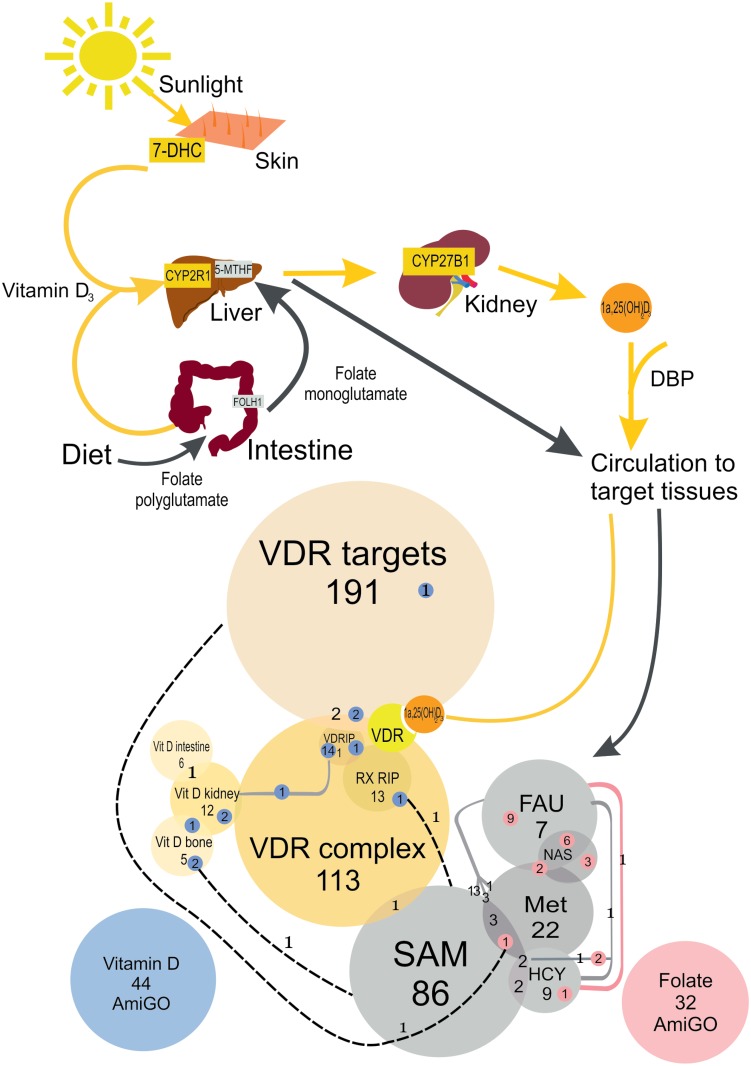
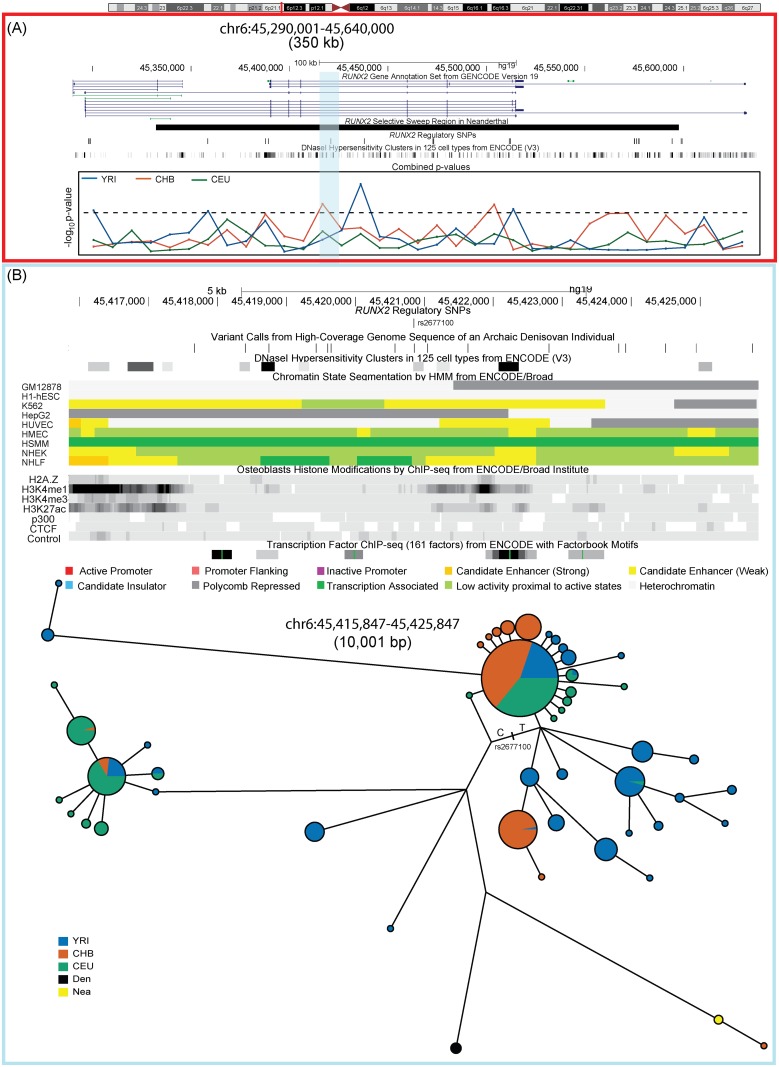
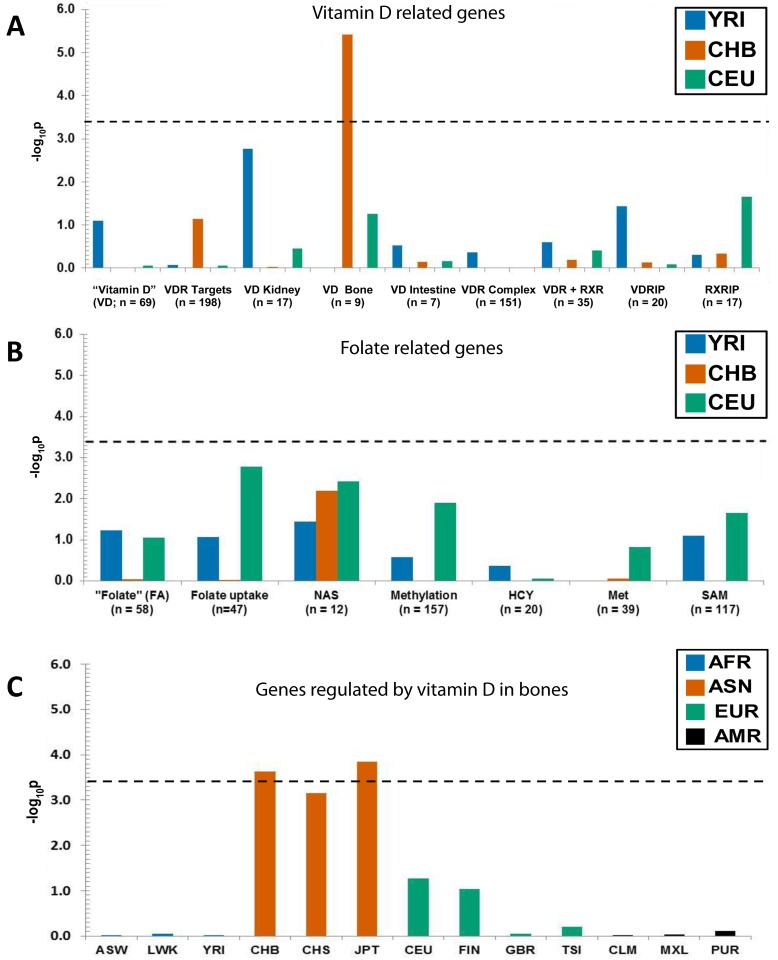
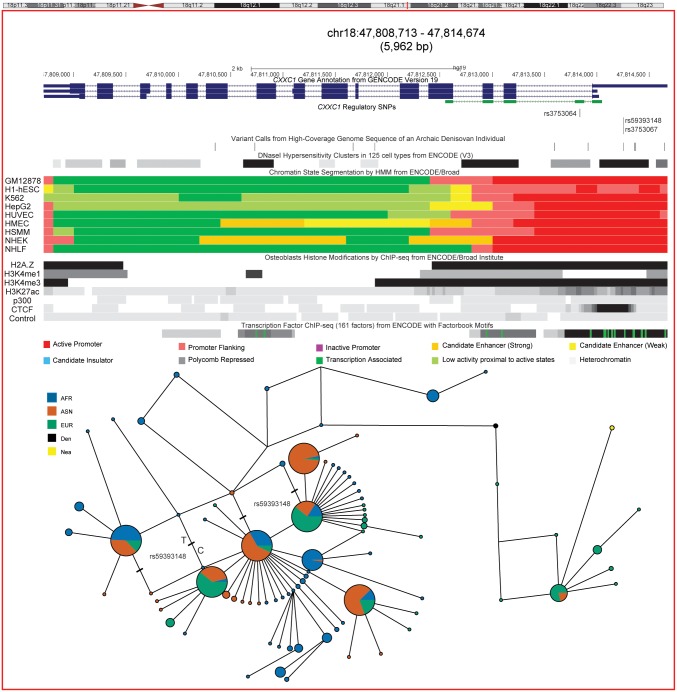
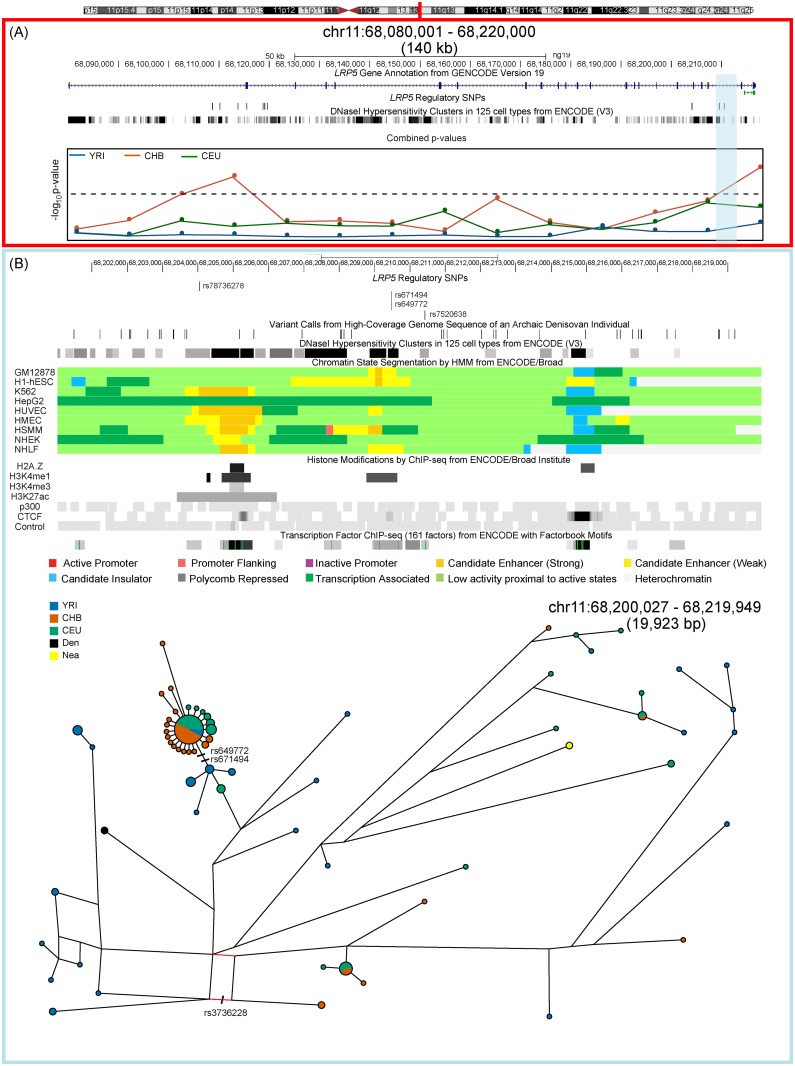
Vitamin D and folate are activated and degraded by sunlight, respectively, and the physiological processes they control are likely to have been targets of selection as humans expanded from Africa into Eurasia. We investigated signals of positive selection in gene sets involved in the metabolism, regulation and action of these two vitamins in worldwide populations sequenced by Phase I of the 1000 Genomes Project. Comparing allele frequency-spectrum-based summary statistics between these gene sets and matched control genes, we observed a selection signal specific to East Asians for a gene set associated with vitamin D action in bones. The selection signal was mainly driven by three genes CXXC finger protein 1 (CXXC1), low density lipoprotein receptor-related protein 5 (LRP5) and runt-related transcription factor 2 (RUNX2). Examination of population differentiation and haplotypes allowed us to identify several candidate causal regulatory variants in each gene. Four of these candidate variants (one each in CXXC1 and RUNX2 and two in LRP5) had a >70% derived allele frequency in East Asians, but were present at lower (20-60%) frequency in Europeans as well, suggesting that the adaptation might have been part of a common response to climatic and dietary changes as humans expanded out of Africa, with implications for their role in vitamin D-dependent bone mineralization and osteoporosis insurgence. We also observed haplotype sharing between East Asians, Finns and an extinct archaic human (Denisovan) sample at the CXXC1 locus, which is best explained by incomplete lineage sorting.
维生素D和叶酸分别通过阳光被激活和降解,在人类从非洲扩张到欧亚大陆的过程中,它们所控制的生理过程可能一直是自然选择的目标。我们在千人基因组计划第一阶段测序的全球人群中,研究了参与这两种维生素代谢、调节和作用的基因集中的正选择信号。通过比较这些基因集与匹配的对照基因之间基于等位基因频率谱的汇总统计数据,我们在一个与骨骼中维生素D作用相关的基因集中观察到了东亚人特有的选择信号。该选择信号主要由三个基因驱动,即CXXC指蛋白1(CXXC1)、低密度脂蛋白受体相关蛋白5(LRP5)和 runt相关转录因子2(RUNX2)。对群体分化和单倍型的研究使我们能够在每个基因中识别出几个候选因果调控变异。这些候选变异中的四个(CXXC1和RUNX2各一个,LRP5两个)在东亚人的衍生等位基因频率>70%,但在欧洲人中也以较低频率(20 - 60%)存在,这表明这种适应性可能是人类走出非洲时对气候和饮食变化的共同反应的一部分,这对它们在维生素D依赖性骨矿化和骨质疏松症发生中的作用具有启示意义。我们还在CXXC1基因座观察到东亚人、芬兰人和一个已灭绝的古人类(丹尼索瓦人)样本之间的单倍型共享,这最好用不完全谱系分选来解释。